I spent most of the day tidying and gardening. I did go to the supermarket in the afternoon, though, and bought a box of 100 bulbs for bee and butterfly friendly flowers. I should have ordered indigenous flower species online, but it was easy because they were there. I just have to find the time to plant them now.
In the evening I mended one of my daughter’s shoes and read about flash photography.
It was photography day today, so I thought I’d crack on and photograph a church looked after by the Churches Conservation Trust. I chose St Mary’s at Chickney in Essex. It’s not far from Stansted Airport and about 40 mins drive from me.
The church is down a single-lane track that leads to a country mansion, and it is enclosed my trees. I parked by the gates to the mansion and had the church to myself all afternoon. The only visitor was the red-faced local toff, who I took to be the owner of the mansion. The first I knew was when two Labradors came bounding into the church. That was a shock. I’ve never seen dogs in a church before. They came sniffing around me in a friendly and excited way, and the toff came in after them with a cheery “Hello!” He strode down the the altar and back, looking up an down as if he’d lost something, when I think he was just checking nothing was damaged or missing.
“I’m just taking some photos,” I said. “If they work out, I thought about sending them to the Conservation Trust.”
“Oh, very good,” he said. He finished his quick scour around the church and departed with, “Well, I’ll leave you in peace, then.”
So the afternoon I could haul my tripod about and take pictures from different angles. The light was a challenge, since the sun was intense. The trees outside the church cast a camouflage pattern of shadows on the walls and tower, and inside intense streak of light crossed the floor and glimmered on the woodwork. It was horrible to deal with. I got one picture of the outside of the church when briefly the sun went in, and inside I put the camera on a 10 second timer, pressed the shutter and then rushed to the brightest window with a circular diffusing screen to soften the most intense light.
At the end of the afternoon, I walked round the north side of the church to see if there was something to photograph there. I heard this intermittent beeping, and wondered if I’d set off a burglar alarm. Then I realised it was a couple of metal detectorists in the field next to the church. The church dates from Anglo-Saxon times, so presumably they hoped to find something antique. I don’t think the church was ever in a village, though, so the likelihood was perhaps small.
Back home I went through the photos and edited them. Here are some things I learned:
Bright sunlight is horrible to deal with, so avoid intensely sunny days.
Make sure you keep a collapsible diffuser. They soften the intensity of the sunlight and act as reflectors for filling dark shadows.
Avoid using the EOS 550D. Yes, it’s a shame but the photos from my EOS 550D weren’t good in the dim light. There wasn’t much colour details and there were greenish and cyan colour casts, which were horrible to remove in post processing. I didn’t get them at all in my 6D, so the colours were artefacts, not things that were there. This is a cruel decision, not using my 550D, because I have good lenses for it, including a 10-18mm zoom that I can’t use on my 6D, and which gives me an extra wide-angle view.
Don’t leave the IS on in my 28-135 lens. The Image Stabilisation (IS) is good when you’re shooting hand-held at slow shutter speeds, but it makes pictures blurry if you have the camera on the tripod. I had to re-take pictures because I’d left the IS on.
Learn to use a flash for subtle light filling. It’s the “subtle” bit that’s difficult. There were some dark areas, like the carvings on a medieval font, which I could take with just a tripod but the exposures were long and the light was flat. I just could have done with a soft flash on them to have given me more form and detail. I had my flashes with me but just didn’t use them.
To get the best quality, use my 40mm fixed lens. This will get a fairly wide angle and will get close up. and is sharper across the frame than my other lenses. I keep forgetting to use it. I could start off with that and keep returning to it as my default lens.
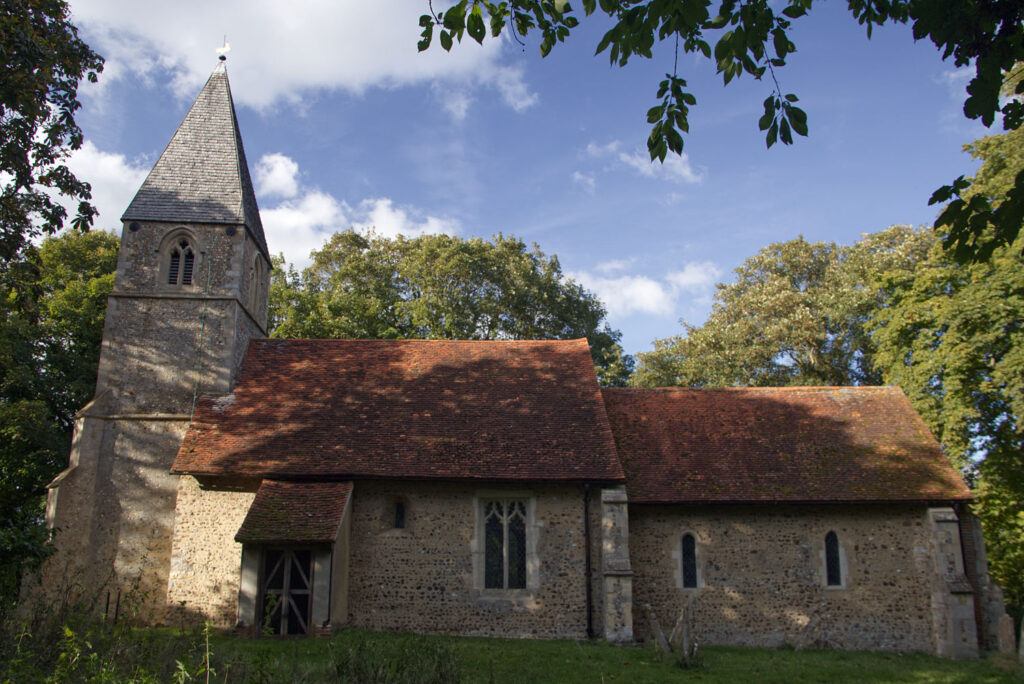
The church was surrounded by trees on a sunny day. Horrendous to photograph.
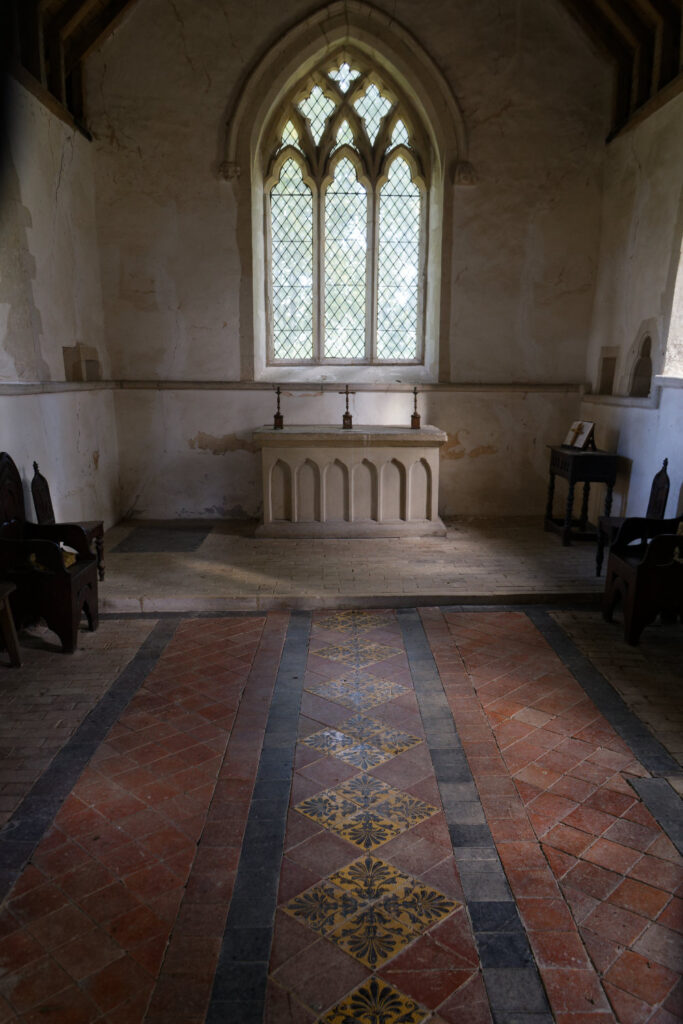
A view of the altar. Stone altars were banned in the early medieval period, and this altar stone was buried. It was rediscovered in the Victorian era and reinstated on the altar. The vicar at the time did this at some risk, since it was still illegal to have stone altar tops.
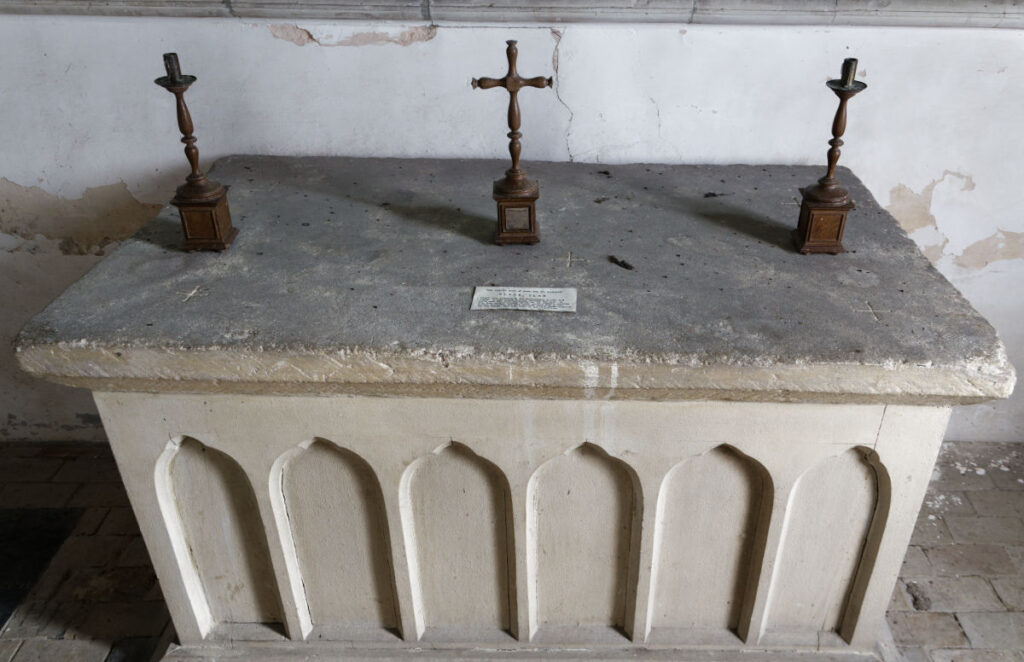
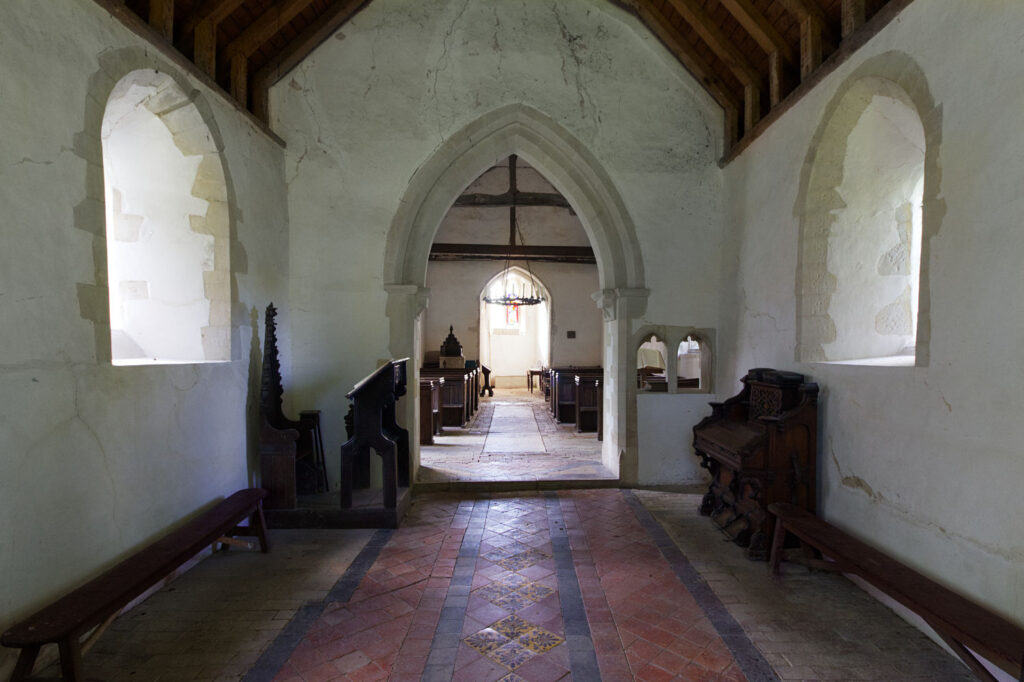
The old altar stone, with crosses inscribed into it.The view from the altar.
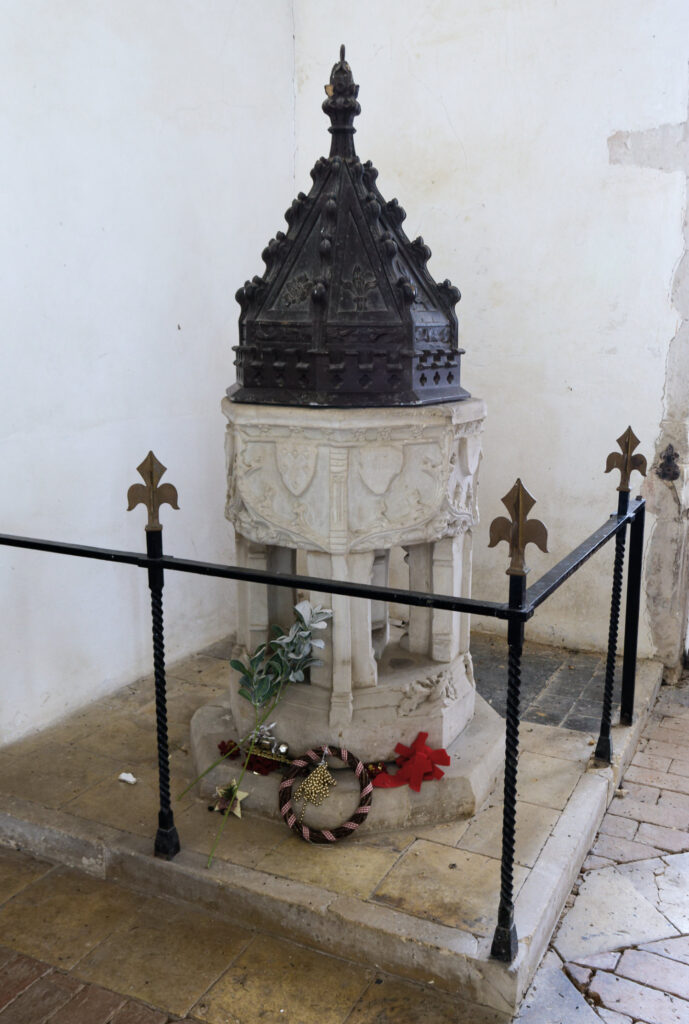
The medieval font. Out of picture to the right I’m holding a diffuser to stop the sunlight hitting it. The scene was a lot more gloomy in real life.
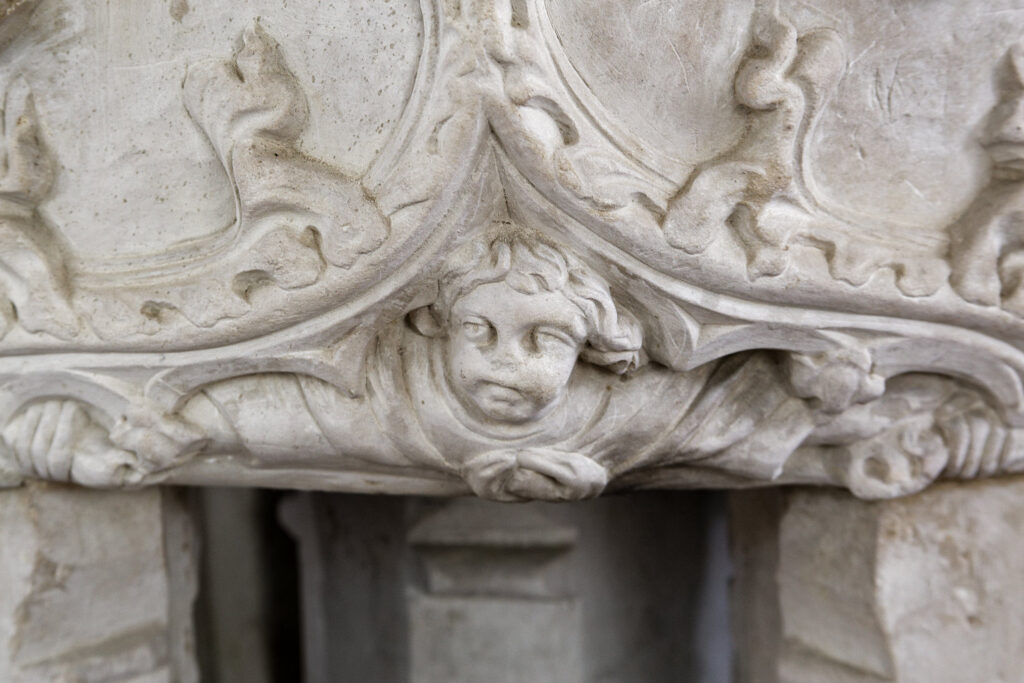
A carving on the font. These carvings were in near-darkness.
Spend the early part of the morning cleaning the dishwasher, in preparation for the dishwasher repair man. He came round with his son (I presume), and after a few minutes the man said, “I’ve got bad news for you. There’s nothing wrong with it.” How many times had a switched it on and off and it failed every time? Yet when they turned it on it worked.
They charged me a £68 call-out charge and said, “You’d better just put it on a cleaning cycle. It was probably just a bit of gunk that got stuck in the pipes. What happens is, it sticks in the pipes then if you don’t use it for a while it dries out and shrinks, and the next time you turn it on it flushes out the pipes.” So, feeling crestfallen at having paid £68 for nothing, I put it on a cleaning cycle.
Just as they were going out the door the man stopped and listened. “It’s not working, ” he said. Apparently, if you want to know what’s wrong with dishwashers you have to learn how to listen to them. He noticed it was wrong, and sure enough the cleaning cycle had stopped. Each time they tried again it stopped. I felt relieved – that £68 was finally working for itself. “It could be the filter,” they said. “We’ll have to take it away and investigate. All the workings are in the bottom of these things, so you have to tip them upside down to get at them.”
Then to Newmarket to see PV, who was asking me what I’d done in the last month. It’s almost a month since the end of my contract. I said when I was working it was like I’d been spinning in a tornado, like Dorothy, and although I’d been dumped to the ground now I was still disorientated. It was a readjustment period, the first month. I’m still disappointed at how little I’ve done, though, despite PV telling me she thought I’d done a lot.
Then back home for my French lesson, where I wasn’t on form at all. There are some days when my brain just isn’t working, and this was one of them. I kept stopping to think of the word or tense, and my mind was blank. Sometimes it happens like that, and other days the words babble along like a stream in the Lakes, feeling perfectly loquacious.
Dropped the children off at school for 8am – the youngest was going on a school trip – then went printing. Today’s teacher was a bit dull and talked for the first hour. I struggled to pay attention, and rather wished I was at home in bed. The teacher kept changing her mind about what we were going to do, and instead of gathering us round for demonstrations, she just stood at the benches rolling ink and shouting instructions to us at the table. She did some of her own prints in the afternoon as well, rather than focussing on tutoring us.
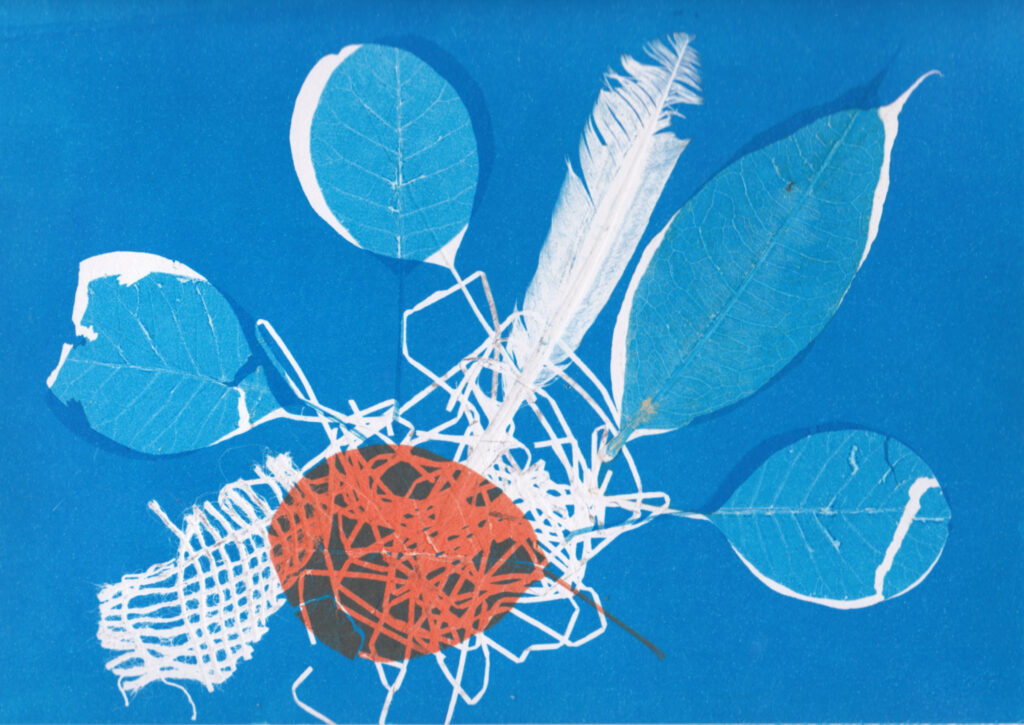
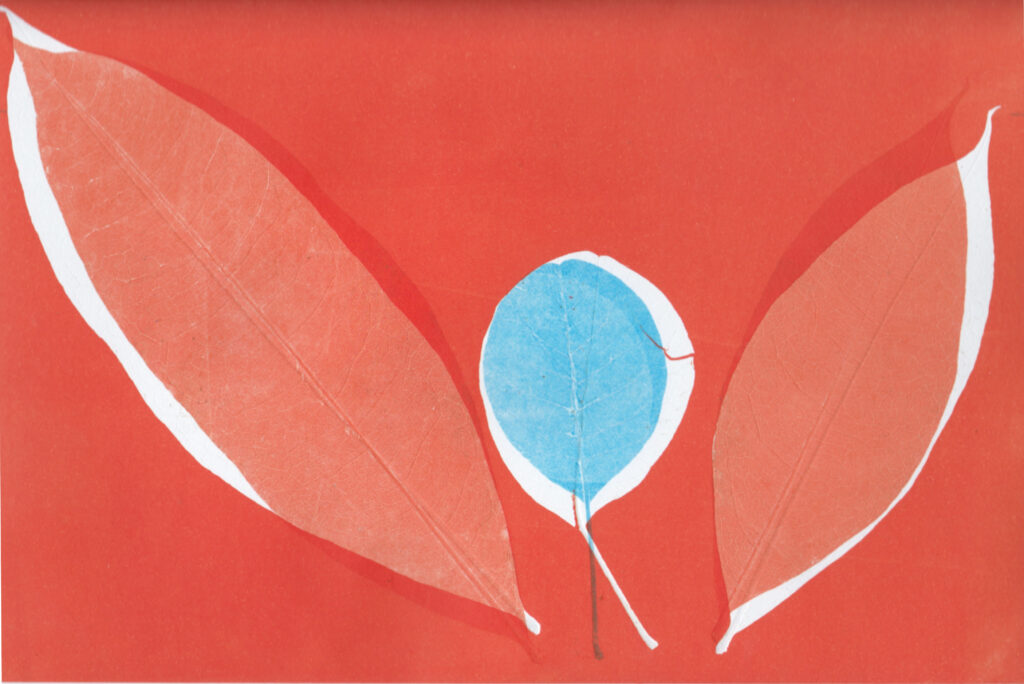
Like the cardboard printing technique, I didn’t understand quickly what mono printing was best suited to. She demonstrated a technique where she rolled the ink over Japanese paper with flat objects underneath, like leaves and card cutouts. I liked the images she got, but she said, “Well, let’s start. I don’t think we need to do that Japanese paper technique. Let’s just get on with the other monoprints.”
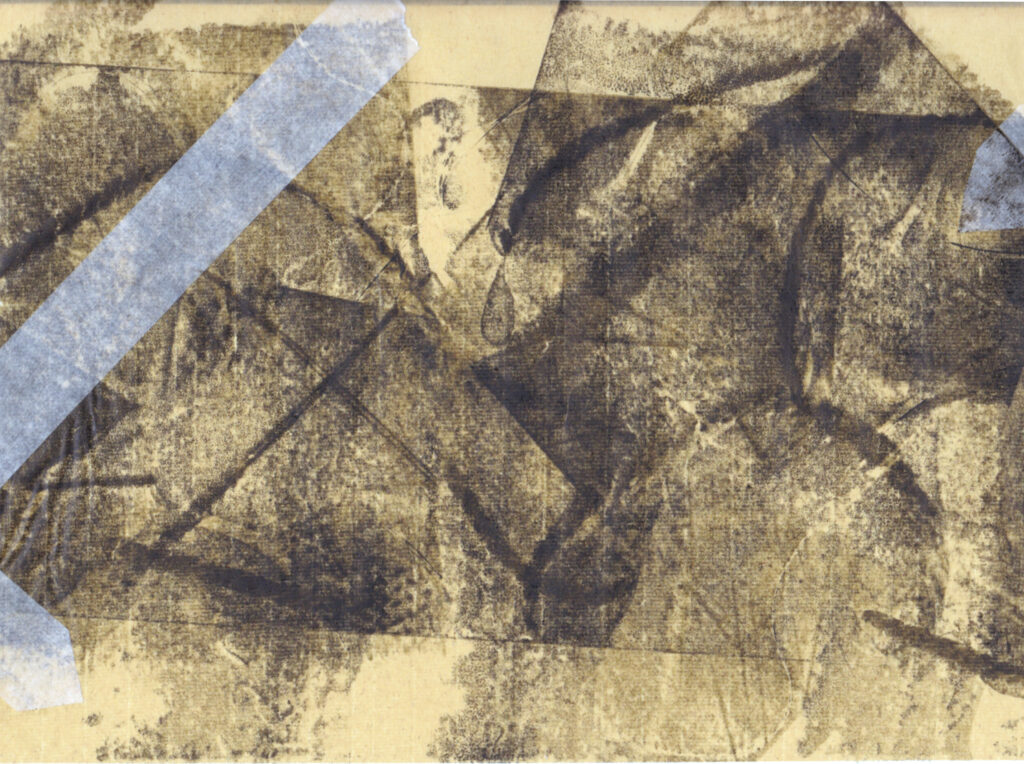
I had a go at the Japanese paper technique anyway, but learned you need to have simple objects with a clear shape. I put lots of objects with subtle textures under my first effort, like strips of linen and dried moss and a feather. It turned out an inky mush. The second effort wasn’t much better, but I liked some of the marks and feel I could have carried on with this technique
One of the touted charms of monoprint is that it can’t be reproduced. In some cases this is a good thing.
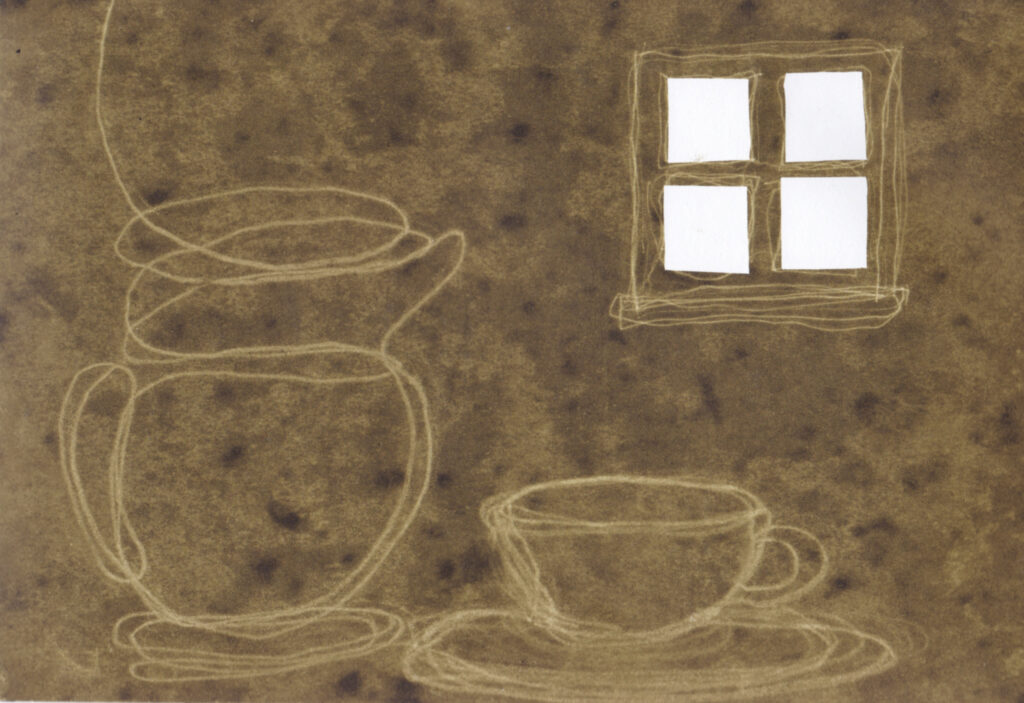
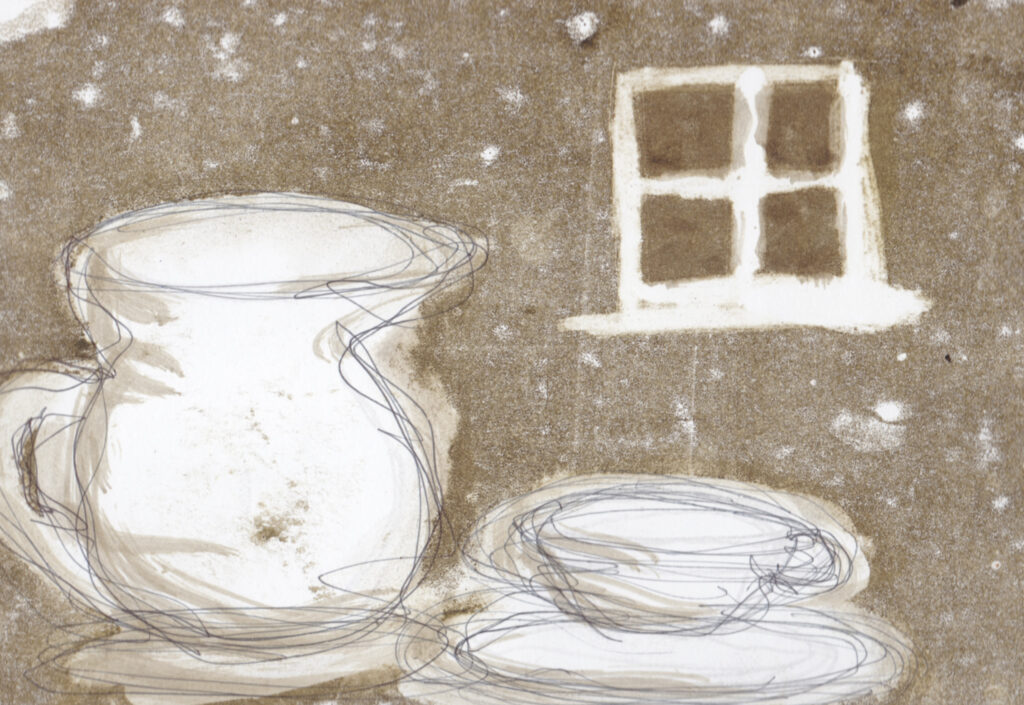
I started with a doodle, as the teacher instructed, but I’m not comfortable drawing from my head, unless it’s abstract. I’m just not good at it. I did a cup of tea, because that’s what I felt like I needed at the time. Not a motivation for great art. I battled away to get a decent image, and these were the best:
Then I started on what I understand to be monoprints, where you place objects on paper and print. These worked better:
All this is not very art school, where you choose a topic you’re interested, like ageing or nature conservation or whatever, and explore ways to express what you want to say about it. Here it was, “Throw a few things together and see if you can make them look pretty.” When you do that, you produce an output that you can pay as little attention to as a graphic design. It’s just a “Oh, that looks nice”, then move on.
Incessant rain all day. Spent the morning catching up on this journal then finished off the re-install of Windows. I wanted to go out and try Haverhill Library, to see if it was better than Cambridge, but instead had a think about how the first three weeks have gone. Here are a few notes:
It was a relief finishing work and pleasing to think I no longer have to deal with the Management Team there. I’ve felt grateful for that.
I’ve felt a bit disorientated. Deliberately, I didn’t have a specific plan for the first month, but that’s meant I’m not sure if I’m spending my time the best I could. Leaving work means the responsibility for your time is entirely on you, and although I’m happy with that, I’ve also felt pressure to spend my time well, and I’m worried I haven’t.
I need to find a quiet place to work, undisturbed. I’ve realised how important this is. Home is too busy. This afternoon I tried tethering my phone to a laptop and I already have a mobile router, so I could use those options, and then I can work from anywhere that has a mobile signal.
I haven’t have as much time as I thought I would. Before I left work, I thought I’d have lots of time to do things, but I haven’t. I think that’s partly because I’m setting up a work practice and re-orientating myself, but it’s also because I’d underestimated how many household things I do in normal life. I could work more efficiently, too. Exercise will help with that.
Almost anything I’ve had to do with computers has been a waste of time. I don’t know what’s happened here. I’ve never had such problems before. I need to be careful with this, and be ruthless aboiut time management. It would be nice to have a career where your skills accumulate over time, rather than where you have to keep learning different skills. Imagine if I’d been a painter or musician all this time, and spent as much time practising those skills as I have sitting at a computer! I’d be so good at them by now. With web development it feels like you spend a lot of time going down snakes, to learn something that is passé in a few years. Perhaps I just need to choose simpler technology.
Went for a run in the evening. It’s so important to keep up exercise, to boost the ebergy levels.