A challenging day

Another trip to the Job Centre today. It was much busier this time, with most of the desks occupied and a hubbub of voices. I sat on a sofa near my job coach Penny. It smelled of disinfectant and I could hear little phrases from the conversations: : “What I’ll do…so actually…Wednesday? Are you able to make that?…then just attach it to an email and send it to my by Friday…yes, Thursday you’re at college.”

A man came out of the interview office in front of me. He had a shaved head and tattoos round his neck. “Have a lovely day,” he said to his coach.

“And you, my love. I’ll keep my eye out and see you in a couple of weeks.”

My coach was running fifteen minutes late. She was talking quietly to the young man in front of her. “You’re not living by your own agenda,” I heard her say. I wondered what that meant.

A child cried out, “There’s a spider! Look, mummy, there’s a spider! A big spider!”

Then it was my turn.

“Sorry about that,” said Penny. “He wanted to talk to someone.”

We chatted about the weather (it’s awful) and the traffic on the M11, whilst she put the stamp on my letter and organised the next appointment.

Now it was time to try places to work in Cambridge. First up it was Waterstones. It was pretty quiet but the internet was patchy and a woman had struck up a conversation with a couple of South African men on a table across from her. They were all talking loudly, so I thought, “Let’s try the library. The internet will be better anyway.”

So I tried the “quiet floor” first, and sat between two book stacks, where there was a plug socket for my laptop. I started downloading and extracting Grav and noticed the escalator was just behind me, and was actually pretty load. It was like sitting next to a factory machine. A man plonked himself in a chair in the next row of stacks and started chatting on his phone, then a phone rang in the stack on the other side. The second man seemed more self-conscious and only talked a couple of minutes. In a language I didn’t recognise, the first man just get rabbiting on and taking swigs out of his bottle of pop.

I thought, “Sod this! Maybe it’s quieter upstairs.”

Upstairs there were more tables that were mostly occupied by young students, maybe sixth-formers, who were just chatting to each other. An American chap was talking loudly and unselfconsciously so the whole floor could hear him. I found a desk at the far end and carried on my download. I felt rattled, though. Since when do people just chat and eat and drink in a library?

Then a couple sat at the table behind me and began talking as loudly and carefree as if they were sitting in a park. There was a funny smell, too, so I though, “Forget it – I’ll move on.” When I got up I realised the couple were eating chicken nuggets and chips. Thus the smell. I felt shaken. Is this is what the country has come to: you go to a library to eat chicken and chips and chat?

I found a quieter area further along, where I looked at some local history books that were on sale for a pound each. There were lots of memoires of local people. It’s sad that this knowledge will be lost, because I’ve no doubt they’re out of print, but I can’t store any more books. I hope they’re on the internet archive.

A woman brought her two children in specifically so they could sit down and eat sandwiches. They were quiet, well-behaved children, though.

I went back to the quiet floor where I did find a quiet table, but by now I was unsettled. Even people on the quiet floor were drinking (despite the signs forbidding it). I read a few letters by Noel Coward then headed back home.

I tried to make up for lost time by getting a local Grav install to work. I wanted to use Visual Studio Code with it’s PHP server plugins, but none would serve the site properly, then I tried XAMMP, EasyPHP and finally Docker. I wanted to set up Grav on a virtual host in a local server, but I kept running into permissions issues. In the end, late at night, I’d installed so much software that I thought it was easier to clean the PC by resetting it. I left it going overnight and went to bed demoralised.
End of the third week

Spent most of the day dismantling a sofa to take to the tip. We offered it for free on Freecycle and the local Facebook, but no-one wanted it. We can’t take it to the charity shop because it doesn’t meet modern fire safety requirements. So I thought I’d do my bit for recycling and take it apart so I could recycle the wood, metal and fabric. What a horrible job.

It was glued and stapled together with a million staples – really, one every couple of centimetres. At first I started pulling the staples out but then I just started cutting the cloth off them. Finally, I just got an electric saw and cut through the main cross pieces and bundled wood, cloth and staples all together for the tip. I did manage to separate the springs and a few squares of cloth, so I can recycle those. Next time I need to get rid of a sofa I’ll just get a chainsaw and saw it in half and take it to the tip.

Things aren’t built for recycling, that’s the problem. No-one thinks, “What will happen to this once it’s reached end of life? How will people reuse it or recycle it?” I’m sure they could have used screws instead of staples: screws through a toothed bar to fix the cloth on the wood frame, and screws though clips to keep the bed of springs to the frame. Then you could have just whizzed round with an electric screwdriver to take the thing apart. As it was, hands were covered in cuts from the half pulled out staples, and I don’t want to try recycling a sofa again!

In the lining of the sofa I found fragments that had fallen down there over the years: a two-pence piece, a twenty-pence piece, some red paper clips, a fridge magnet of a cartoon character and a small green stalk that I think used to be the trunk of a palm tree. It came with a little doll who was sitting in a tropical garden, I think with a fountain and a sun lounger. I don’t remember the details of it, but IO felt sad. This was the sofa we held the children on as babies, that we read them stories on when they were older, and now I was sawing it up. It was heartbreaking, really, realising how quickly time goes, and how quickly age and death are approaching.

A skull cake
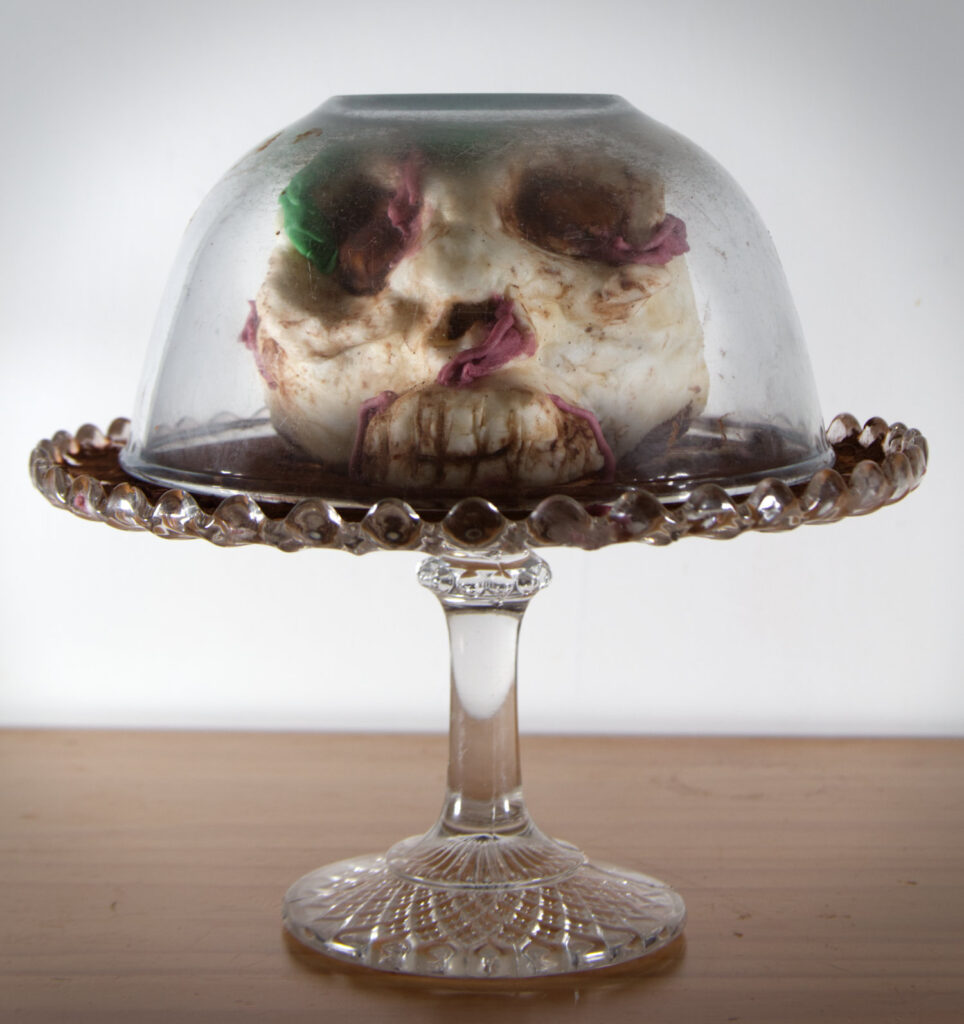
The daughter made a skull cake today. I liked that it had a glass bowl over it, but more of a challenge to photograph. Those are worms creeping out of the holes, plus a weed. It’s sitting on grated chocoloate, to represent the soil.

So how did the third week go anyway?

Things that went well

  • Photography: I learned more and found a way of making the pictures useful for people. This was a breakthrough!
  • …errrrm.

Things that went badly

  • Webby things: I couldn’t get my Next.js sites to deploy, and the laptop that I bought arrived broken.
  • Art: I didn’t do any. The art day was the day my new laptop arrived, and I was fiddling around with that, and with other computers so I could work out how to do web development without buying a new laptop.
  • Printmaking: well, it was a learning experience.
  • Writing: I didn’t do any, except this journal. That’s because on Thursday (writing day) I was socialising and setting up a test site for PH.
  • Fitness: I only went for one run.

So let’s see. A big theme is how much time I’ve spent getting computers and software to work. Imagine if I’d spent all that time drawing – I’d be brilliant by now! I definitely need to cut down on the laptop time, and choose more robust web technologies.

An encounter with church hoppers

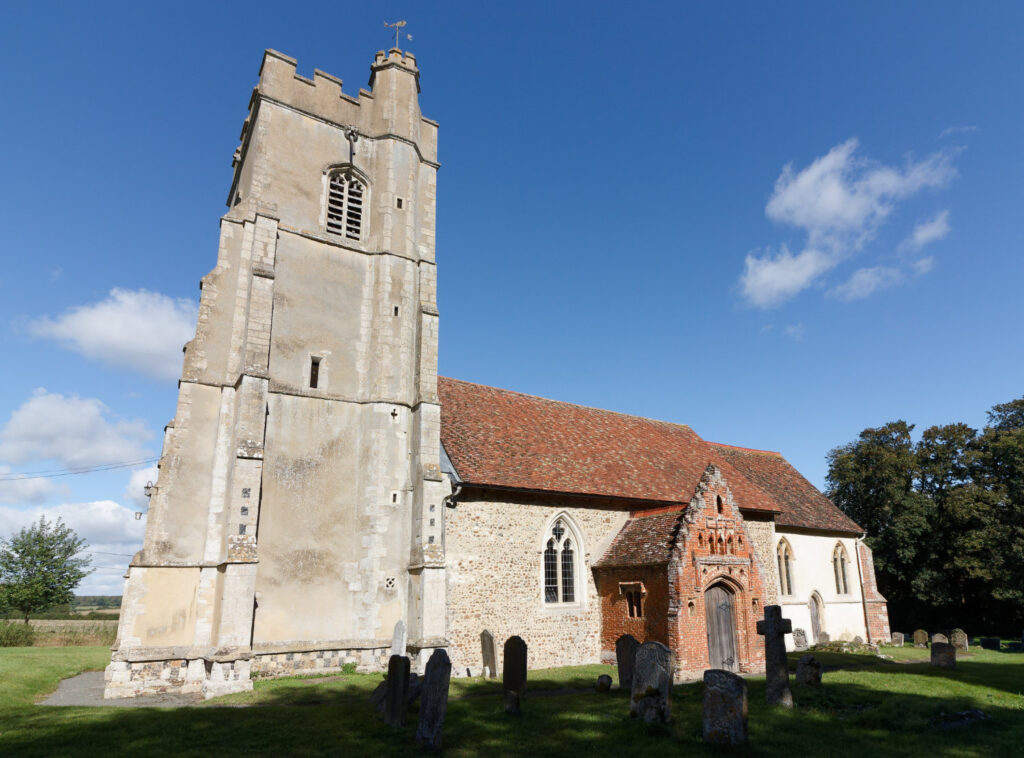
I was anxious to finish this Little Thurlow project off so I drove over there in the hope it would be open and empty. A car was parked and a woman was in the churchyard, though. She was heading back to get something out of the boot of her car. I guessed she was a local who was decorating the church so I wandered up the paths nearby to see if I could get a photo of the church in its landscape, which I couldn’t. The trees and big hedges blocked the view from all angles.

When I got back to the car, I found the woman was still there with the boot open. She was with a man and there were having a drink from a flask. I thought this was a bit odd if they were locals but decided to move on to Great Bradley until they had gone. I assumed they were doing something in the church.

Great Bradley was quiet so I took some photos from the outside. I’d taken my 550D with it’s 10-18mm lens, which allowed me to get a full view of the church even when space was restricted, in this case by a barn wall. Then I went inside and had just got my tripod set up when there was a rattling at the door nearest the road. Someone was trying to get in, and would be round the porch side in a minute. I hurried put my stuff back and in came the couple I’d just seen in Thurlow.

The church at Great Bradley
The prettier side of Great Bradley church (the south side, away from the road). The picture is a bit cramped because I didn’t want a branch in it, so had to move closer and use a super wide-angle lens. That didn’t quite leave enough room around the church.

They’d come from an Essex coastal town (I forget which) and said they like coming to Suffolk because the churches are open. “In Essex they’re always closed,” the woman said. “It’s the insurance.”

They’re members of the Church Conservation Trust and their hobby is “church hopping”. They told me that’s the correct term, though they also take in garden centres along the way. We talked for quite a while about old churches, garden centres and schools (they have grandchildren), and the man showed me his Google Map with all the churches on they haven’t visited. As they visit a church, they take it off the map. These people are professionals.

I felt I should leave them to it, so I headed back to Little Thurlow and took some extra pictures there.

I edited them when I got back home, and sent them to the Church Roof Repair Fund. It was interesting to compare the pictures taken by the 6D and the 550D. The 550D is a lower-end and older camera. The difference in image is subtle but noticeable.

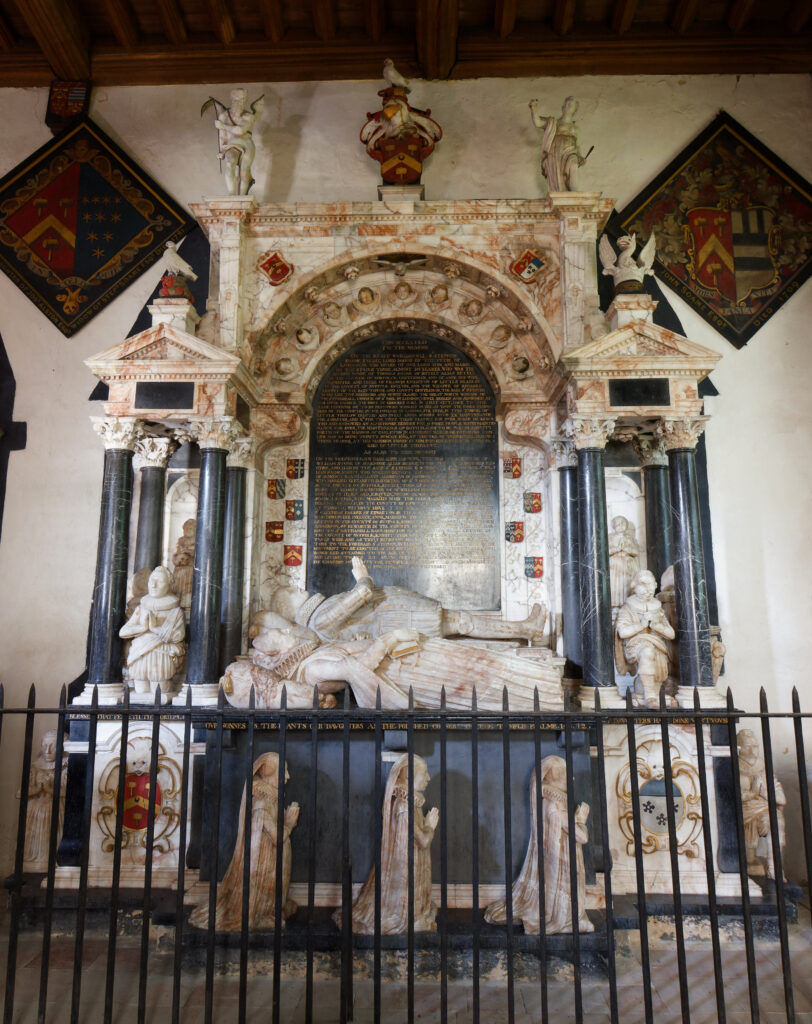
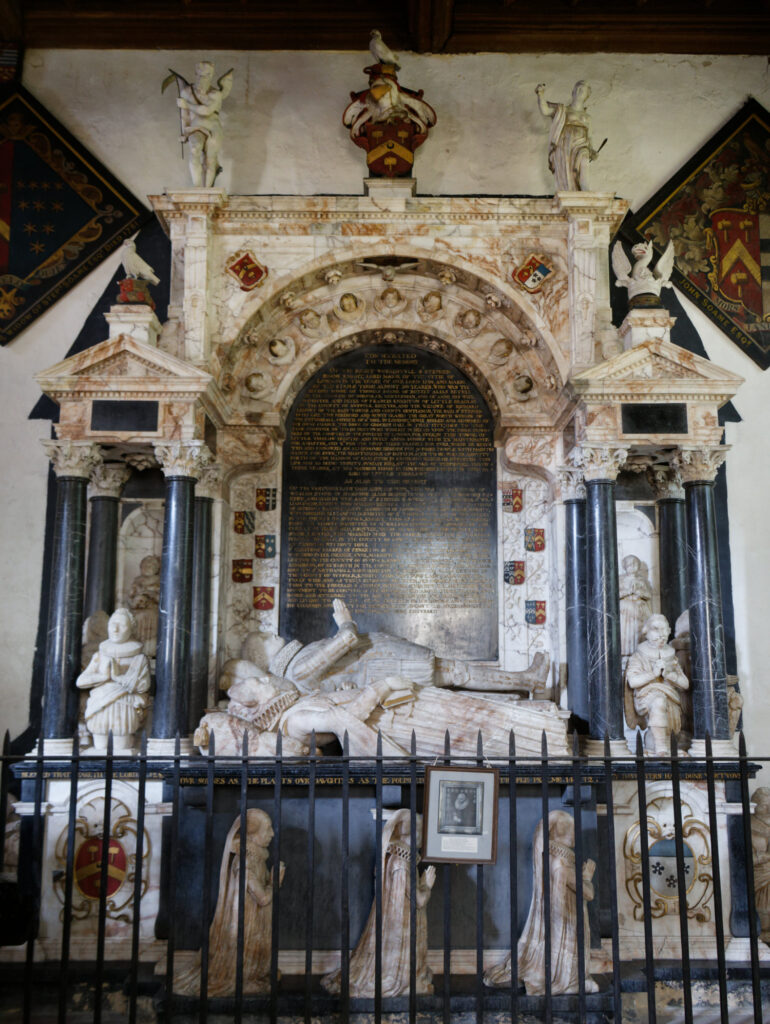
The Soame memorial, a marble monument
This is the EOS 550D.
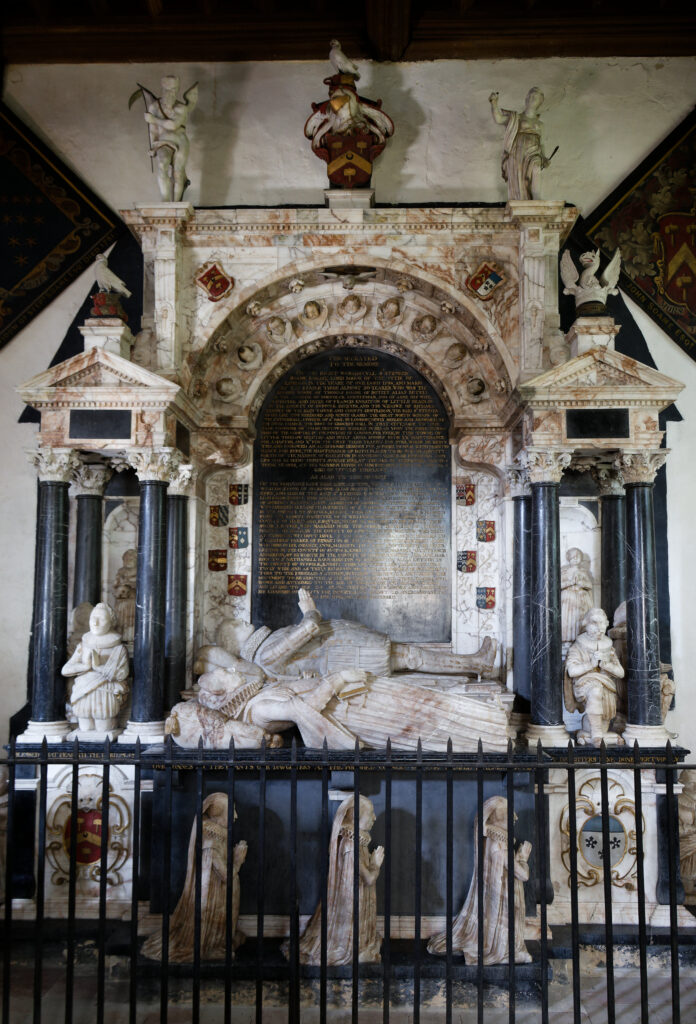
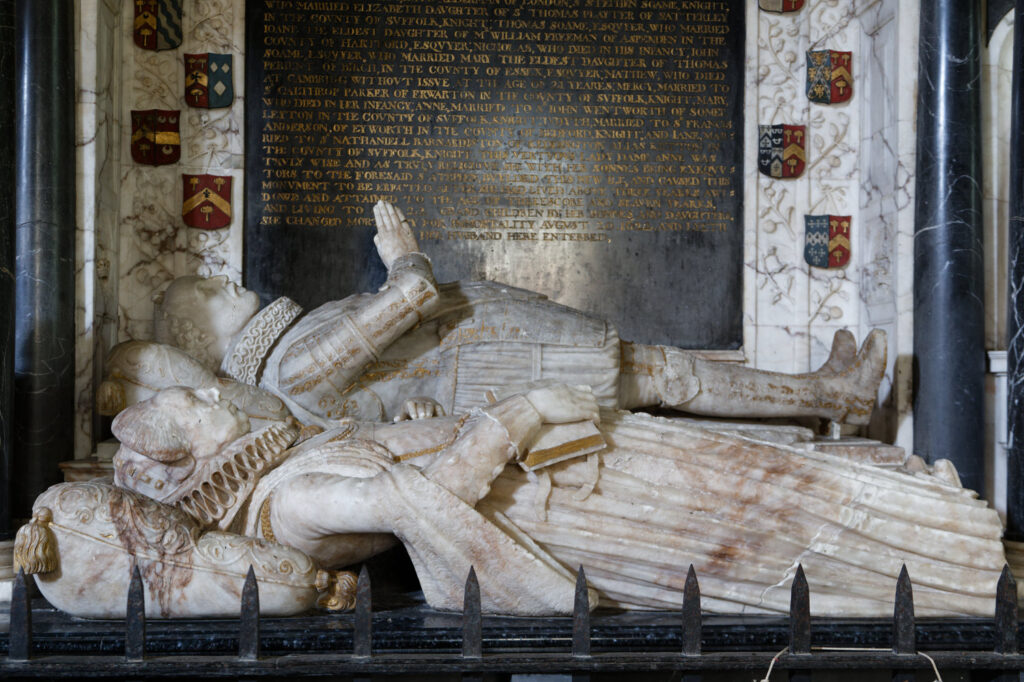
The Soame memorial, a marble monument, taken with another camera
This is the EOS 6D. There are fewer colours overall in the 550D. Look at the escutcheon in the bottom left, for example. In the 550D it’s just a single lurid red, whilst the 6D is more realistic and shows more variation in tone. The sculpture of Sir John Soames also shows much more colour information in the 6D version. This was the theme throughout the pictures: irrespective of the exposure, the 6D seems to capture more colours. I guess it helps that it has a full-frame sensor.

I won’t dump all the pictures here, but here are a couple:

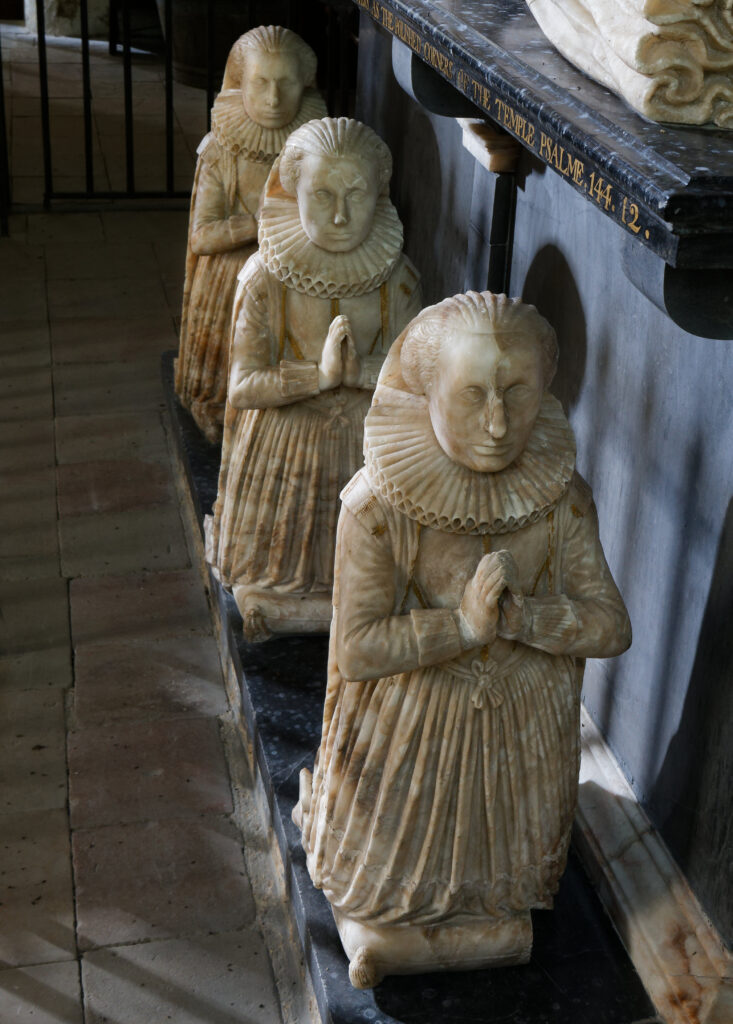
The sculpture of the three daughters of Stephen Soame
I liked this view of the daughters that I got today. I’ve never seen them from this angle.
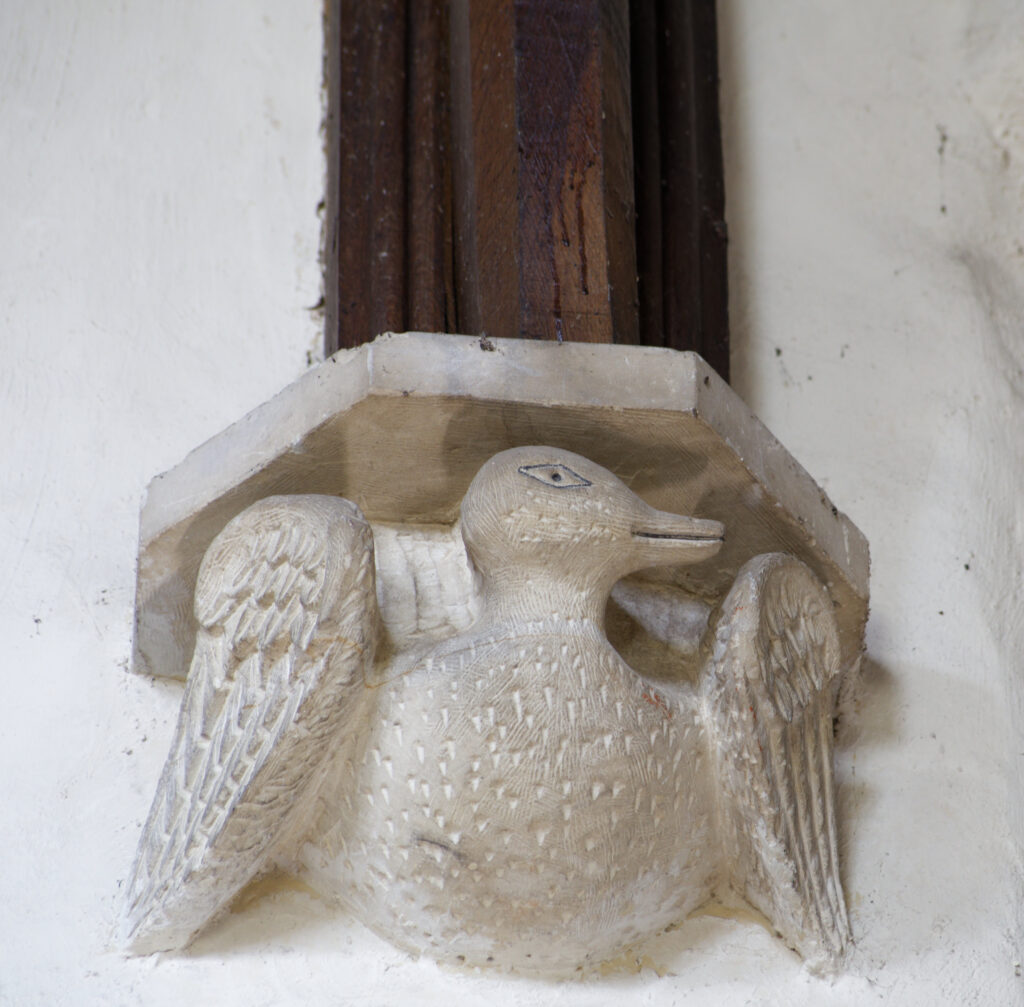
A relief sculpture of a duck on the church wall
I included pictures of some details of the church as well. I’ve been using a Canon EF100-200mm lens for these zoom shots. I bought it in a charity shop for £20, and had no expectations. It’s great, though!

A reason for church photography

Friday is photography day, which reminds me I didn’t mention some exciting news from this week. I sent some of my photos of Little Thurlow church to their roof repair fund people. I said if they were any use for awareness or fundraising, they were welcome to use them. I didn’t want any money or credit.

The lower roof along the side of the church is covered in plastic sheets because someone stole the lead from it. Don’t even ask me what needs to go through your mind to do a thing like that. What do these people value in life? Anyway, it’s going to cost a lot to repair (£22,000), so I donated online and sent that email to them.

I got a reply saying they thought the pictures were “superb” and that they did have some pictures, but not of that quality. This was flattering, and made me think about how I could do something useful with these pictures. I went onto the Churches Conservation Trust website, and noticed most of the pictures of the churches there were poor quality. What a wheeze that could be: going from deserted church to deserted church and taking pictures of them! I looked up some of the nearest churches, and will take photos of a couple to send to the Trust. Let’s see if they will be interested.

Meanwhile, I also remembered I had a book I bought years ago in a second-hand bookshop: “Photographing Historic Buildings”, published in 1983. I started reading that.

In the afternoon I went to St Peter’s at Little Thurlow again, so I could take some more pictures to send to them. I just felt I could improve the quality of my first set. Anyway, the church was locked, so I looked at my map and drove on to Great Bradley church.

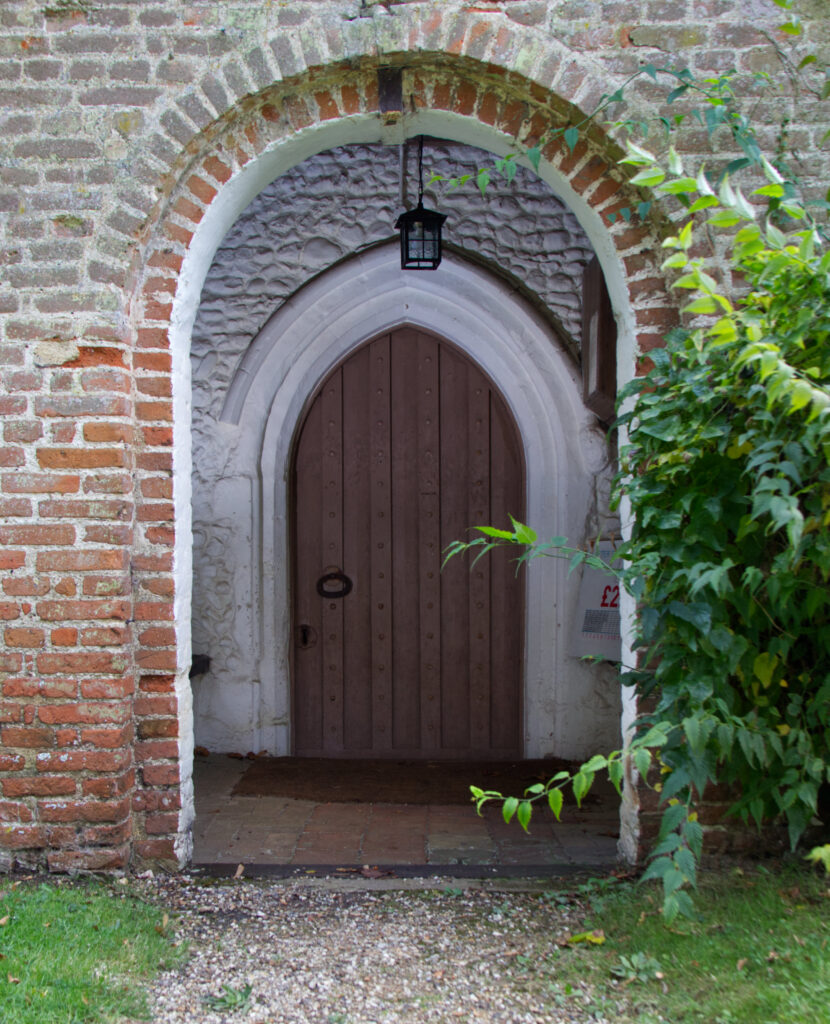
Before I left Little Thurlow I experimented with using a flash to fill shadows, like here in the porch.

This is down a lane outside the village, and from the outside looks dismal. The walls are rendered, and the render has browned and cracked. I wasn’t hopeful of a pretty church inside, but was surprised. Firstly, the entrance porch is on the opposite side to the road, and it’s a pretty red brick Tudor porch with lost of recesses like a dovecote. Then the doorway into the church is Norman, with spiralling pillars and sculptures of heads on top. Inside, the church is plain, pretty and very quiet. At the back there is a fireplace where the bread for Communion used to be baked, which now has moss in it and a crack that accommodates a small frog.

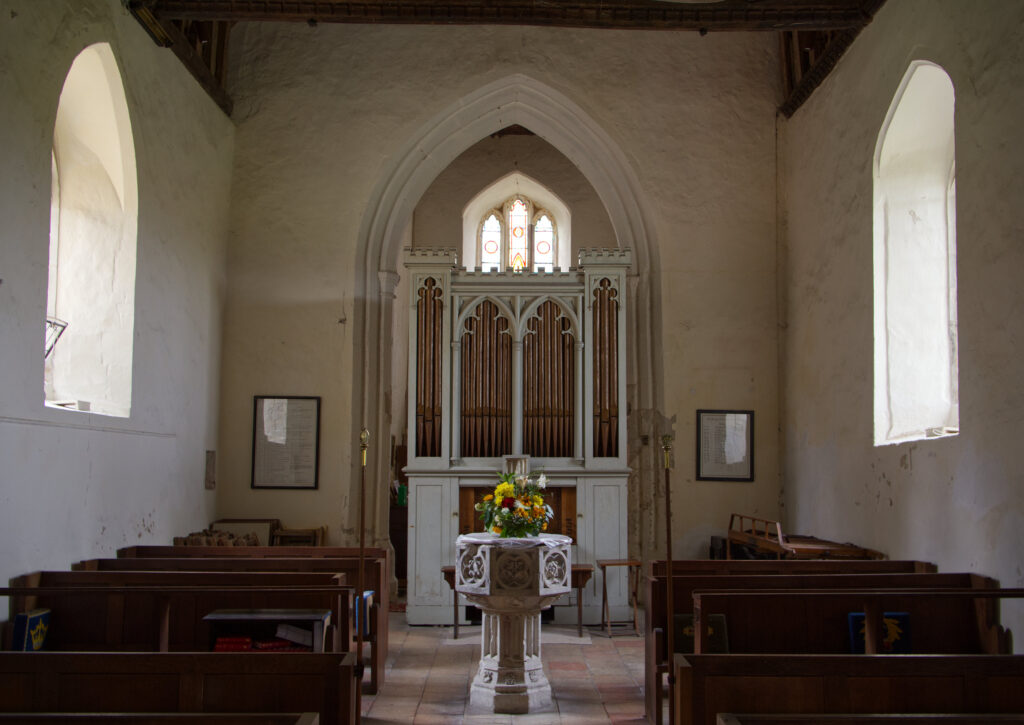
A font and small organ in a church
I didn’t take my tripod into the church and took this handheld at a tenth of a second. The IS (Image Stabilisation) did a good job of controlling the blur.

Then I carried on down the lane to St Margaret of Antioch church, which I must say is remote. It’s such an obscure, single-track road. If you’d been brought up in London, you’d never think such places existed. The church was locked, so I’ll try another day.

In the evening, I did an experiment to see which produced most noise in an image: a long shutter speed or a high ISO. I tried with both my Canon 6D and 550D. In both cases, it’s the ISO. If I keep the ISO at 200 I can have a shutter speed of a few seconds and not see any noise.

Webby things and socialising

French lesson this morning and my teacher says I should write a damning review for that laptop seller. I still feel uneasy about it, but I guess she’s right.

Then to Hinxton to meet up with VWD, but unfortunately we only had 45 minutes because someone had put a meeting in her calendar for 1pm and we met at 12:15. Things seemed to be going well, and we’ll meet another time.

Then at 2pm it was a long meeting with HP, when we discussed how she might make the website for her travel agency. I think we concluded that Grav plus shared hosting was the best option. I set up Grav on a live server for her to play around with, and decide if she likes. It took a while for me to configure the admin plugin so the text wasn’t grey against a grey background! It’s amazing that so many developers seem oblivious to accessibility. I might create an issue about it in the Grav GitHub repo.

The timetable is not going so well: I didn’t do any art on Tuesday (laptop problems), and I didn’t do writing today (socialising and websites). Still, I like the idea of having a guide of what to focus on each day, even if I need to go off-piste.

Incessant and heavy rain this evening. When I picked the children up, the road was a continuous flood between Balsham and Horseheath. I had my windscreen wipers on their fastest setting and was driving at 30mph.

A mixed day at the press

It was cardboard cut printing today, and the teacher thought this washing line image would work.

A rotary washing line with white raindrops along the lines and a black background

I wasn’t sure which contrast polarity to choose, whether to make the line and drops dark and the background light, or the other way round. The trouble is, if I made the background dark, then I would have to carve away the cardboard of the background areas, and leave lots of tiny islands of cardboard for the droplets. I didn’t think this was practical, so I chose to carve away the washing line and punch holes for the droplets.

It didn’t work. I was hoping to get an interesting abstract image but instead I got something that was neither a washing line nor a striking abstract. There just wasn’t enough contrast. In hindsight, I should have carved out the background, as in the original plan, but not worried about leaving tiny islands for rain drops. Instead, I should have punched tiny circles out of some scrap cardboard and glued them on the background once it was carved out.

Abstract of textures and shapes
The test print, to try out different techniques, was about the best of the day.
The first print. I realised this wasn’t going to plan :o(
Adding colour didn’t help.
The nearest I got to what I was imagining at the beginning. I just got the contrast polarity wrong.

I didn’t produce an image I liked, but I did have an interesting journey, for two reasons. Firstly, I learned what works in this kind of printing, and learned more than if I’d created a successful print. I made a mistake because I hadn’t been able to visualise the final print from the plate, and therefore hadn’t cut the plate the most effective way.

Secondly, I liked the way I chose an open-ended image. The others had produced lovely images of vegetables and flowers, but I’d call those convergent subjects. It’s like you’re at the base of the triangle aiming for the apex – the image of that mushroom or pumpkin. Along the way you could try different techniques but ultimately you’re aiming for a figurative picture of something.

In a divergent subject you start at the apex and broaden out. You take a single image and start improvising based on it, with no desire to represent anything, but just to produce something striking and haunting. I didn’t get there today, but I felt that with another hour I could have.

Back at home, I found the Linux install was too buggy to sustain, so I reset the whole laptop back to Windows. I decided to not buy a new laptop, and to stop playing around with Linux. I’ve uninstalled the crapware from Windows and I’ll use that.

This all got me thinking about technology. I’d spent the day using presses that never had any bugs or updates, didn’t have any crapware or popups, didn’t have any subscription models or lock-ins, and had worked beautifully for 150 years. Is our technology so advanced? Or rather, are our expectations for our products and lifestyle so much better? It’s much less stressful and time-consuming to use technology that leaves you alone, that lasts a lifetime, and that just works.

I’m thinking of finding a way of making websites that’s as simple as possible, with as few dependences as possible, and that will need no maintenance or any technical skills to edit.

Laptop misery

My new laptop arrived this morning, the laptop that was to solve my problems, and make sure I never went into the rabbit hole of Linux again. But no. The case had scratches and half torn-off stickers on it, plus some sticky goo on the bottom. It didn’t look good, and it got worse when I turned it on and found the screen was damaged. It had a ragged patch of dead pixels. The condition was described as “very good” and “professionally refurbished”, but clearly they’d got it from an office clearance and thrown it in a box without a glance.

I took photos of it and sent them to the seller. They asked me if I’d like a replacement. I tried the laptop first, and realised I didn’t like the screen anyway. It had this privacy feature which meant that someone looking from the side couldn’t see what you were typing. The trouble is, unless you looked absolutely straight on, neither could you. Just leaning back or tilting your head made the screen darken. So that settled it: the quality control and silly screen meant no replacement.

So I asked for a refund, and they sent me a returns slip, which said “Reason for return: damaged in transit.” That was devious. They were trying to fudge the Ebay records, and make it appear the fault wasn’t theirs. I don’t like writing negative reviews, and I’ve never written one before, but this time I probably should.

So I went back on Ebay and online reviews to see what other laptop would be suitable. I can’t justify the cost of a new one, especially as I haven’t got my end of contract payment yet. Apparently the Lenovo ThinkPad T480 is good. It’s a few years old, but better than the newer ones, which have gone down in quality. I was on the verge of buying one and then – I’m sorry to confess – I tried Linux again on my newest laptop. So that was the day gone.

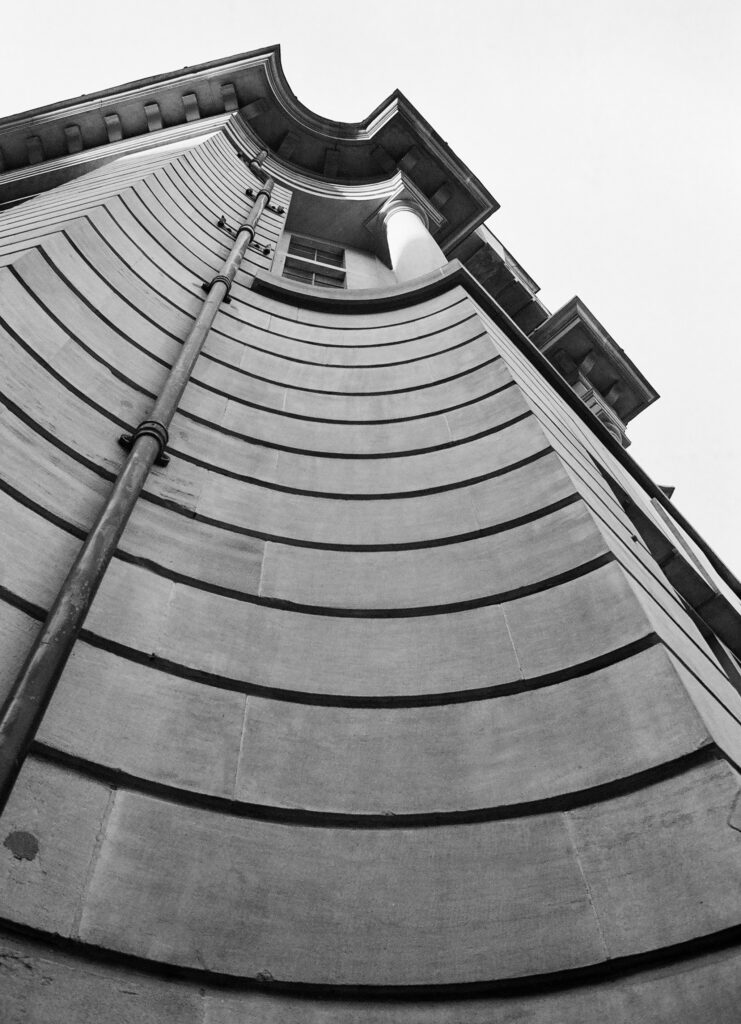
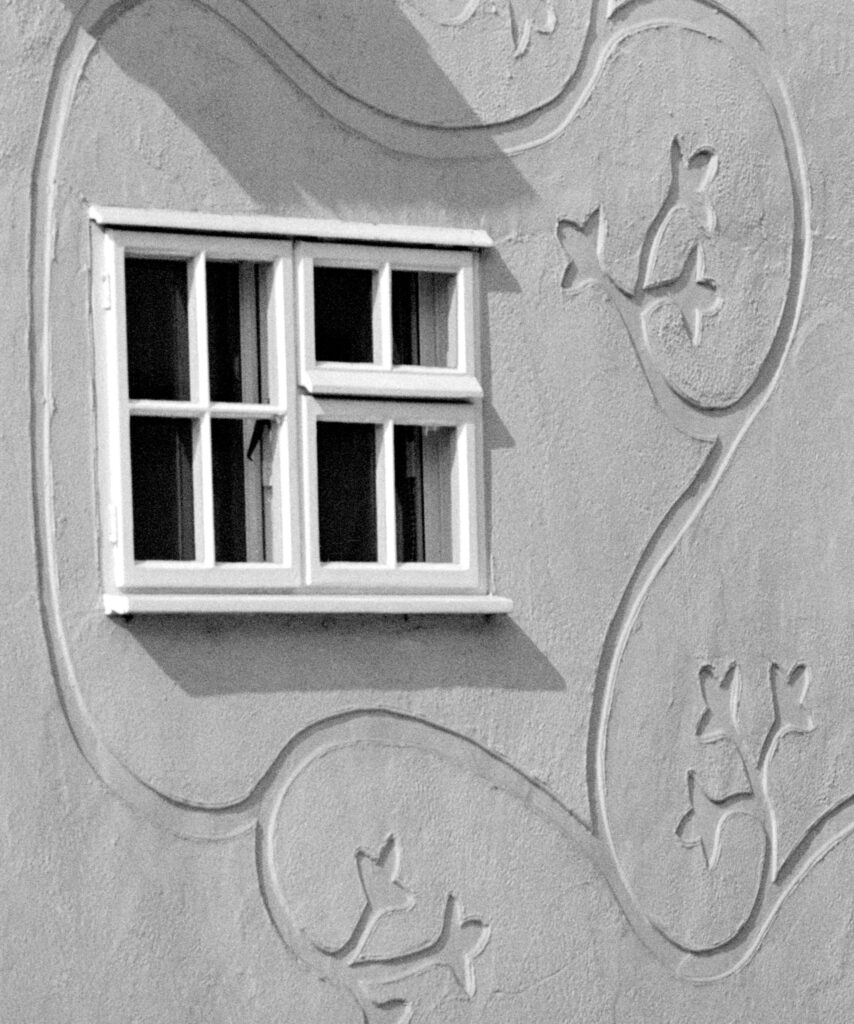
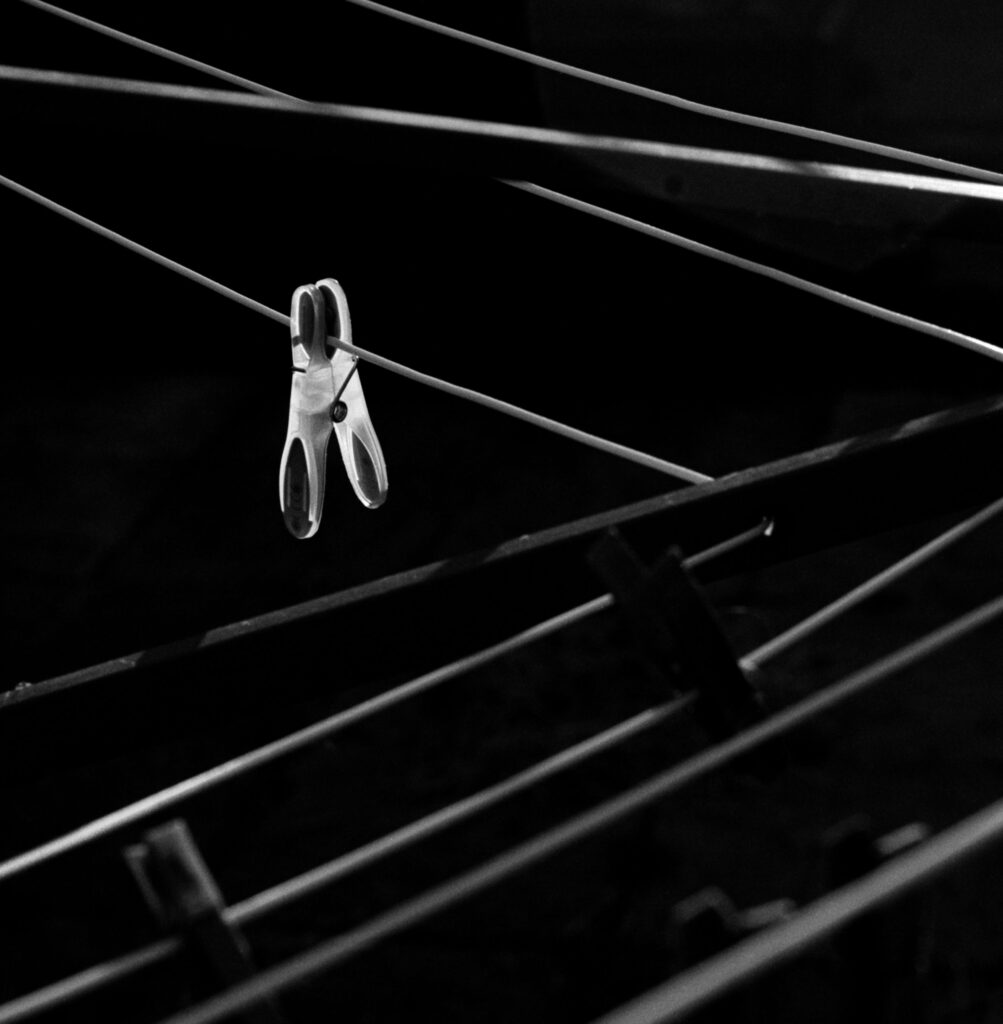
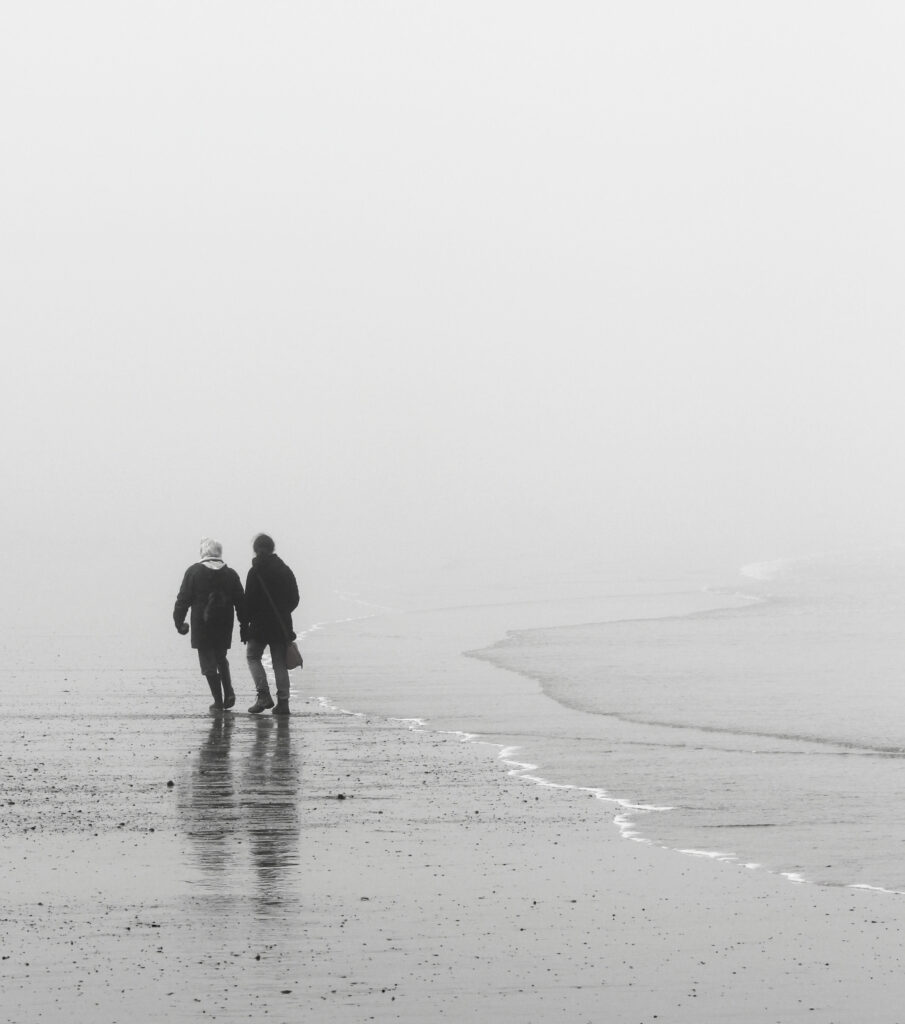
It’s printmaking tomorrow and I chose some photos I might use. Here are a few, mostly taken with black and white film.

A building with lines across the walls.
A window with swirling lines called pargeting around it.
A high contrast picture of a clothes peg with the washing line criss-crossing the image
Two people at the edge of the sea in the mist

First webby day

No pictures today, because in my new timetable Monday is a web day. I did an audit of what technology I’m using for each site and realised I have made the same site several times with different technologies. With my CV in mind, I thought I’d upload the code to GitHub and deploy all the test sites on GitHub pages.

The first site was Uncle Cliff’s Attic, which I plan to make with Drupal, but at the moment is just static HTML pages. I plan to use Drupal to keep my hand in with it – the experience will be useful on my CV. But I also have a Next.js version of the site, which I tried to publish on GitHub pages. Wow, did that turn out to be a wretched experience!

I followed tutorial after tutorial and none of it worked. I was thinking it was my workflow file that was the problem, but after several hours of trial and error, I discovered that the build process wasn’t working properly. Even my local copy wasn’t exporting a static site. At this point I gave up and deleted the repo.

The next site to try was Why Pictures Work, which I’d also made a Next.js version of. It was in a more recent version of Next.js, with the app directory. That didn’t make a difference, unfortunately, because it wouldn’t deploy to GitHub pages or to Vercel. Both sites looked fine locally. Making a website really shouldn’t be this complicated.

I looked at my simple static page version of the sites and laughed. The web is capitalism on steroids. It continually disrupts itself, and so does web technology. Luckily, the basic technology like HTML, CSS and Javascript is not driven by commercial interests, but many of the layers on top of that are, like Next.js and Gatsby. Each of these upper layers needs to keep changing to show how cutting edge they are, and what cool new features they have, and they need to ridicule older technologies to convince web developers that they are not doing “modern” or “best practice” development unless they use these products.

But it’s a mind game, a peer pressure strategy that appeals to those who want to see themselves as state-of-the-art and among the progressive elite. The goal is to convince people not only that these products are best practice, but also that they’re an “awesome experience” to use. That’s what’s laughable: they’re horrible to use, and blatantly driven by commercial interest. It’s only vanity that would make you use them. It’s not about building simple, sustainable sites that meet the customer needs, it’s about being cool and of course, for the technology owners, making money.

Still, it’ll be good for my CV and I might try again.

The end of the second week

It rained all day today, except about two hours in the afternoon when I did some gardening.

A few quick sketches I did when I took my daughter to the ice rink today. You have a fraction of a second to get someone. I need a lot more practice!

So how did the week go?

Things that went well

  • I kept this diary up.
  • I took more photos and learned more about using my tripod and flash.
  • I visited new places.
  • My printmaking course was a success.

Things that didn’t go so well

  • Exercise: I didn’t do any strength exercises and only went for two runs.
  • I didn’t do any more work on my websites.
  • I didn’t do much drawing.
  • I didn’t do many domestic jobs.

Oh dear. I seem to have lost balance here, in favour of photography. Maybe I should dedicate a day to each kind of activity: website creation, writing, art, photography. That’s not a bad idea. Printmaking is on Wednesday and I’ve got French on Thursday morning, so Wednesday evening has to be reserved for French, and some periods at other times as well, so I can revise vocabulary. So let’s see. It could be:

  • Monday: websites
  • Tuesday: art
  • Wednesday: printmaking and French
  • Thursday: French and writing
  • Friday: photography

Would that work? I think so. If the weather was sunny, I could always do a more outdoor activity, like art and photography, and swap the day with an indoor activity. Let’s try that.

More flamboyant tombs

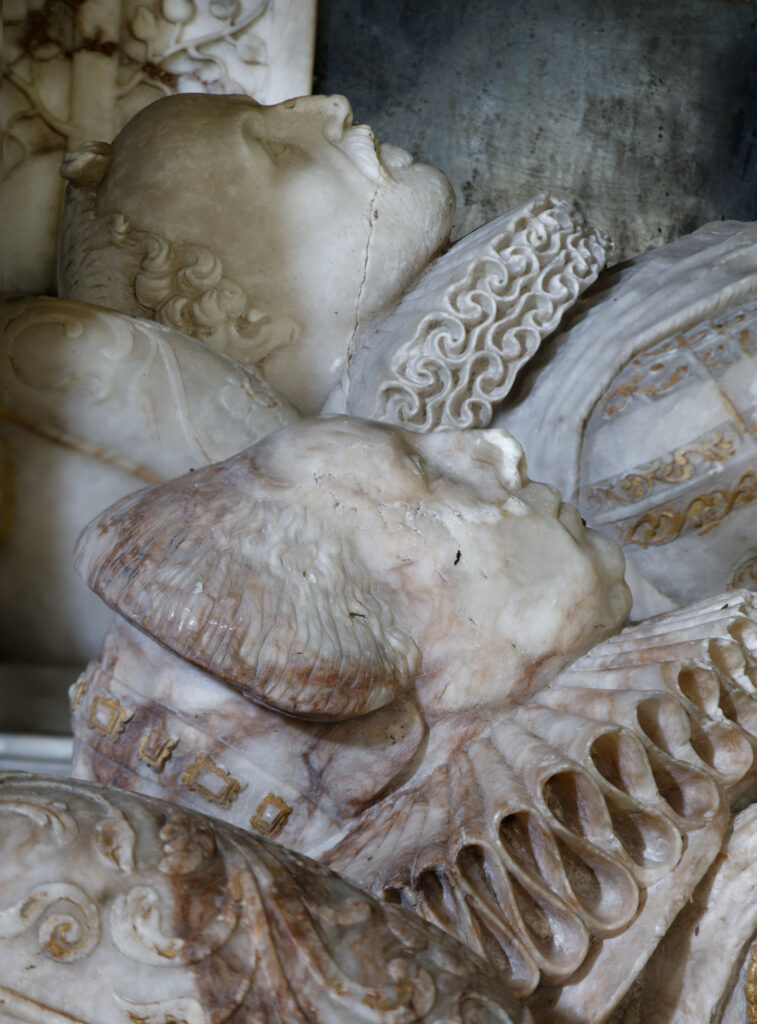
I went to Little Thurlow church to practise using my tripod. In this church is the immodest tomb of Sir Stephen Soame and his wife Dame Anne. Sir Stephen (1544-1619) was a merchant, a member of the Elizabethan Parliament, and former Mayor of London, whose charitable deeds are listed in gilt lettering on a large tablet of black marble. The monument was commissioned by his wife.

Little Thurlow church.
The monument to Sir Stephen and his wife. The daughters are kneeling at the front.
His wife appears to be as tall as he is, if not taller.
I had to focus stack this one. Unfortunately I moved the camera slightly between shots because my camera didn’t have a focus point on Sir Stephen’s head. I had to lift the camera to the nearest focus spot then return it to position, but the return position wasn’t exactly the same. If this happens again, I’ll use manual focus.
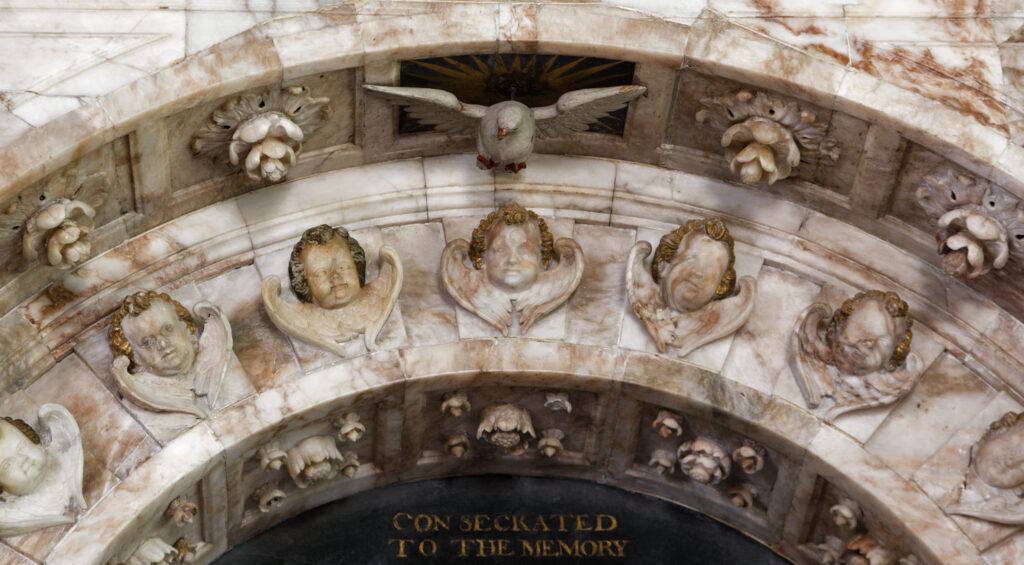
The dove of the heavenly spirit with a posse of cherubs.
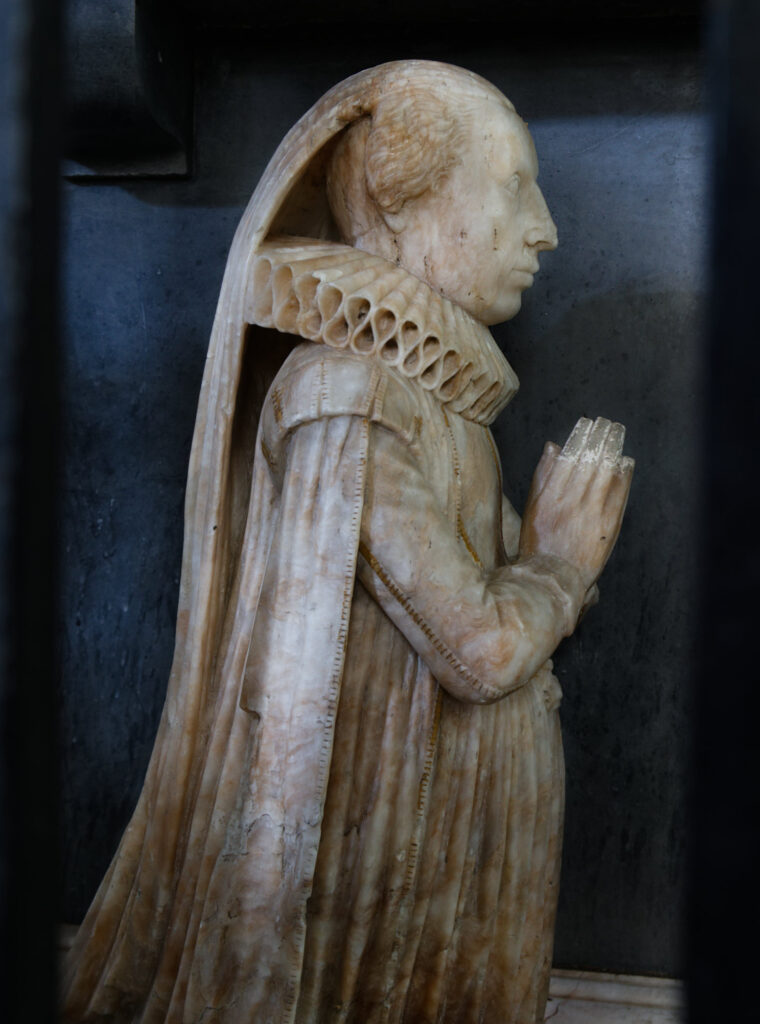
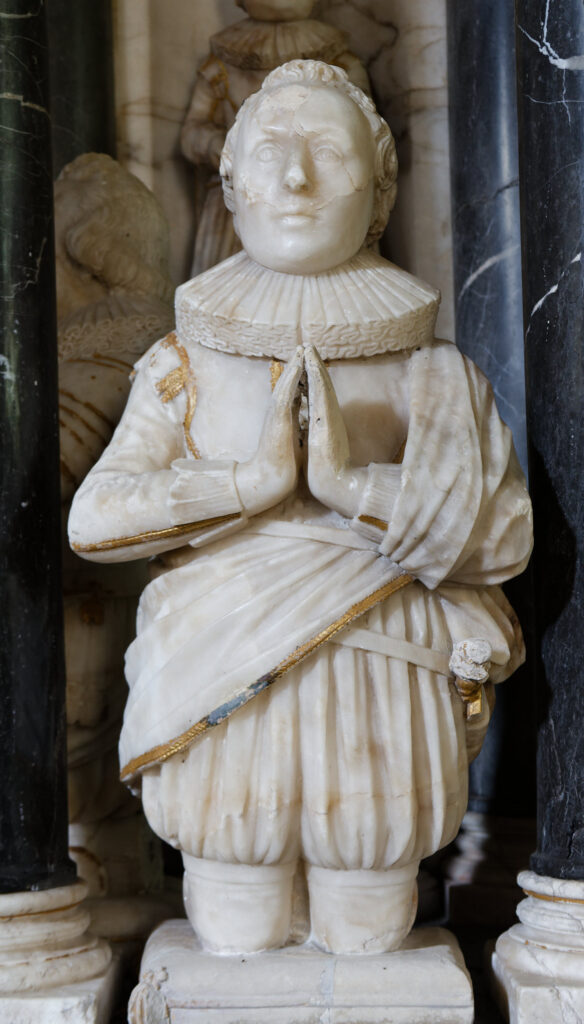
One of the daughters
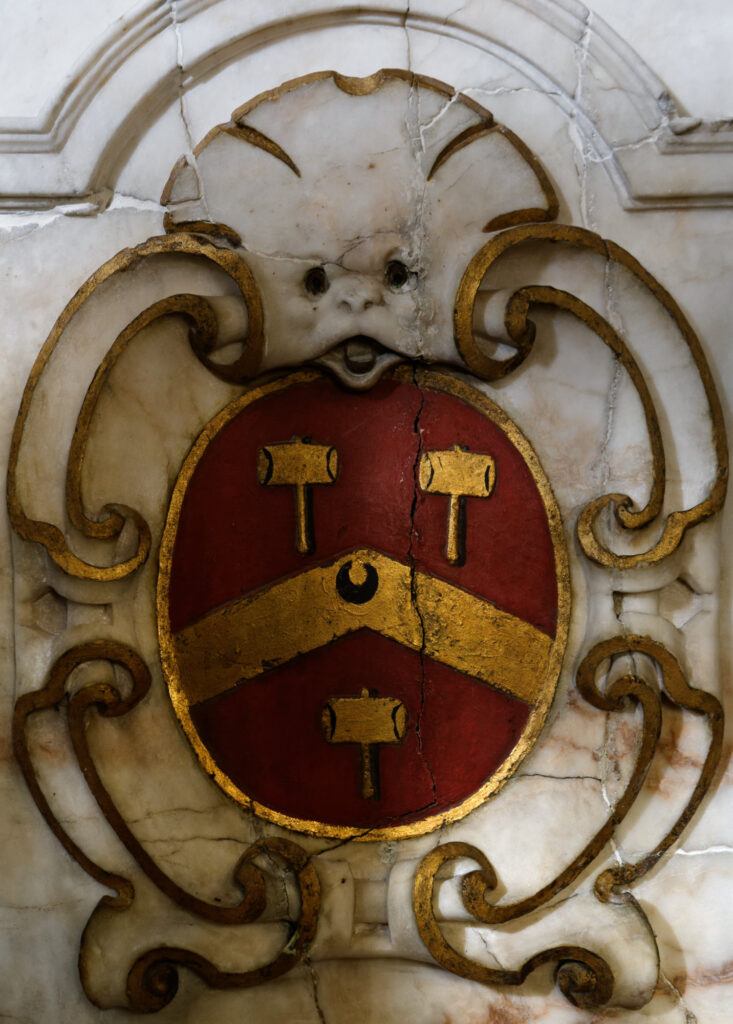
A family crest on the monument
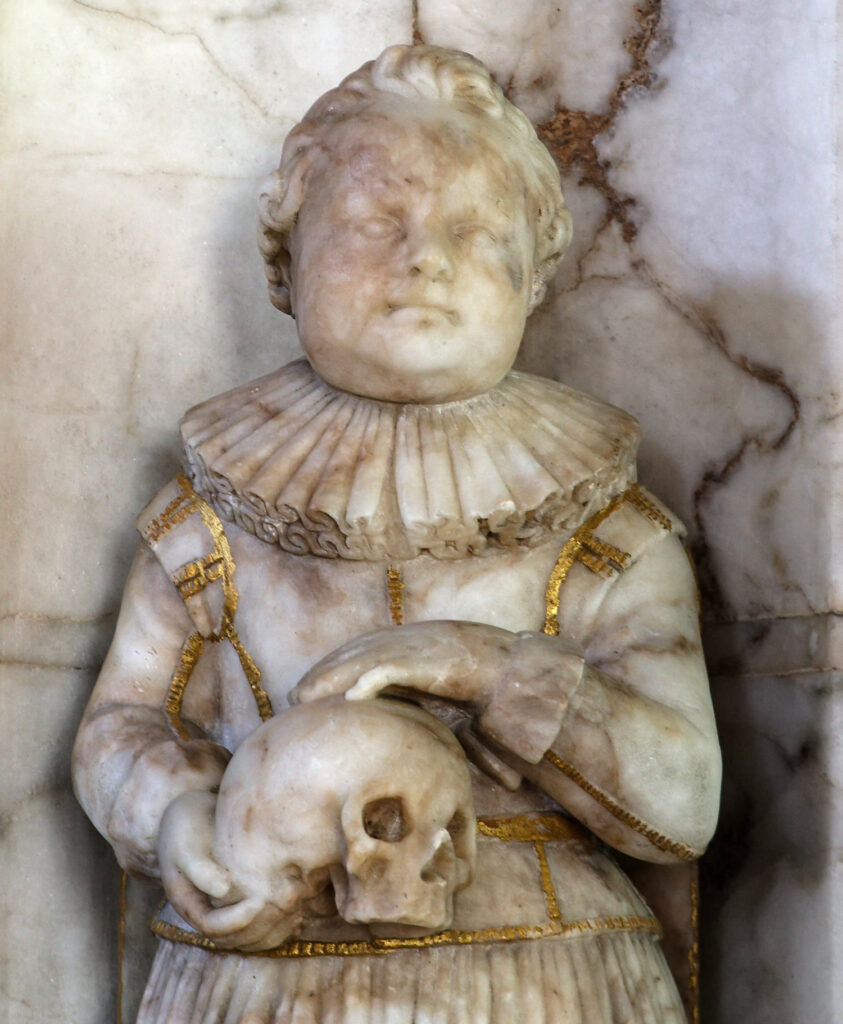
The monument is crowded with praying figures – the children of Sir Stephen.
A child holding a skull
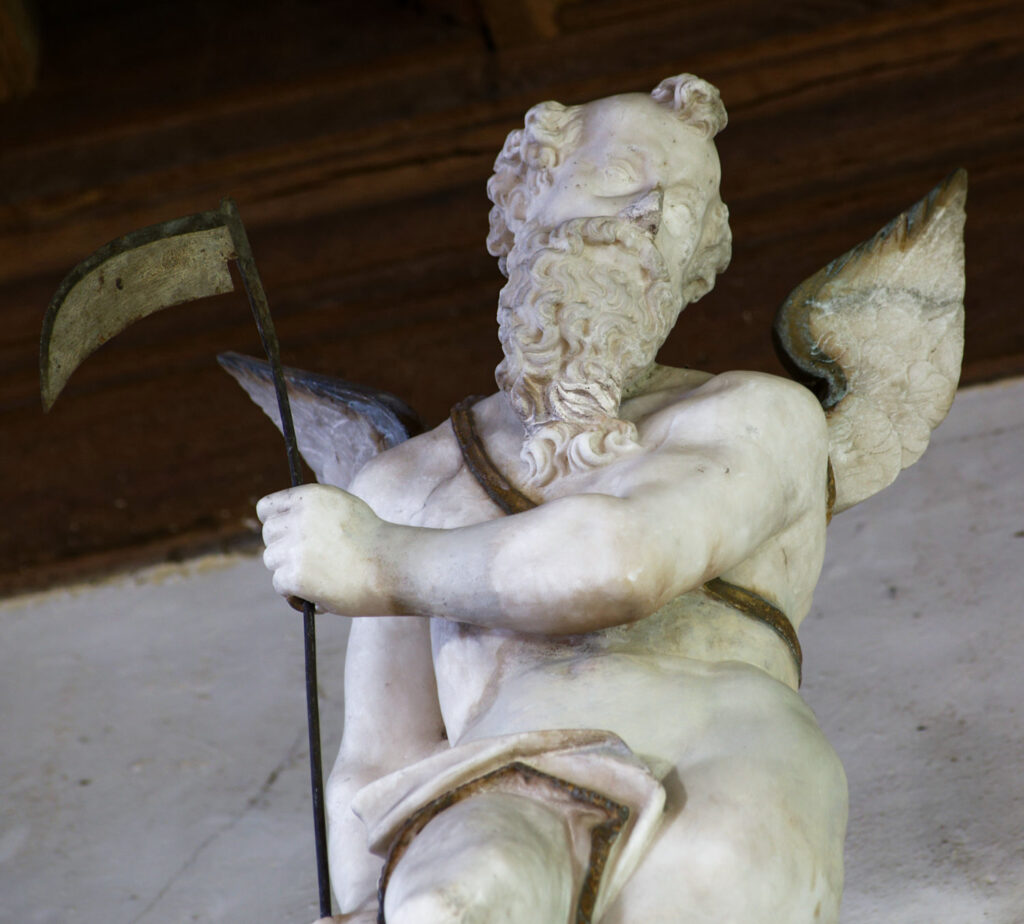
Time overlooking everything
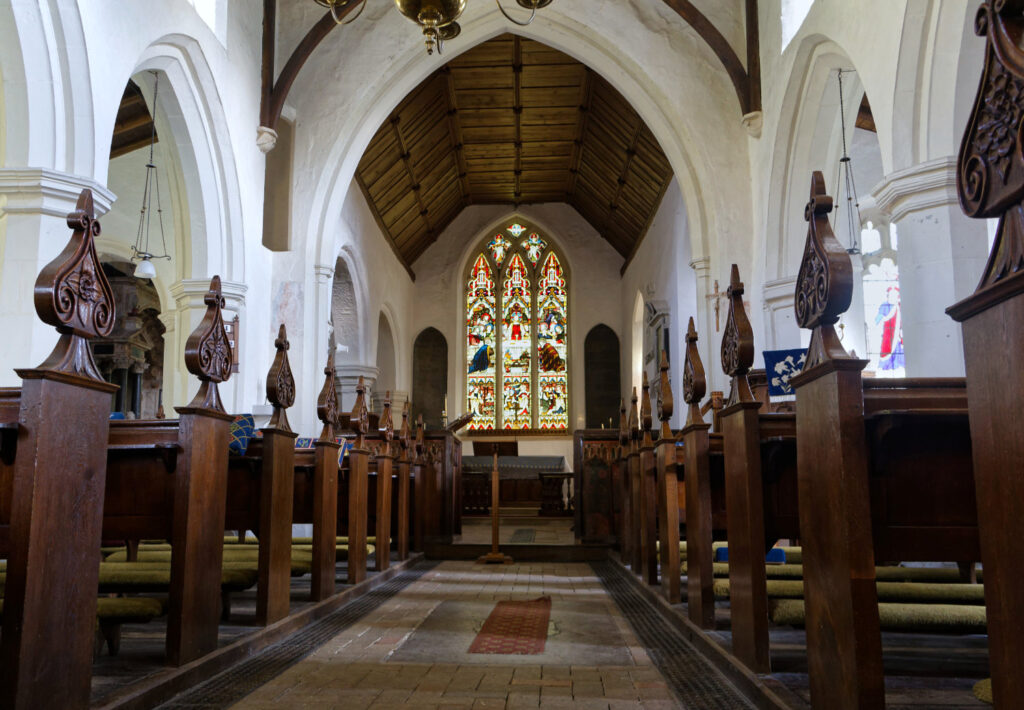
Meanwhile, the rest of the church was also quite pretty.
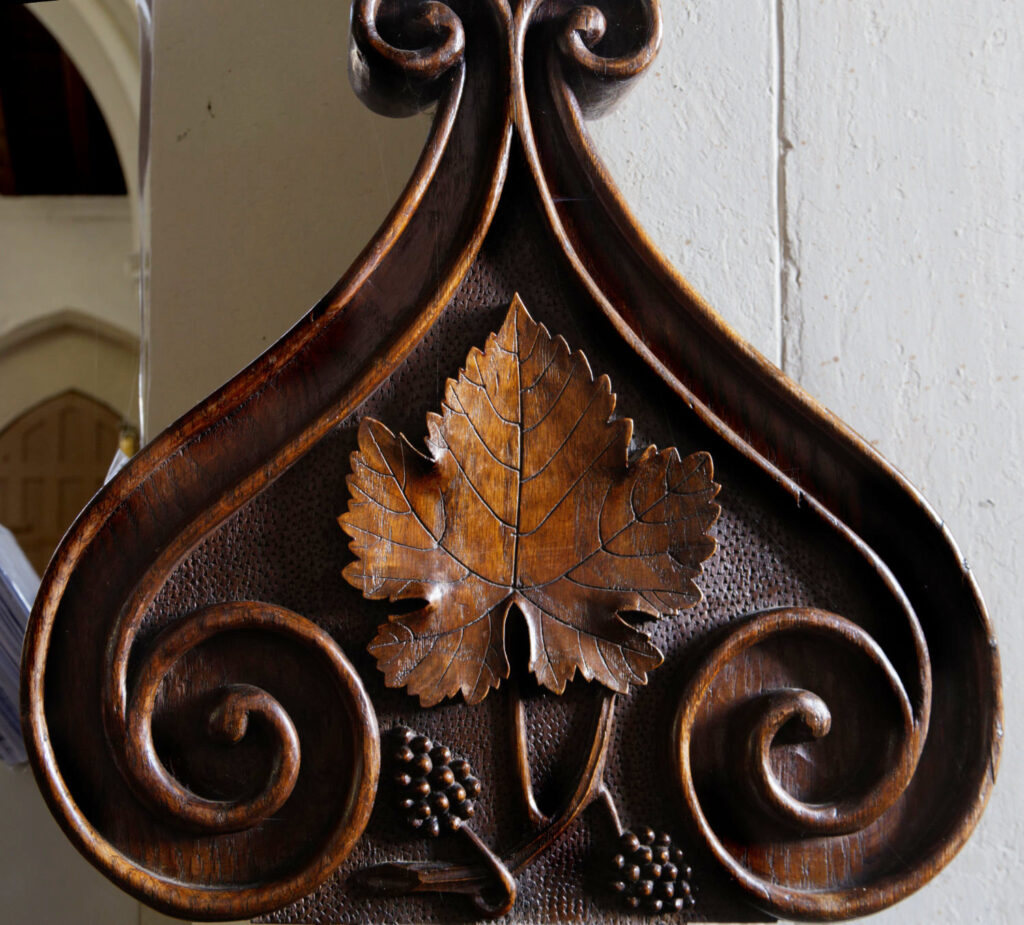
The ends of the pews had individual carvings.

I took all these at ISO 400, with shutter speeds of up to a second for the darker subjects. I wondered if the quality would be better at a higher ISO, say 800, and a faster shutter speed. They were mostly slightly underexposed, due to my fear of overexposure, but I could try exposing to the right because darkened shadows will produce less noise than brightened highlights. I didn’t think of bracketing the exposures, either, when there was high dynamic range.

Still, I was pleased with how agile I was with the tripod, and the pictures are okay.