Friday is photography day, which reminds me I didn’t mention some exciting news from this week. I sent some of my photos of Little Thurlow church to their roof repair fund people. I said if they were any use for awareness or fundraising, they were welcome to use them. I didn’t want any money or credit.
The lower roof along the side of the church is covered in plastic sheets because someone stole the lead from it. Don’t even ask me what needs to go through your mind to do a thing like that. What do these people value in life? Anyway, it’s going to cost a lot to repair (£22,000), so I donated online and sent that email to them.
I got a reply saying they thought the pictures were “superb” and that they did have some pictures, but not of that quality. This was flattering, and made me think about how I could do something useful with these pictures. I went onto the Churches Conservation Trust website, and noticed most of the pictures of the churches there were poor quality. What a wheeze that could be: going from deserted church to deserted church and taking pictures of them! I looked up some of the nearest churches, and will take photos of a couple to send to the Trust. Let’s see if they will be interested.
Meanwhile, I also remembered I had a book I bought years ago in a second-hand bookshop: “Photographing Historic Buildings”, published in 1983. I started reading that.
In the afternoon I went to St Peter’s at Little Thurlow again, so I could take some more pictures to send to them. I just felt I could improve the quality of my first set. Anyway, the church was locked, so I looked at my map and drove on to Great Bradley church.
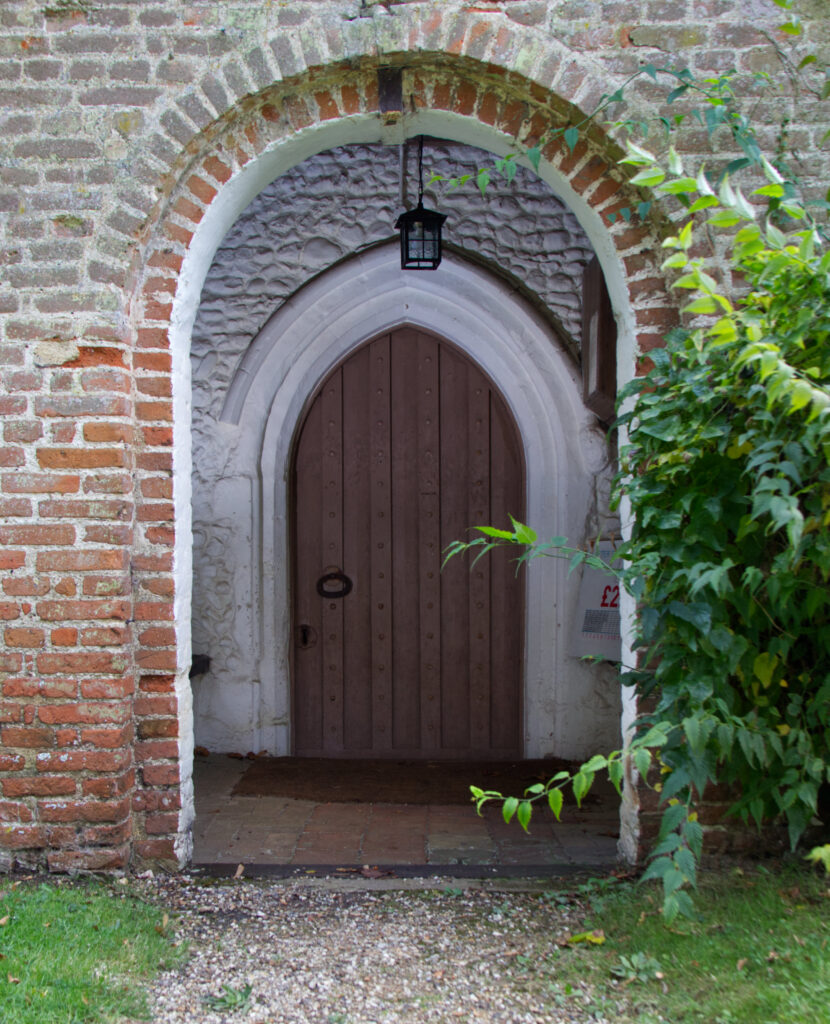
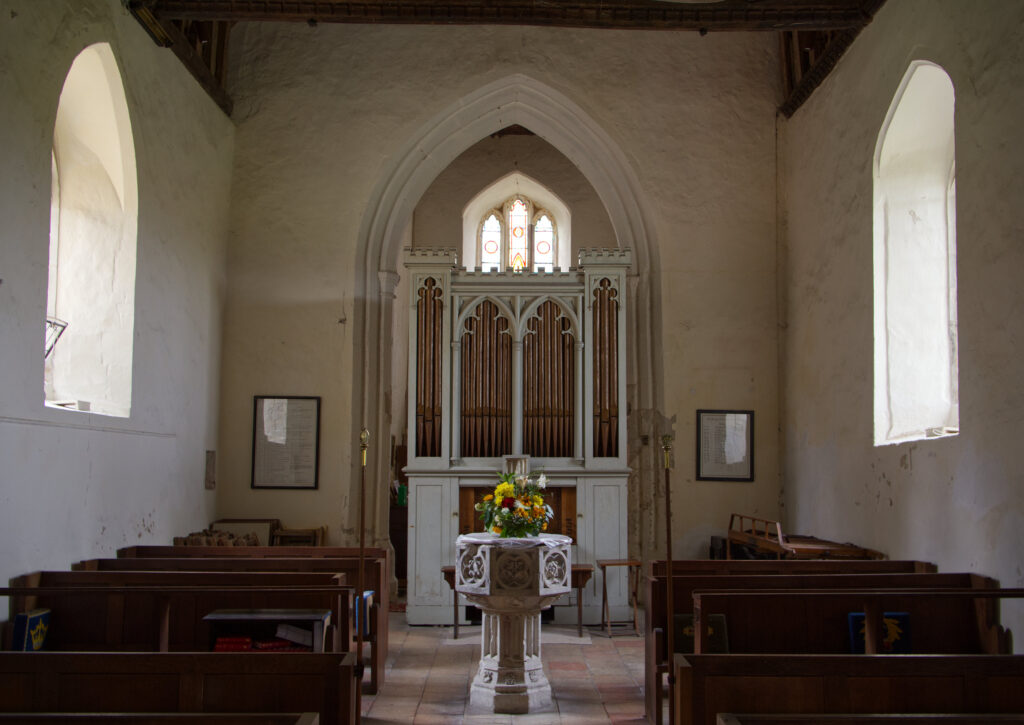
This is down a lane outside the village, and from the outside looks dismal. The walls are rendered, and the render has browned and cracked. I wasn’t hopeful of a pretty church inside, but was surprised. Firstly, the entrance porch is on the opposite side to the road, and it’s a pretty red brick Tudor porch with lost of recesses like a dovecote. Then the doorway into the church is Norman, with spiralling pillars and sculptures of heads on top. Inside, the church is plain, pretty and very quiet. At the back there is a fireplace where the bread for Communion used to be baked, which now has moss in it and a crack that accommodates a small frog.
Then I carried on down the lane to St Margaret of Antioch church, which I must say is remote. It’s such an obscure, single-track road. If you’d been brought up in London, you’d never think such places existed. The church was locked, so I’ll try another day.
In the evening, I did an experiment to see which produced most noise in an image: a long shutter speed or a high ISO. I tried with both my Canon 6D and 550D. In both cases, it’s the ISO. If I keep the ISO at 200 I can have a shutter speed of a few seconds and not see any noise.