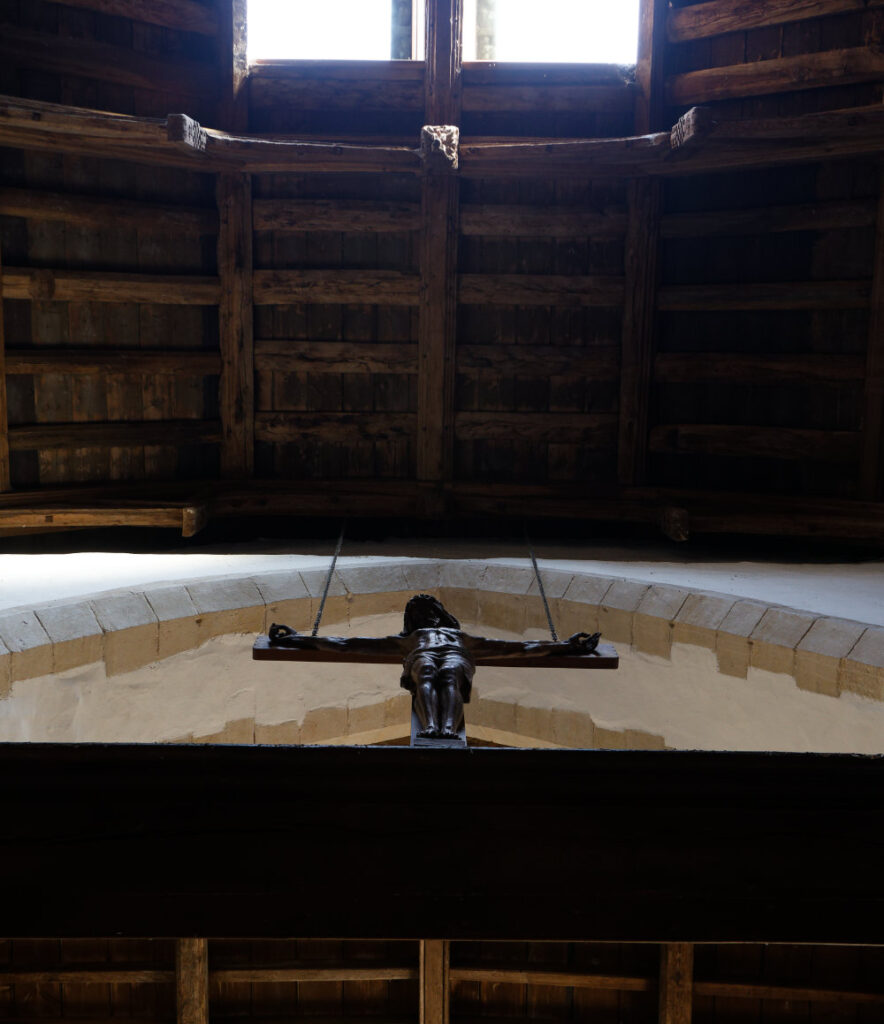
I felt I had unfinished business at Kedington church. On my last visit, I hadn’t used a flash or a tripod, and I hadn’t controlled the camera with the app. So after my French lesson I headed out, and this time I had the church to myself. Here are my findings.
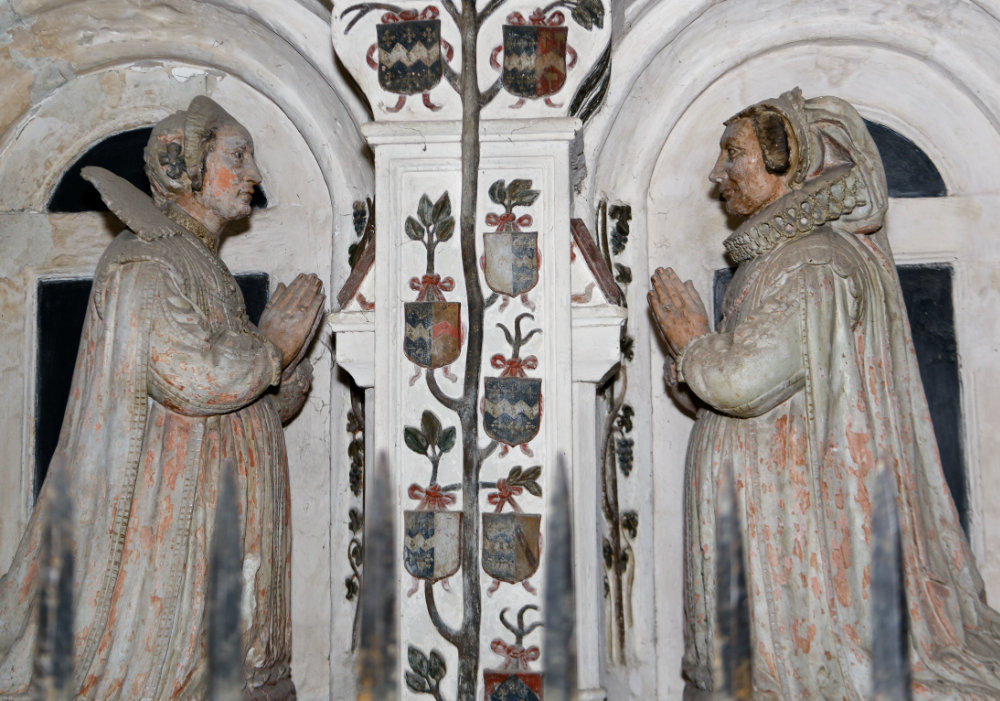
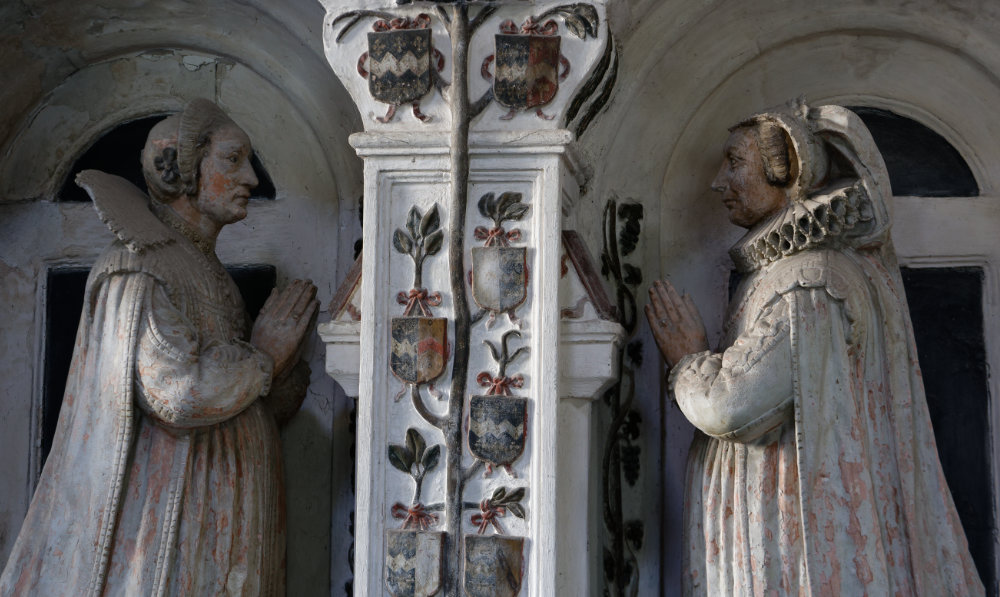
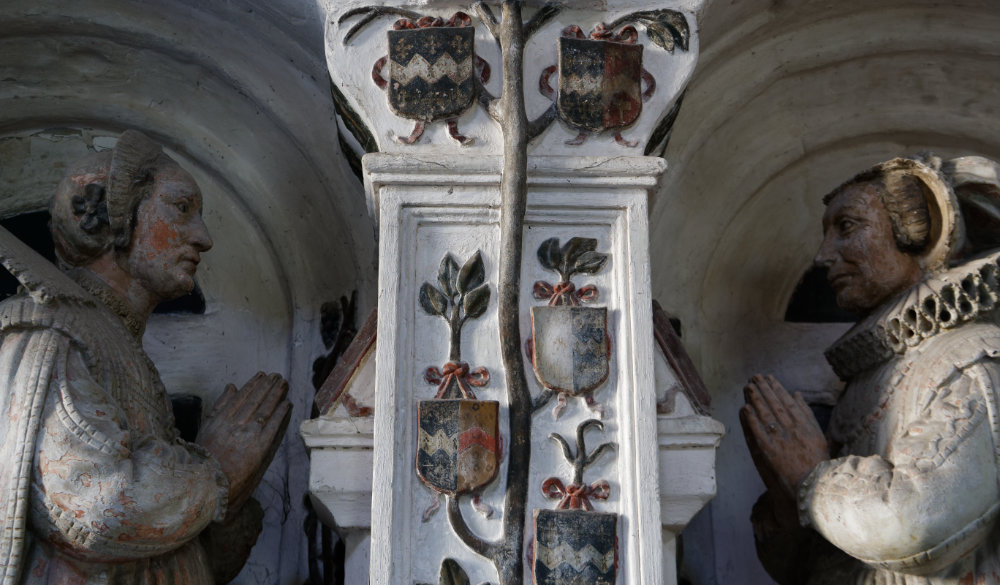
The wives of Sir Thomas Barnardiston
With an on-camera flash. I tried varying the angle of the flash head and diffusing it, but never got better than this. The rest were horrible (over-exposed foreground, dark drop-shadows, flat tones).With a tripod. This is much nicer, with tone contours and less harsh light. Unfortunately the women are in alcoves, and so in the shadow, but the light could be improved with post-processing.With the camera sitting on the top of the railings guarding the tomb. The lens was wedged between two spikes, so pretty secure, and I controlled it from the app. This is similar to the tripod image.
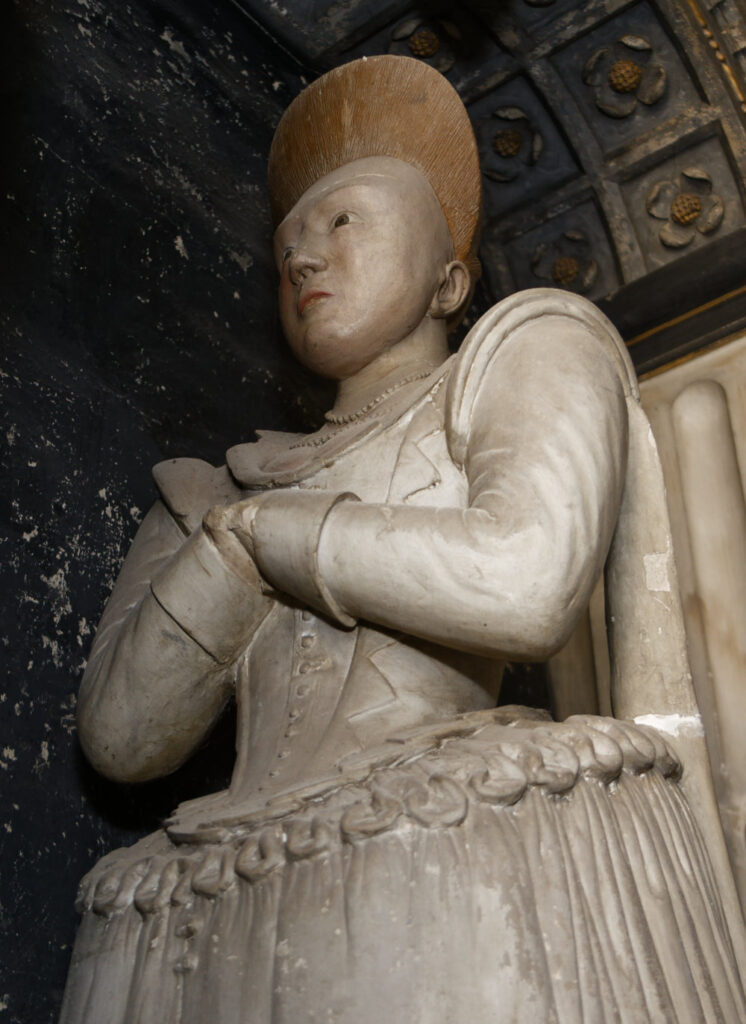
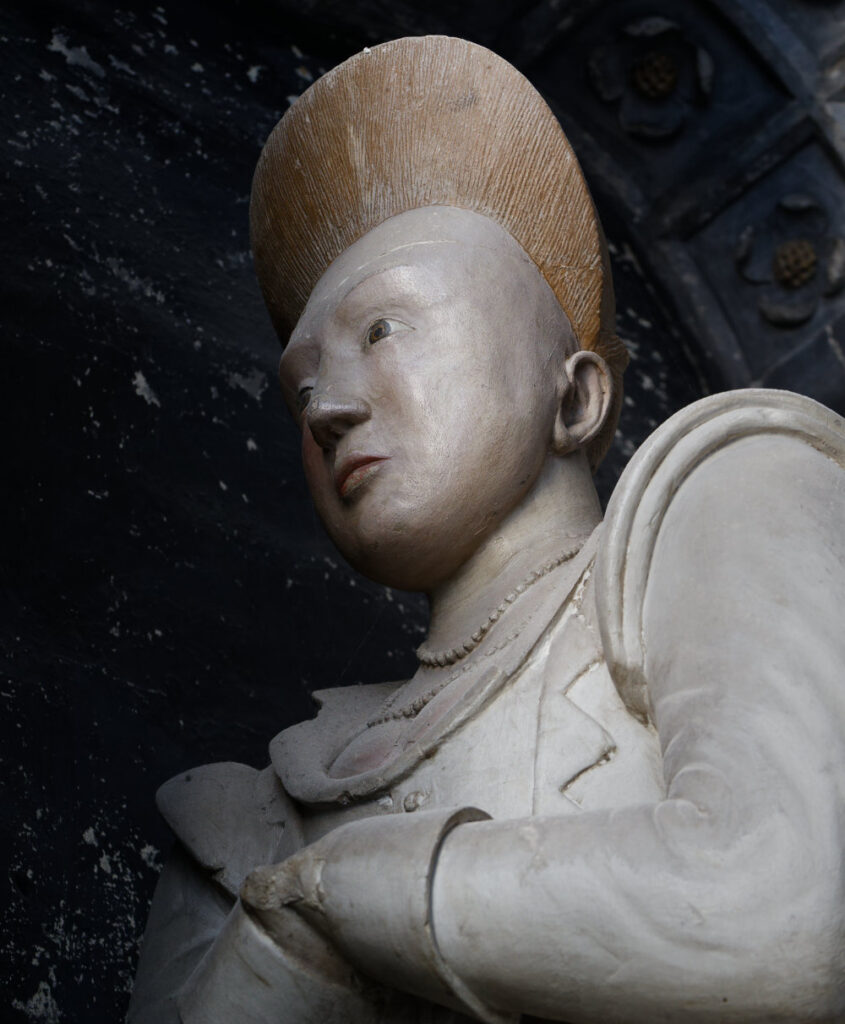
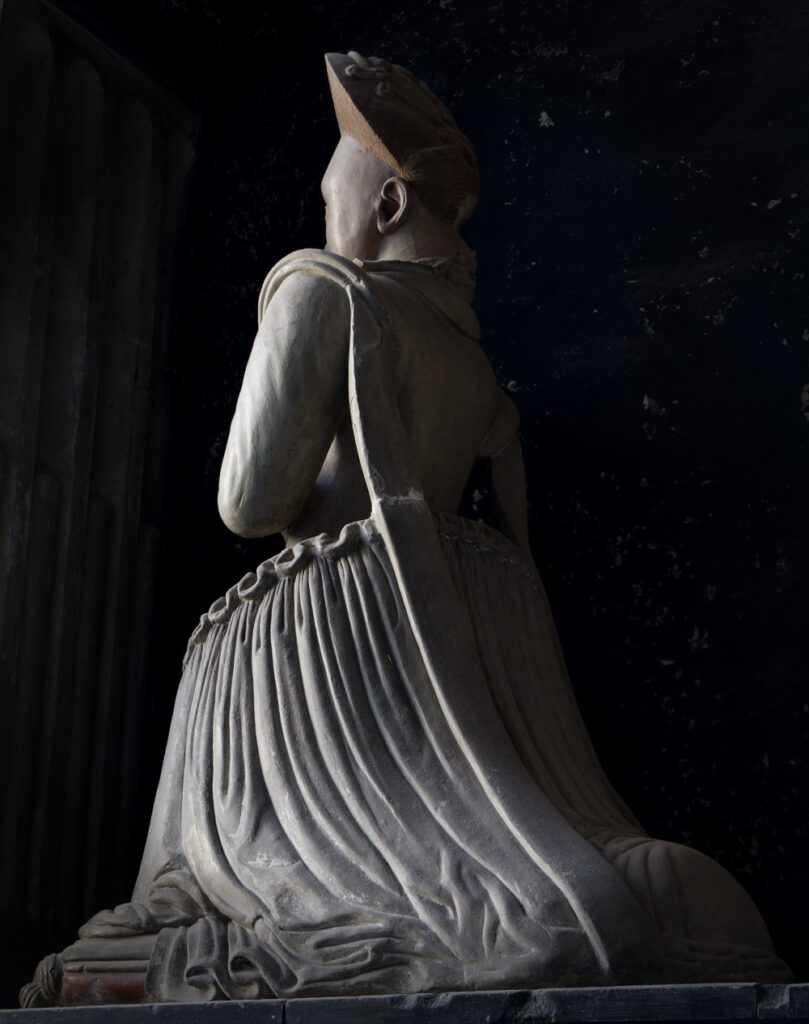
Grissel Barnardiston
With a camera-mounted flash. This was the best I could do. I had to tone down the brightness of the nearest arm in post-processing.
With a tripod. The tripod made me choose different angles than if I’d held the camera by hand. Space was tight between the tombs, so there were only so many places the tripod would fit.
With the camera resting on a shelf, propped up by the camera strap and operated remotely. Again, the need for a secure spot to put the camera made me go to different places to take a shot. Normally you (1) see something worth taking (2) move to a position to take it and (3) take the photo. When you need a secure surface (1) and (2) are reversed. You choose the position first, then look for a shot, which results in unusual angles. This is my favourite photo of the Grissel Barnardiston sculpture, even though you can’t see her face. The lines are lovely, and it’s like you’ve caught her alone praying. It would work well in black and white.
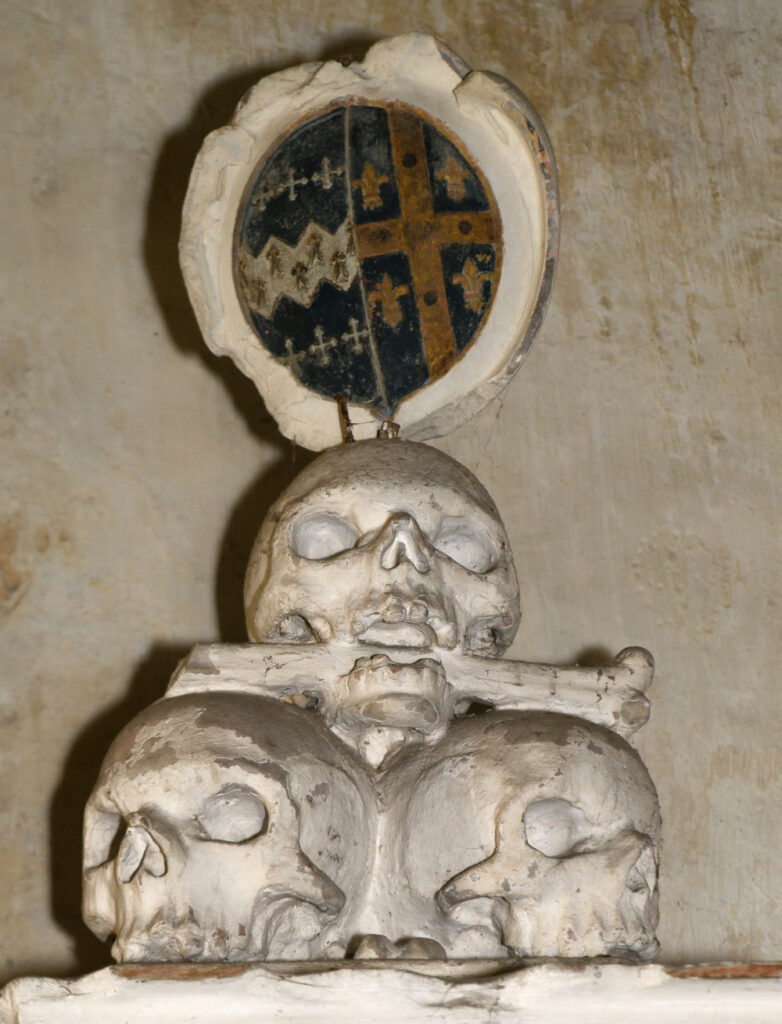
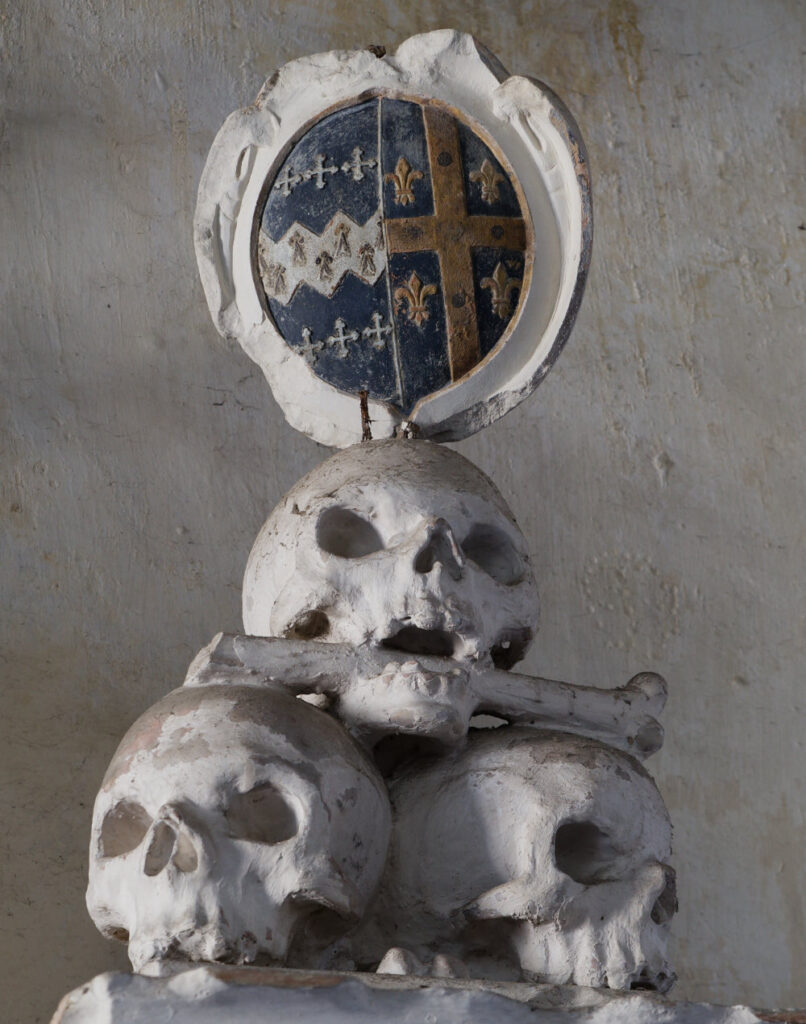
The skulls
With a flash. The colour balance is wrong with the flash photos, I notice. Presumably that was set before the flash fired. Anyway, more horrible drop-shadows.
With a tripod. Much better, even though the skulls were up on a dark wall. I couldn’t take a version with the camera resting on anything, since there was nothing at the right position.
With the camera resting with its back on the floor and controlled by the app.
Conclusions
On-camera flash is horrible. It looks better when you can bounce it off something, but the church just swallowed the light. Even with a diffuser attached to the back of the flash, I had to point it almost directly at the subject.
The tripod and app control techniques give you new angles you wouldn’t ordinarily think of. I was impressed with the creativity that the app allowed, because you could put the camera in places where you couldn’t see the back screen or look through the viewfinder.
I need to practise using the tripod more, so I can get faster with it. I struggled with it a bit today – just simple things like extending and shortening the legs – so I need to get familiar with it.
All of the above methods made better quality images (less noisy ones) than hand-holding the camera and using a high ISO, like I did last time.
It’s worth varying the techniques when you go somewhere, to force you to look in a different way.
I’ve got to watch the aperture of my leans. At its widest aperture and longest zoom, my lens gets a bit fuzzy away from the centre. I keep forgetting that.
I ran out of time to try one more method: putting the camera on a tripod and then triggering it remotely whilst holding a flash away at the side. This should give better contours to the image than the notorious on-camera flash. It’s probably not a good idea for old objects like these, though, because I remembered today that flash light can eventually fade paint, like the paint on murals and sculptures.