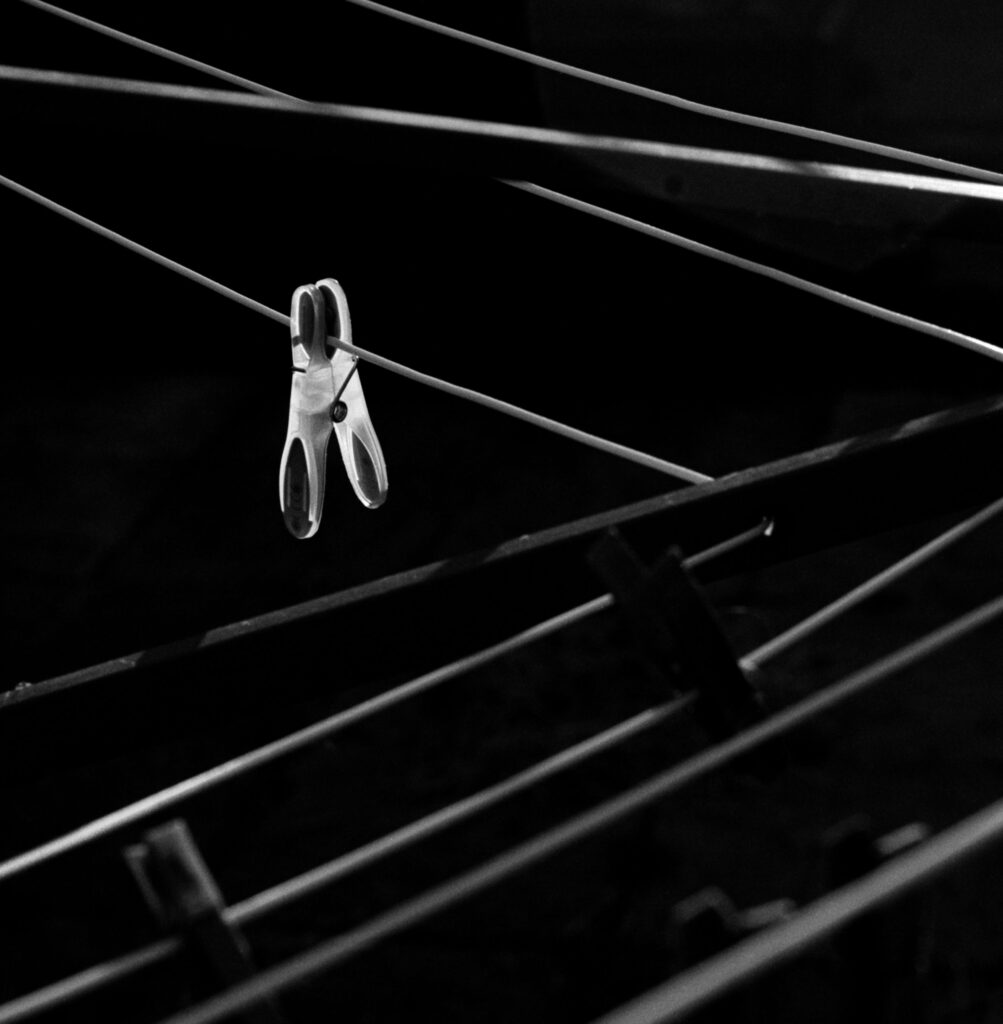
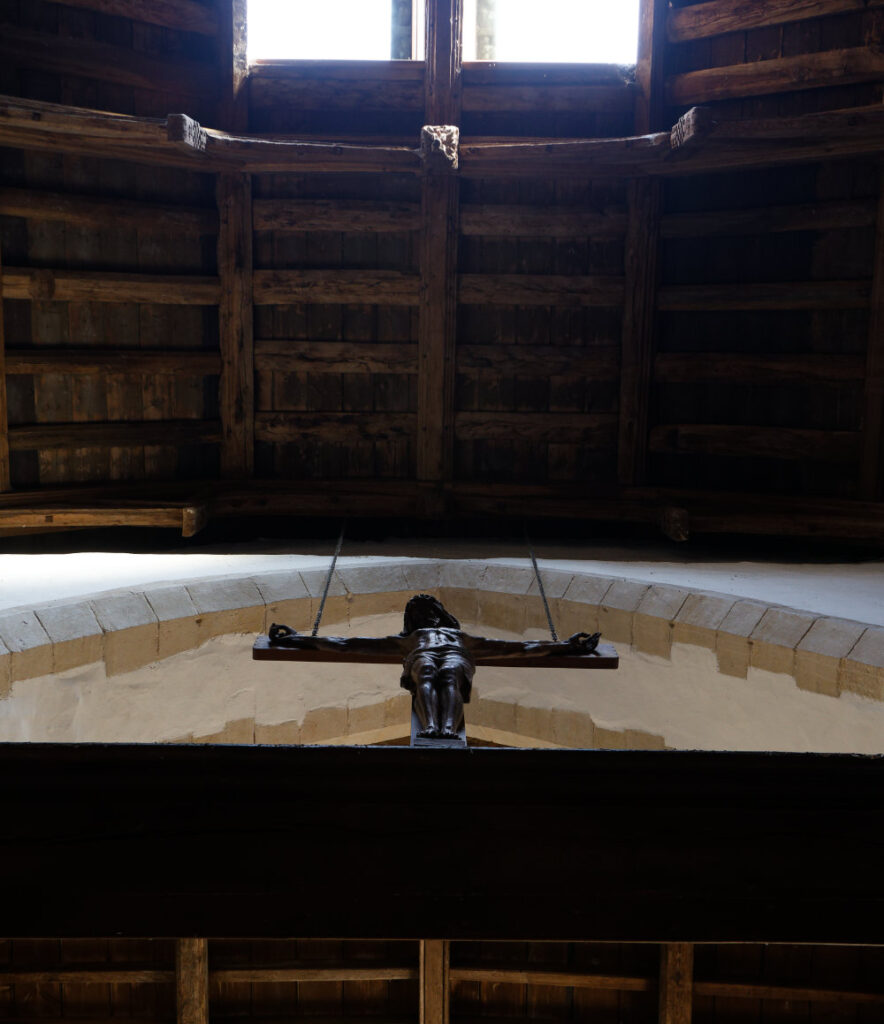
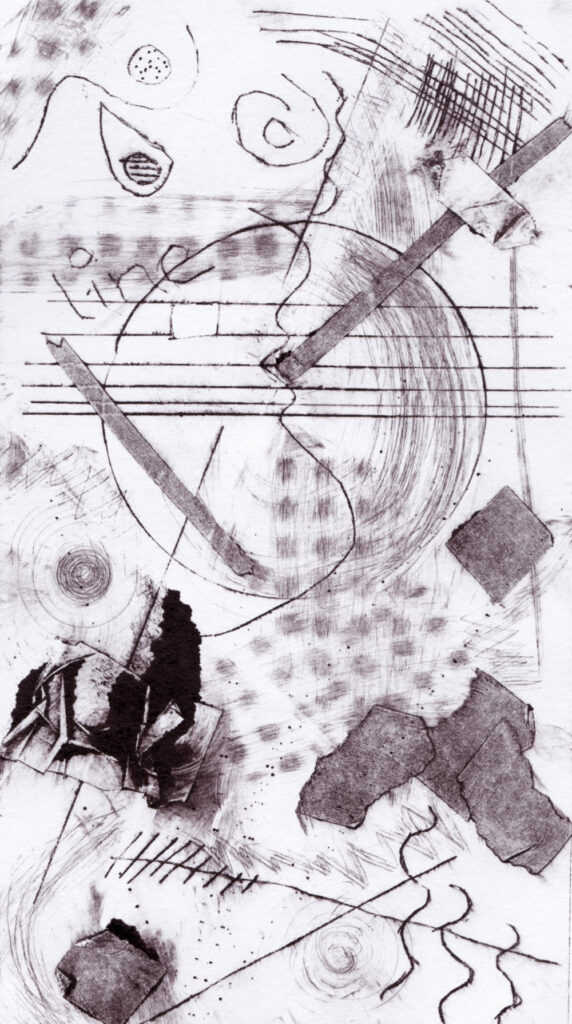
It was cardboard cut printing today, and the teacher thought this washing line image would work.
I wasn’t sure which contrast polarity to choose, whether to make the line and drops dark and the background light, or the other way round. The trouble is, if I made the background dark, then I would have to carve away the cardboard of the background areas, and leave lots of tiny islands of cardboard for the droplets. I didn’t think this was practical, so I chose to carve away the washing line and punch holes for the droplets.
It didn’t work. I was hoping to get an interesting abstract image but instead I got something that was neither a washing line nor a striking abstract. There just wasn’t enough contrast. In hindsight, I should have carved out the background, as in the original plan, but not worried about leaving tiny islands for rain drops. Instead, I should have punched tiny circles out of some scrap cardboard and glued them on the background once it was carved out.
The test print, to try out different techniques, was about the best of the day.
The first print. I realised this wasn’t going to plan :o(Adding colour didn’t help.The nearest I got to what I was imagining at the beginning. I just got the contrast polarity wrong.
I didn’t produce an image I liked, but I did have an interesting journey, for two reasons. Firstly, I learned what works in this kind of printing, and learned more than if I’d created a successful print. I made a mistake because I hadn’t been able to visualise the final print from the plate, and therefore hadn’t cut the plate the most effective way.
Secondly, I liked the way I chose an open-ended image. The others had produced lovely images of vegetables and flowers, but I’d call those convergent subjects. It’s like you’re at the base of the triangle aiming for the apex – the image of that mushroom or pumpkin. Along the way you could try different techniques but ultimately you’re aiming for a figurative picture of something.
In a divergent subject you start at the apex and broaden out. You take a single image and start improvising based on it, with no desire to represent anything, but just to produce something striking and haunting. I didn’t get there today, but I felt that with another hour I could have.
Back at home, I found the Linux install was too buggy to sustain, so I reset the whole laptop back to Windows. I decided to not buy a new laptop, and to stop playing around with Linux. I’ve uninstalled the crapware from Windows and I’ll use that.
This all got me thinking about technology. I’d spent the day using presses that never had any bugs or updates, didn’t have any crapware or popups, didn’t have any subscription models or lock-ins, and had worked beautifully for 150 years. Is our technology so advanced? Or rather, are our expectations for our products and lifestyle so much better? It’s much less stressful and time-consuming to use technology that leaves you alone, that lasts a lifetime, and that just works.
I’m thinking of finding a way of making websites that’s as simple as possible, with as few dependences as possible, and that will need no maintenance or any technical skills to edit.
My new laptop arrived this morning, the laptop that was to solve my problems, and make sure I never went into the rabbit hole of Linux again. But no. The case had scratches and half torn-off stickers on it, plus some sticky goo on the bottom. It didn’t look good, and it got worse when I turned it on and found the screen was damaged. It had a ragged patch of dead pixels. The condition was described as “very good” and “professionally refurbished”, but clearly they’d got it from an office clearance and thrown it in a box without a glance.
I took photos of it and sent them to the seller. They asked me if I’d like a replacement. I tried the laptop first, and realised I didn’t like the screen anyway. It had this privacy feature which meant that someone looking from the side couldn’t see what you were typing. The trouble is, unless you looked absolutely straight on, neither could you. Just leaning back or tilting your head made the screen darken. So that settled it: the quality control and silly screen meant no replacement.
So I asked for a refund, and they sent me a returns slip, which said “Reason for return: damaged in transit.” That was devious. They were trying to fudge the Ebay records, and make it appear the fault wasn’t theirs. I don’t like writing negative reviews, and I’ve never written one before, but this time I probably should.
So I went back on Ebay and online reviews to see what other laptop would be suitable. I can’t justify the cost of a new one, especially as I haven’t got my end of contract payment yet. Apparently the Lenovo ThinkPad T480 is good. It’s a few years old, but better than the newer ones, which have gone down in quality. I was on the verge of buying one and then – I’m sorry to confess – I tried Linux again on my newest laptop. So that was the day gone.
It’s printmaking tomorrow and I chose some photos I might use. Here are a few, mostly taken with black and white film.
No pictures today, because in my new timetable Monday is a web day. I did an audit of what technology I’m using for each site and realised I have made the same site several times with different technologies. With my CV in mind, I thought I’d upload the code to GitHub and deploy all the test sites on GitHub pages.
The first site was Uncle Cliff’s Attic, which I plan to make with Drupal, but at the moment is just static HTML pages. I plan to use Drupal to keep my hand in with it – the experience will be useful on my CV. But I also have a Next.js version of the site, which I tried to publish on GitHub pages. Wow, did that turn out to be a wretched experience!
I followed tutorial after tutorial and none of it worked. I was thinking it was my workflow file that was the problem, but after several hours of trial and error, I discovered that the build process wasn’t working properly. Even my local copy wasn’t exporting a static site. At this point I gave up and deleted the repo.
The next site to try was Why Pictures Work, which I’d also made a Next.js version of. It was in a more recent version of Next.js, with the app directory. That didn’t make a difference, unfortunately, because it wouldn’t deploy to GitHub pages or to Vercel. Both sites looked fine locally. Making a website really shouldn’t be this complicated.
I looked at my simple static page version of the sites and laughed. The web is capitalism on steroids. It continually disrupts itself, and so does web technology. Luckily, the basic technology like HTML, CSS and Javascript is not driven by commercial interests, but many of the layers on top of that are, like Next.js and Gatsby. Each of these upper layers needs to keep changing to show how cutting edge they are, and what cool new features they have, and they need to ridicule older technologies to convince web developers that they are not doing “modern” or “best practice” development unless they use these products.
But it’s a mind game, a peer pressure strategy that appeals to those who want to see themselves as state-of-the-art and among the progressive elite. The goal is to convince people not only that these products are best practice, but also that they’re an “awesome experience” to use. That’s what’s laughable: they’re horrible to use, and blatantly driven by commercial interest. It’s only vanity that would make you use them. It’s not about building simple, sustainable sites that meet the customer needs, it’s about being cool and of course, for the technology owners, making money.
Still, it’ll be good for my CV and I might try again.
It rained all day today, except about two hours in the afternoon when I did some gardening.
A few quick sketches I did when I took my daughter to the ice rink today. You have a fraction of a second to get someone. I need a lot more practice!
So how did the week go?
Things that went well
I kept this diary up.
I took more photos and learned more about using my tripod and flash.
I visited new places.
My printmaking course was a success.
Things that didn’t go so well
Exercise: I didn’t do any strength exercises and only went for two runs.
I didn’t do any more work on my websites.
I didn’t do much drawing.
I didn’t do many domestic jobs.
Oh dear. I seem to have lost balance here, in favour of photography. Maybe I should dedicate a day to each kind of activity: website creation, writing, art, photography. That’s not a bad idea. Printmaking is on Wednesday and I’ve got French on Thursday morning, so Wednesday evening has to be reserved for French, and some periods at other times as well, so I can revise vocabulary. So let’s see. It could be:
Monday: websites
Tuesday: art
Wednesday: printmaking and French
Thursday: French and writing
Friday: photography
Would that work? I think so. If the weather was sunny, I could always do a more outdoor activity, like art and photography, and swap the day with an indoor activity. Let’s try that.
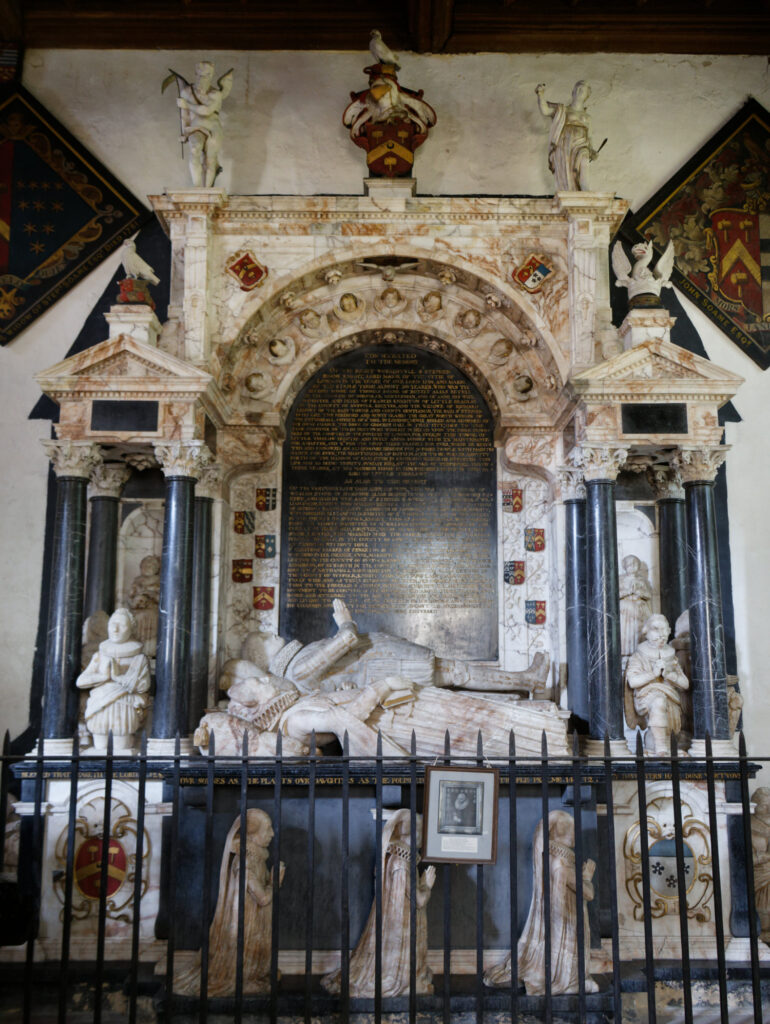
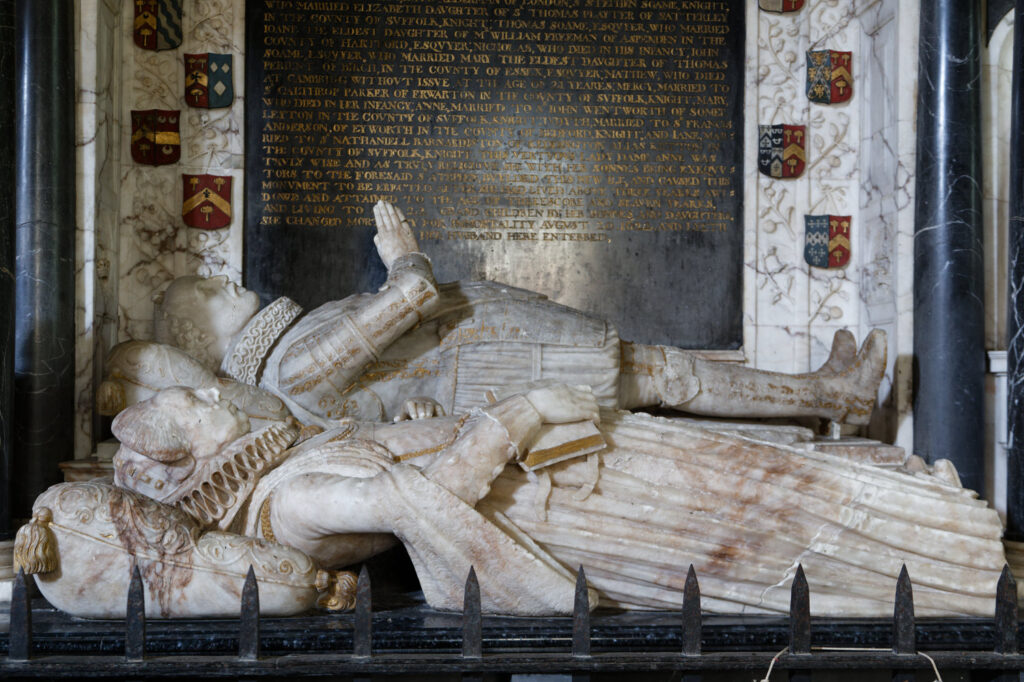
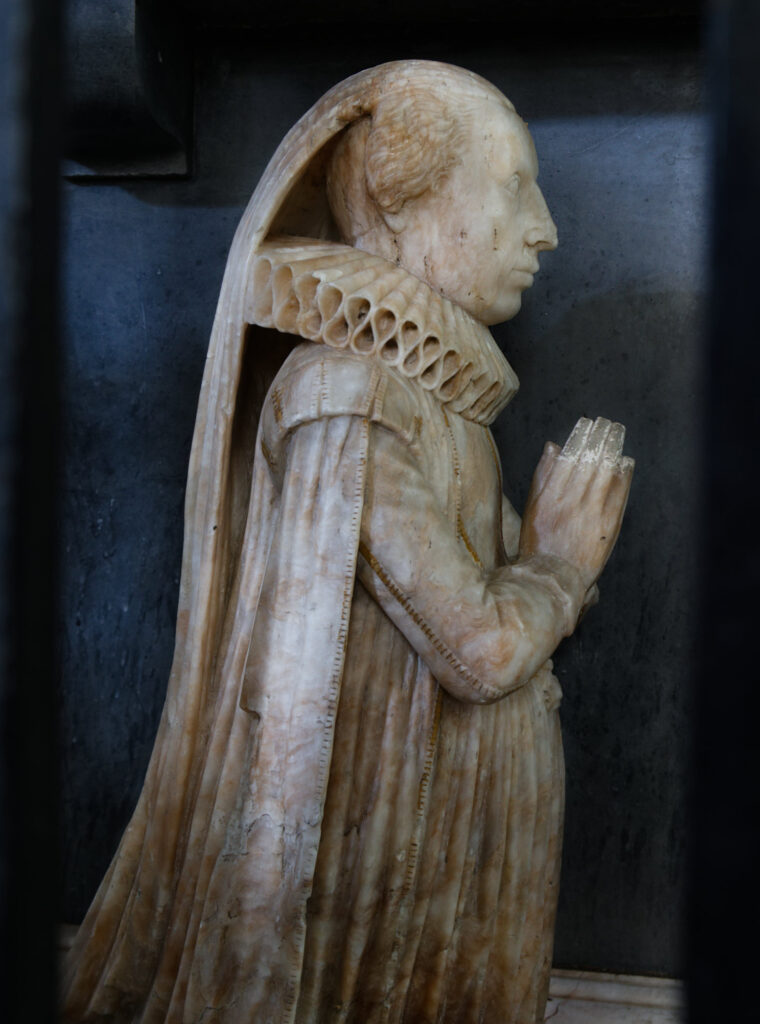
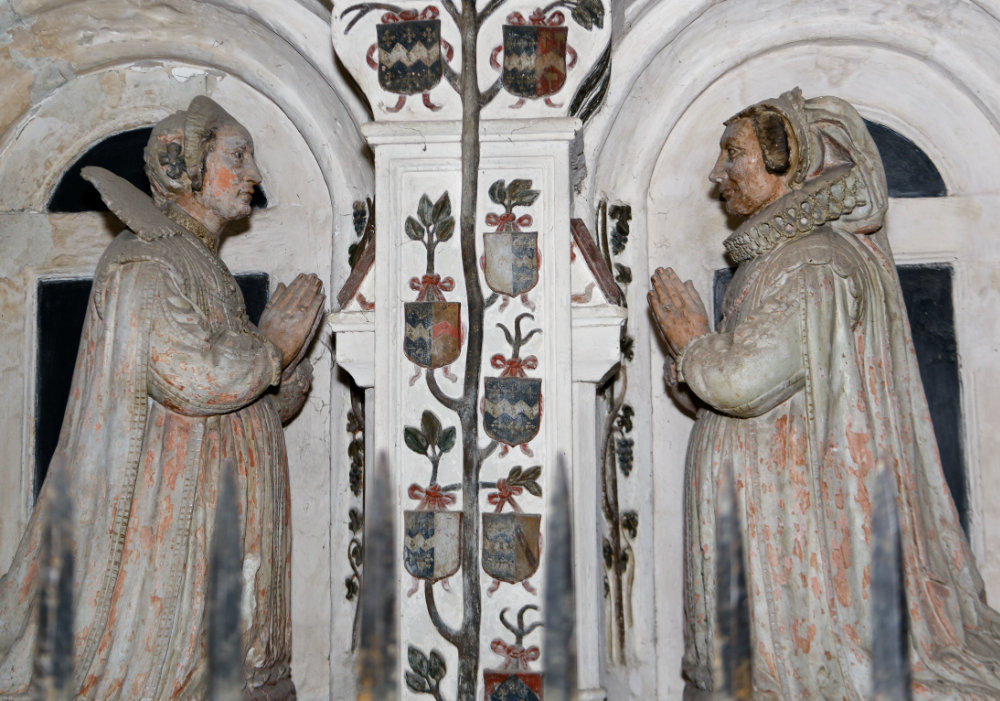
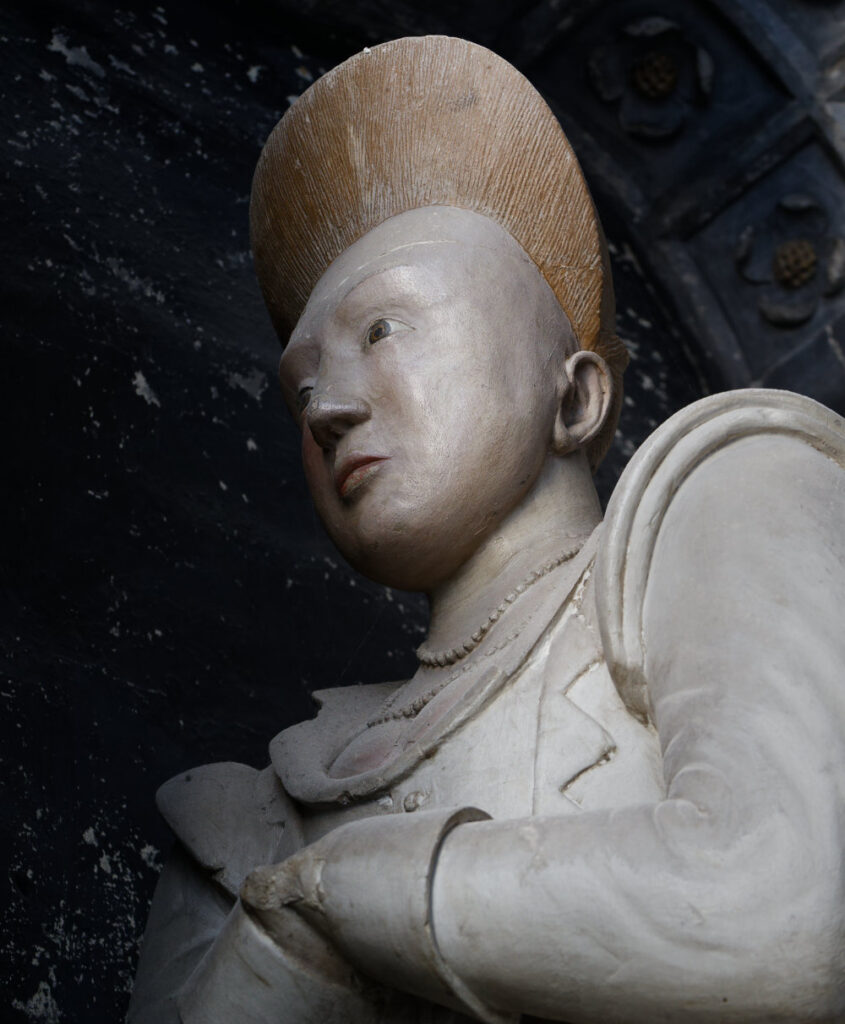
I went to Little Thurlow church to practise using my tripod. In this church is the immodest tomb of Sir Stephen Soame and his wife Dame Anne. Sir Stephen (1544-1619) was a merchant, a member of the Elizabethan Parliament, and former Mayor of London, whose charitable deeds are listed in gilt lettering on a large tablet of black marble. The monument was commissioned by his wife.
Little Thurlow church. The monument to Sir Stephen and his wife. The daughters are kneeling at the front.His wife appears to be as tall as he is, if not taller.
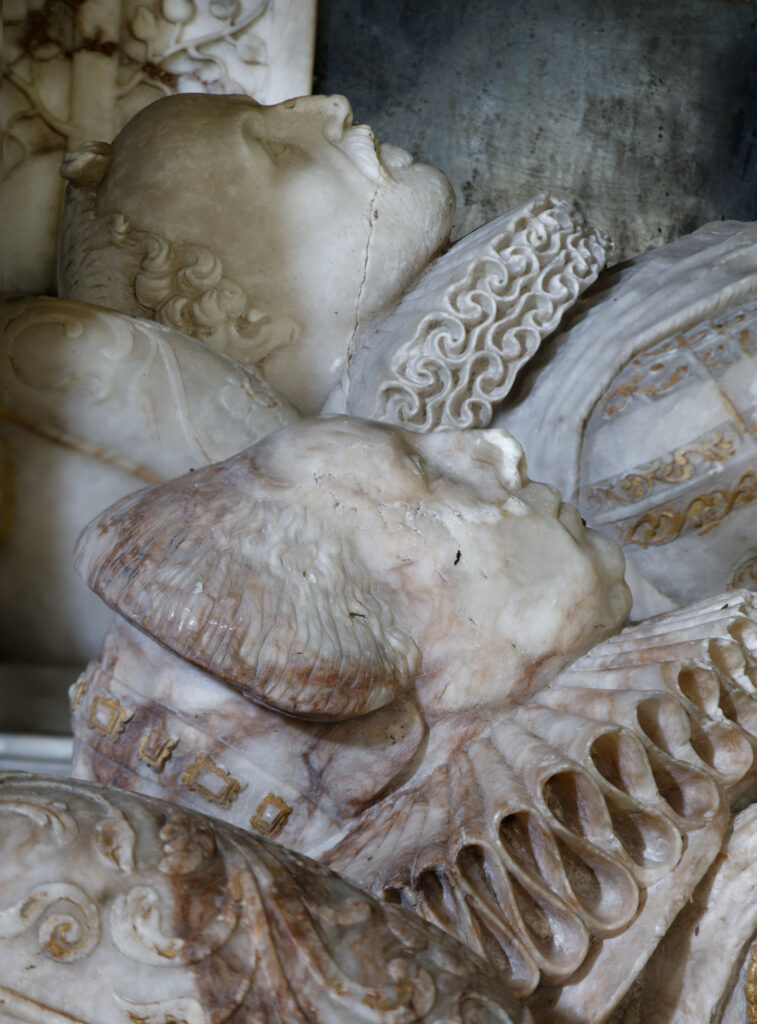
I had to focus stack this one. Unfortunately I moved the camera slightly between shots because my camera didn’t have a focus point on Sir Stephen’s head. I had to lift the camera to the nearest focus spot then return it to position, but the return position wasn’t exactly the same. If this happens again, I’ll use manual focus.
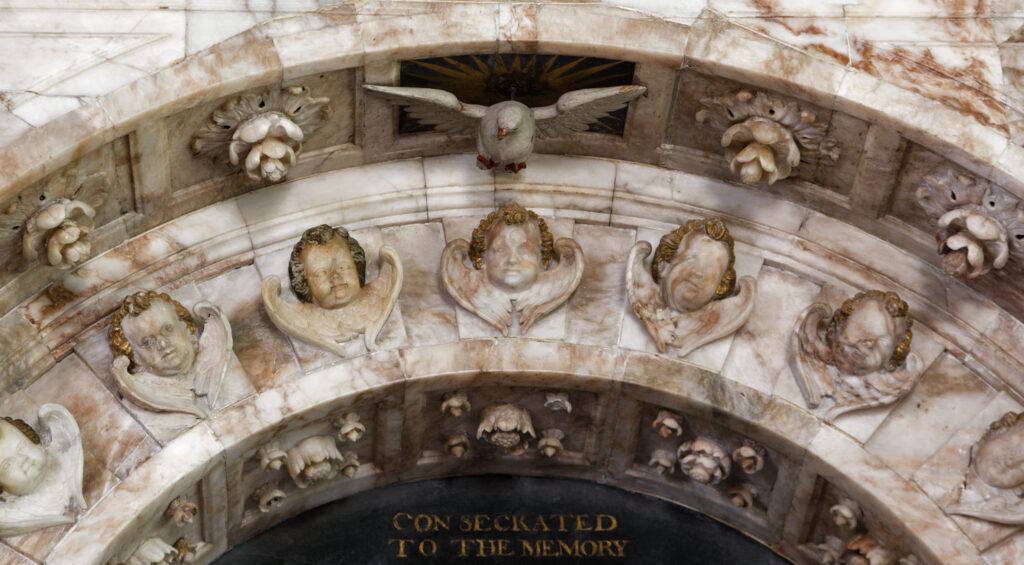
The dove of the heavenly spirit with a posse of cherubs.
One of the daughters
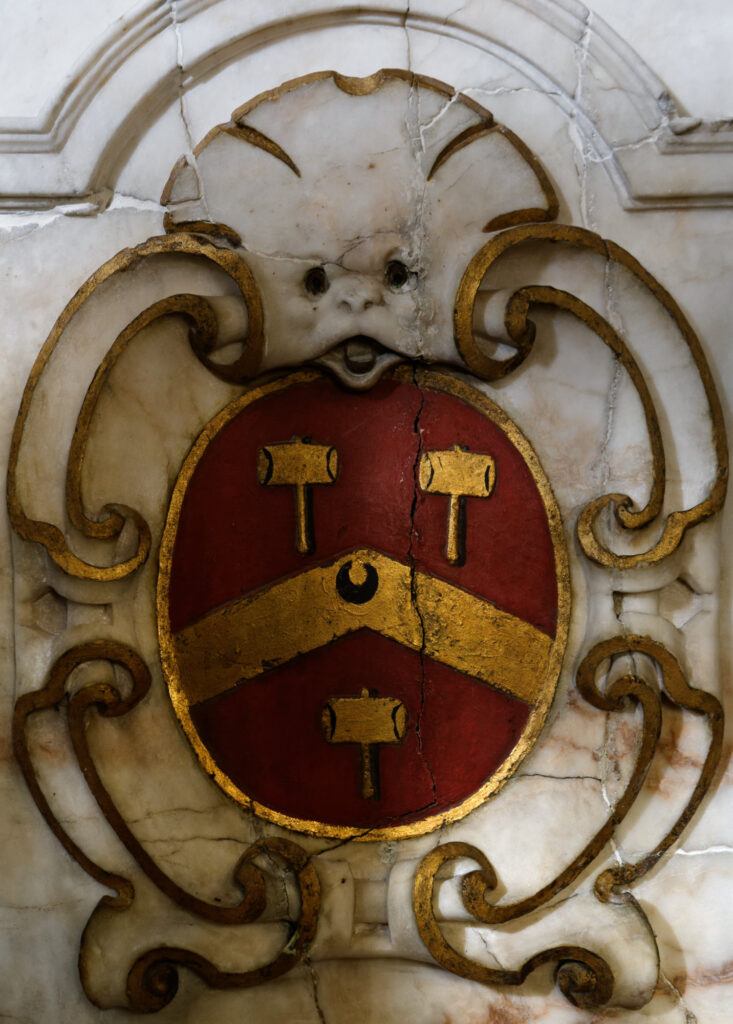
A family crest on the monument
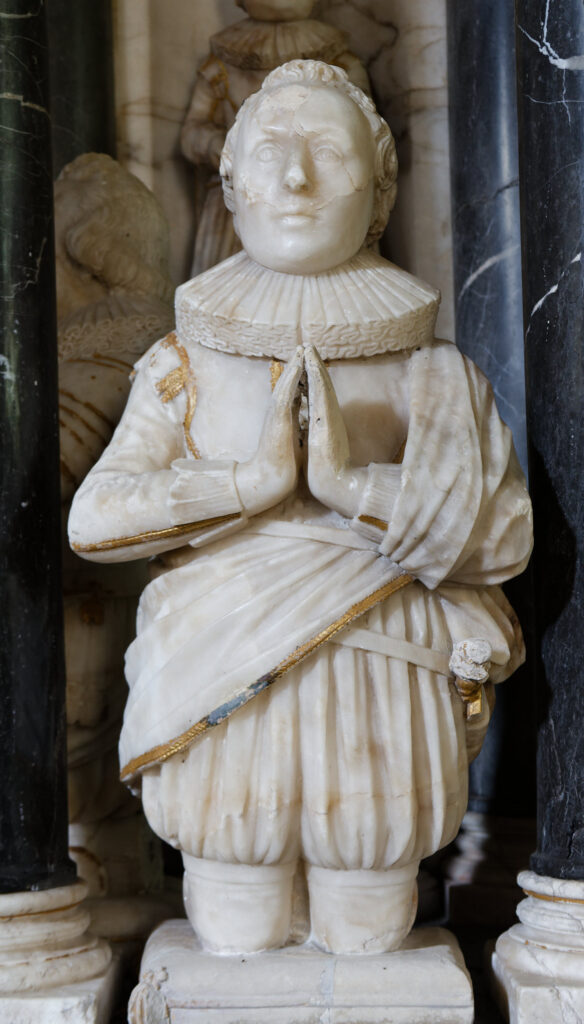
The monument is crowded with praying figures – the children of Sir Stephen.
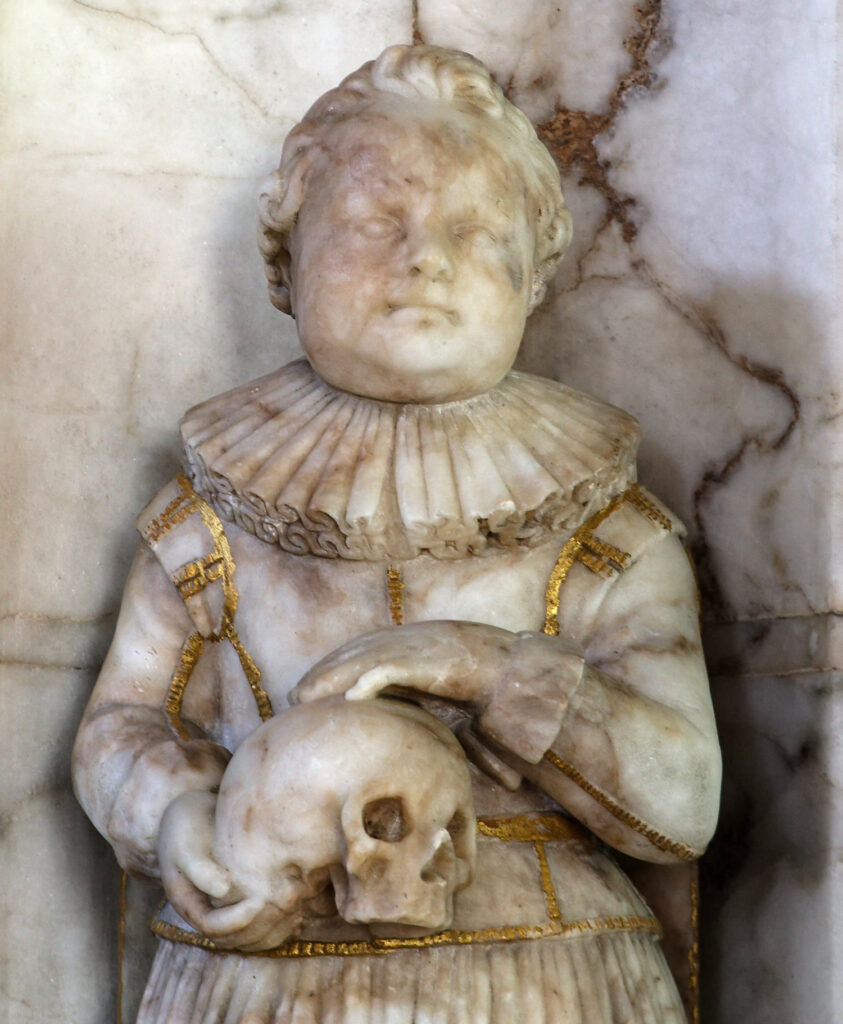
A child holding a skull
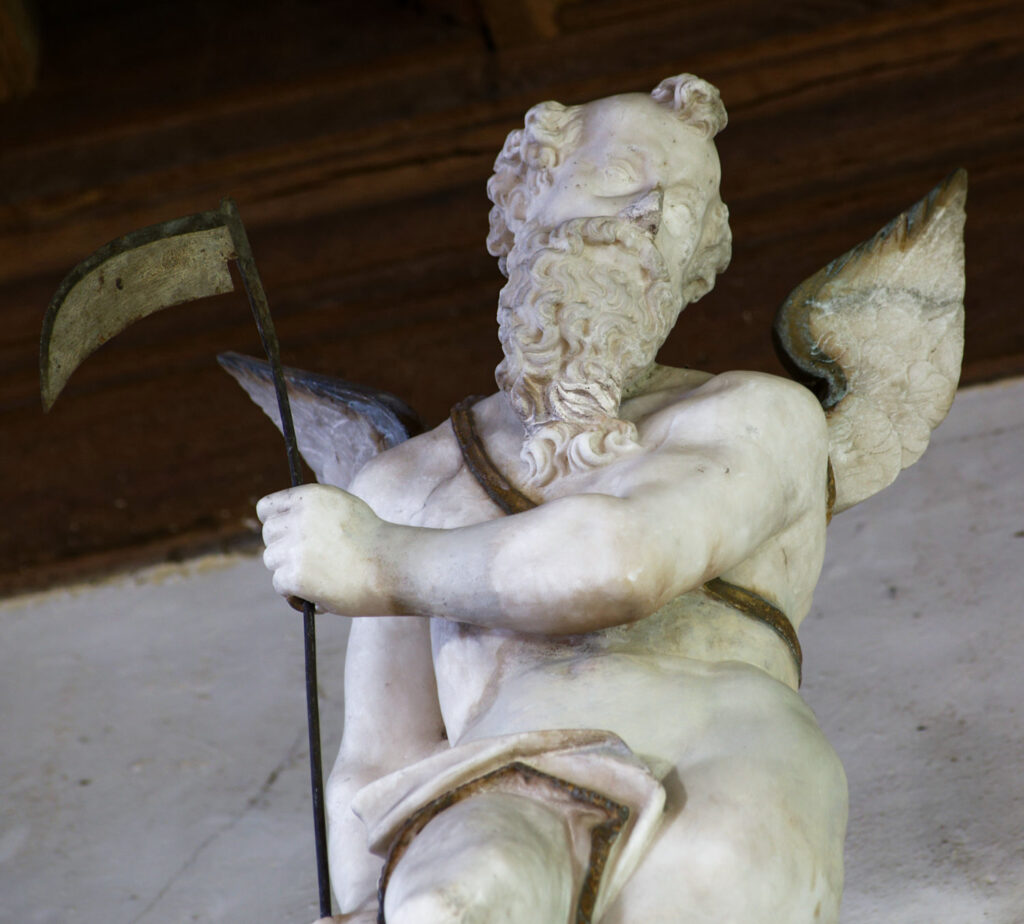
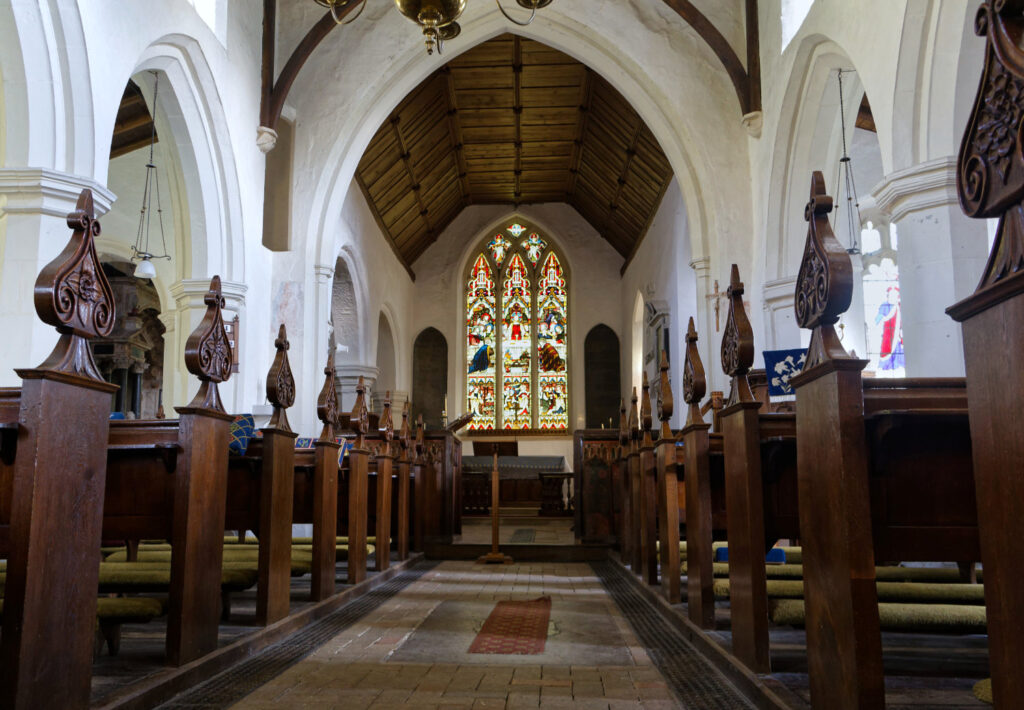
Time overlooking everythingMeanwhile, the rest of the church was also quite pretty.
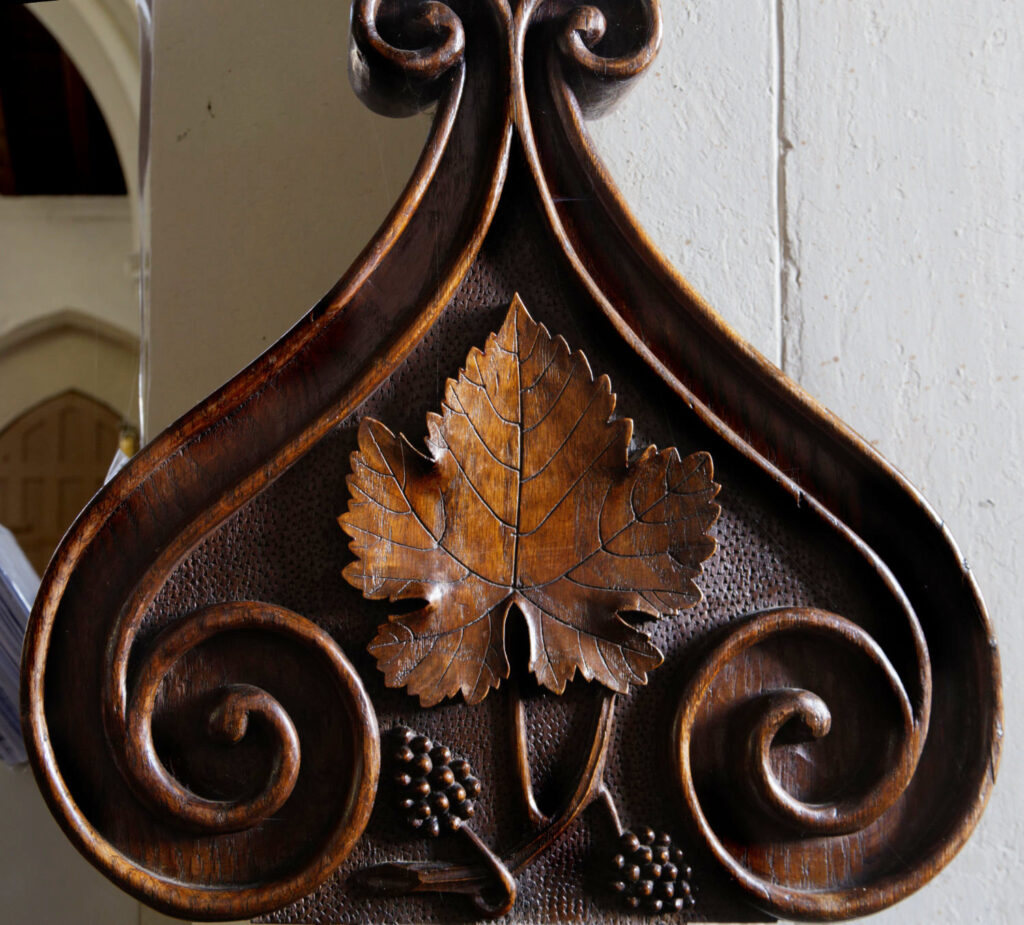
The ends of the pews had individual carvings.
I took all these at ISO 400, with shutter speeds of up to a second for the darker subjects. I wondered if the quality would be better at a higher ISO, say 800, and a faster shutter speed. They were mostly slightly underexposed, due to my fear of overexposure, but I could try exposing to the right because darkened shadows will produce less noise than brightened highlights. I didn’t think of bracketing the exposures, either, when there was high dynamic range.
Still, I was pleased with how agile I was with the tripod, and the pictures are okay.
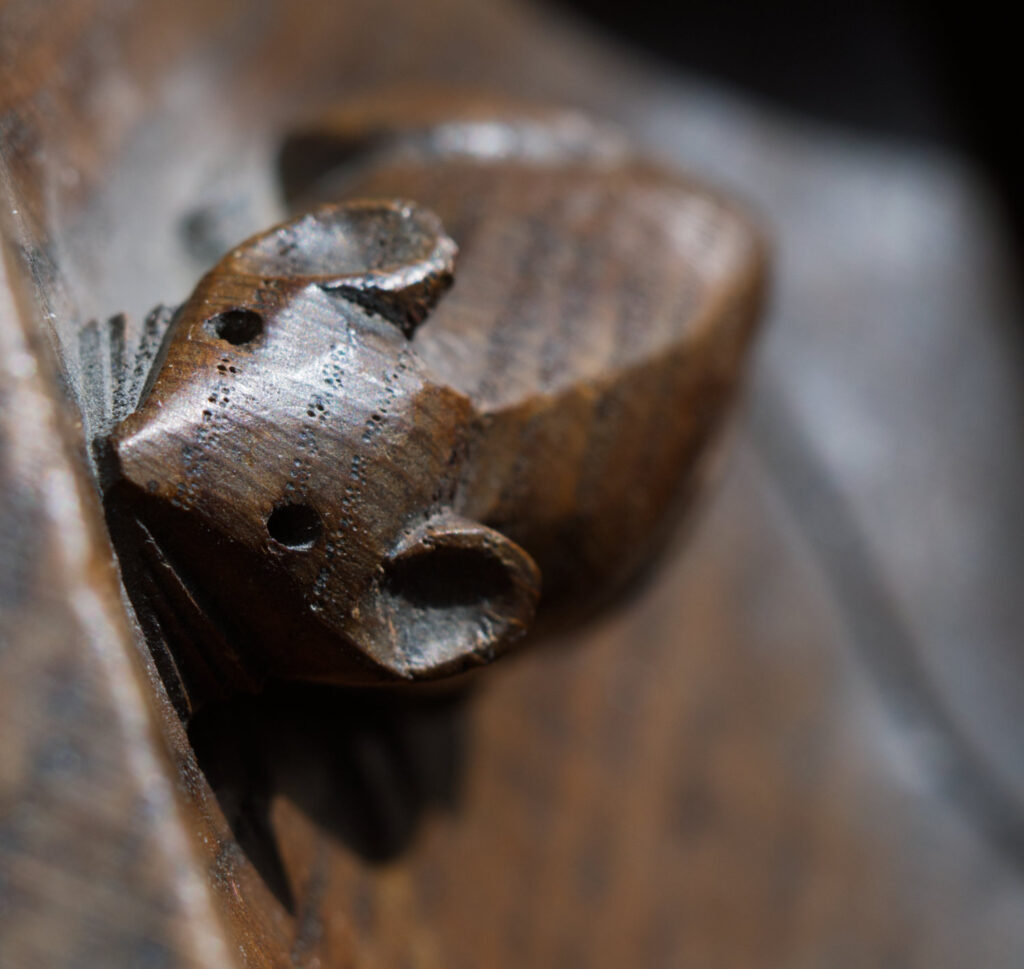
The mouse signature of Robert Thompson, the furniture maker from Kilburn, North Yorkshire. My granparents lived down the road from him, so I inherited one or two bits of furniture made by the original “Mousey” Thompson himself. This mouse is on a carved book-end. I was trying out a 1970s macro lens (SMC Pentax-M 100mm F2.8).
I practised putting up and adjusting my tripod today, so I can do it quickly and I know all the angles I can use. It’s such a good tripod (a Vanguard VEO3+). You feel confident using it because it’s so well-engineered, and it offers such a range of angles, including with the camera upside down on the floor!
Still on practising with equipment, I looked again at how to use my flash. There may be times when it’s okay to use an on-camera flash, like with a flat subject, but most of the time I’d hold it to the side of the subject. I’m planning to fix the camera on the tripod and put it on a ten-second timer. Then when I push the shutter release button, I’ll move to the side and hold the flash in the air, pointing it at the subject from an angle. I practised that today and it does create better contours and softer shadows.
I also read the instructions of my flash again because I’d forgotten how to get exposure compensation with it. Lowering the flash strength will help, and firing through a hand-held diffuser, especially if the subject is close.
So there, I feel more confident in using the tripod and flash, which will be handy as we get into the darker months.
The computer troubles continue. I discovered that none of my laptops can run a video call and a browser at the same time. This was a problem in my French class on Thursday, and yesterday with a call to R. I had to use my phone to call R. I use my desktop most of the time, and it works well, but it doesn’t have a camera, a microphone or speakers. I could just buy them, and that would be cheaper than a new laptop, but what if I need to call someone from another room, or away from home? I’m facing the prospect of buying a new laptop after all.
We had guests this afternoon then I had to go out in the evening. so that was the rest of the day.
I felt I had unfinished business at Kedington church. On my last visit, I hadn’t used a flash or a tripod, and I hadn’t controlled the camera with the app. So after my French lesson I headed out, and this time I had the church to myself. Here are my findings.
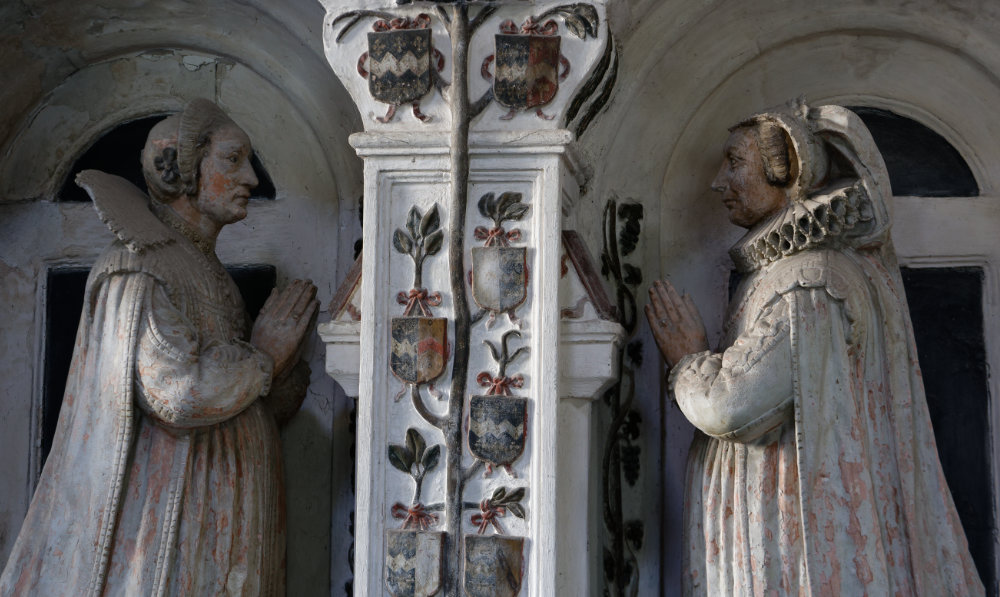
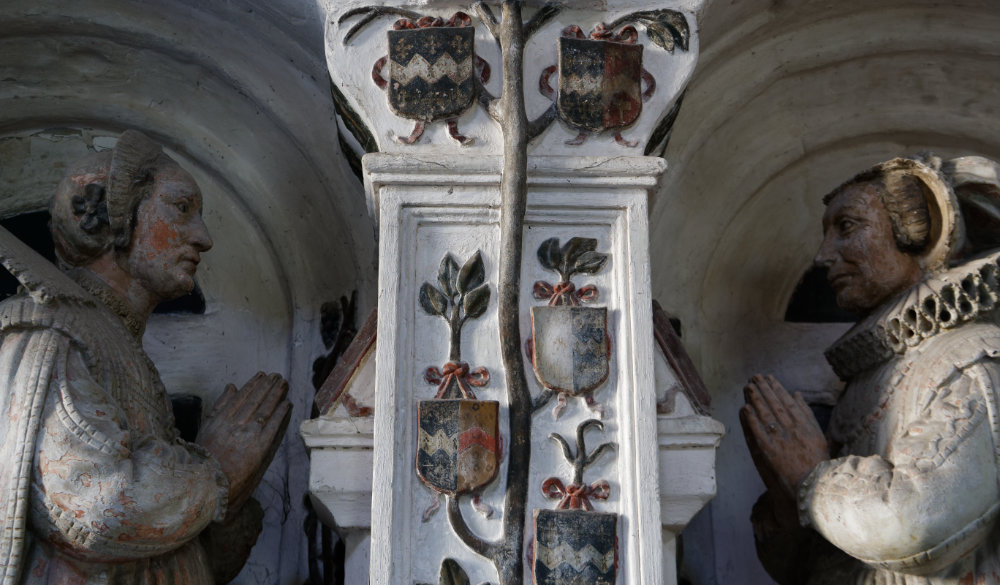
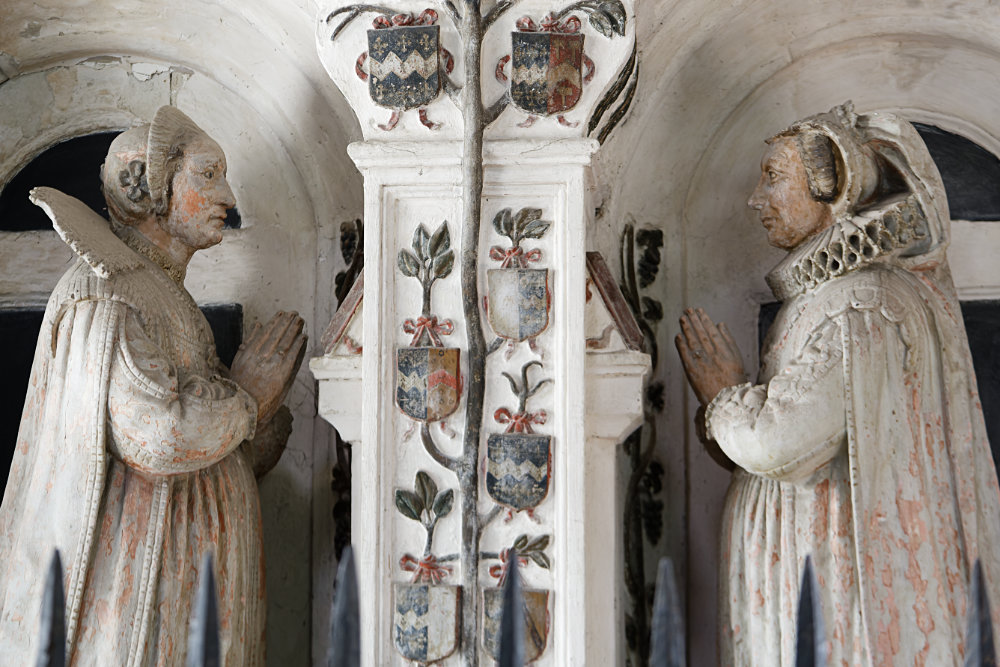
The wives of Sir Thomas Barnardiston
With an on-camera flash. I tried varying the angle of the flash head and diffusing it, but never got better than this. The rest were horrible (over-exposed foreground, dark drop-shadows, flat tones).With a tripod. This is much nicer, with tone contours and less harsh light. Unfortunately the women are in alcoves, and so in the shadow, but the light could be improved with post-processing.With the camera sitting on the top of the railings guarding the tomb. The lens was wedged between two spikes, so pretty secure, and I controlled it from the app. This is similar to the tripod image.
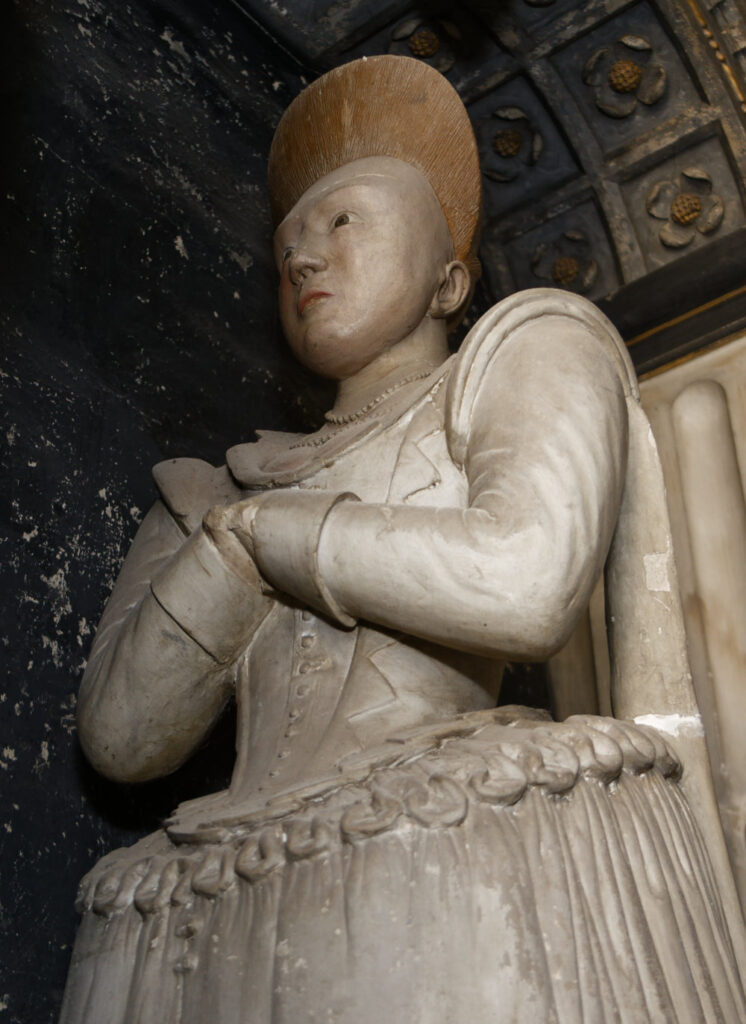
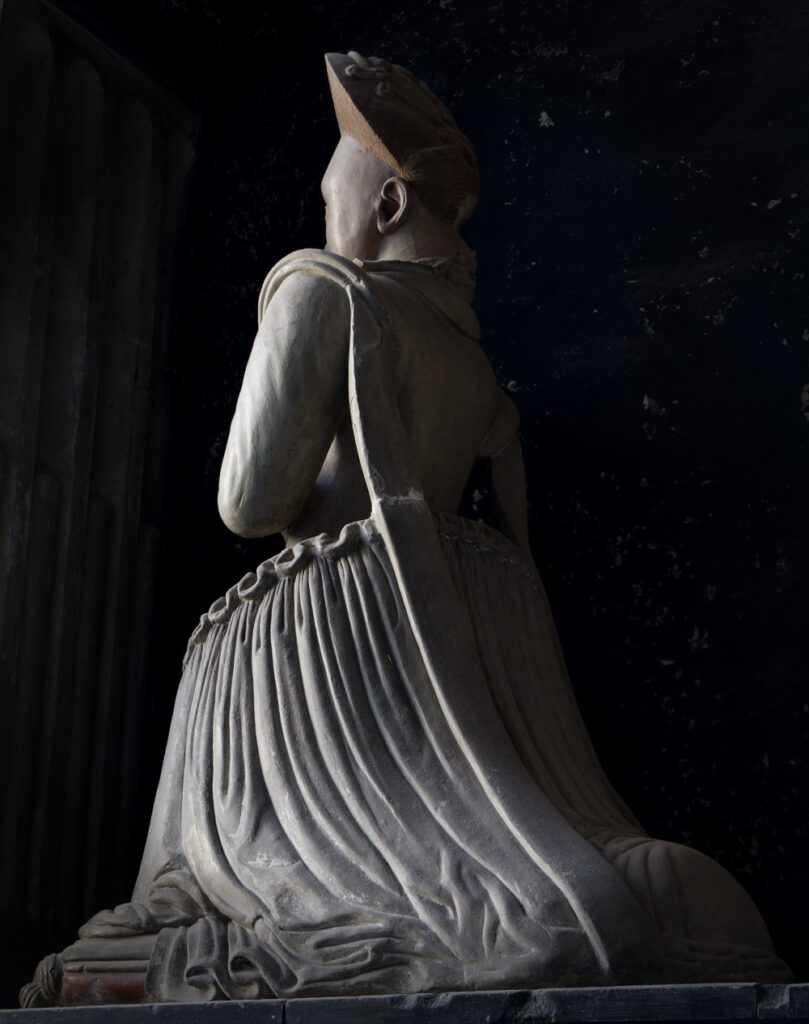
Grissel Barnardiston
With a camera-mounted flash. This was the best I could do. I had to tone down the brightness of the nearest arm in post-processing.
With a tripod. The tripod made me choose different angles than if I’d held the camera by hand. Space was tight between the tombs, so there were only so many places the tripod would fit.
With the camera resting on a shelf, propped up by the camera strap and operated remotely. Again, the need for a secure spot to put the camera made me go to different places to take a shot. Normally you (1) see something worth taking (2) move to a position to take it and (3) take the photo. When you need a secure surface (1) and (2) are reversed. You choose the position first, then look for a shot, which results in unusual angles. This is my favourite photo of the Grissel Barnardiston sculpture, even though you can’t see her face. The lines are lovely, and it’s like you’ve caught her alone praying. It would work well in black and white.
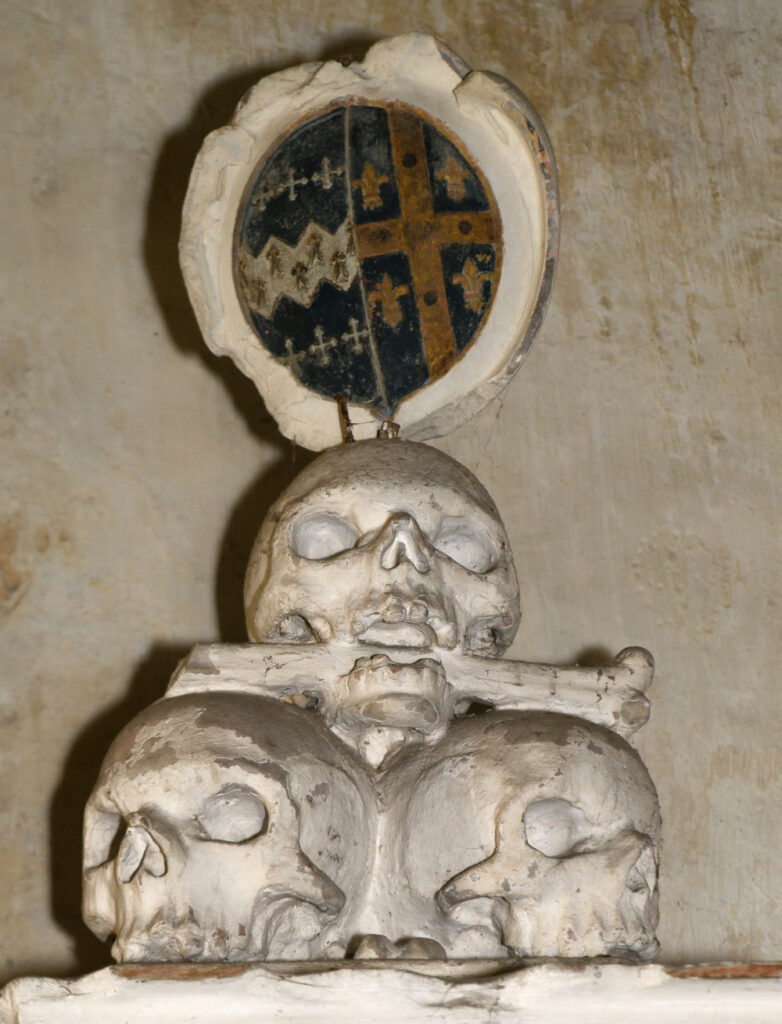
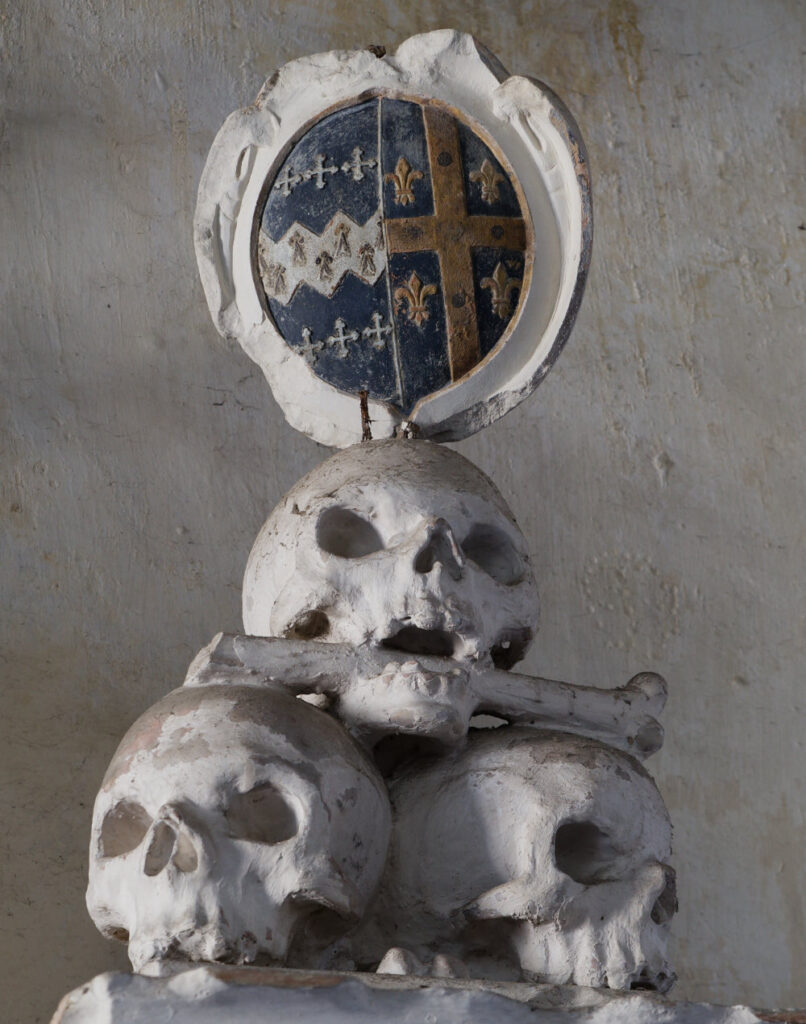
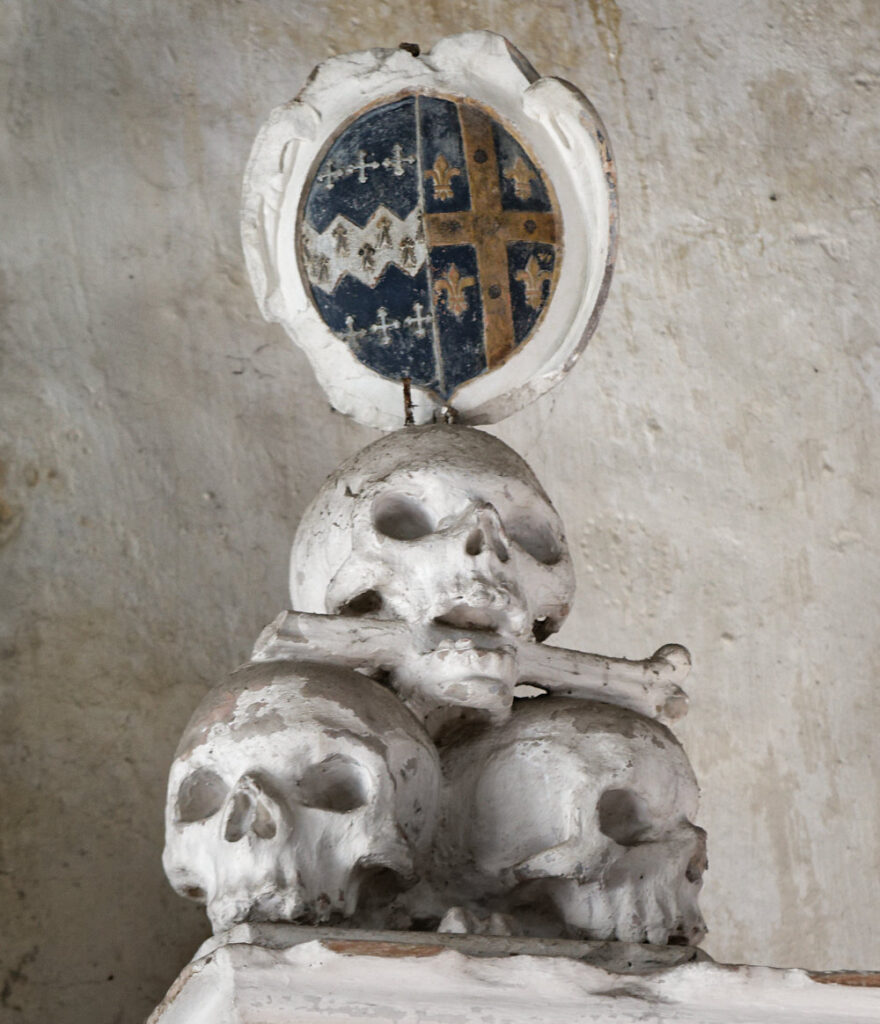
The skulls
With a flash. The colour balance is wrong with the flash photos, I notice. Presumably that was set before the flash fired. Anyway, more horrible drop-shadows.
With a tripod. Much better, even though the skulls were up on a dark wall. I couldn’t take a version with the camera resting on anything, since there was nothing at the right position.
With the camera resting with its back on the floor and controlled by the app.
Conclusions
On-camera flash is horrible. It looks better when you can bounce it off something, but the church just swallowed the light. Even with a diffuser attached to the back of the flash, I had to point it almost directly at the subject.
The tripod and app control techniques give you new angles you wouldn’t ordinarily think of. I was impressed with the creativity that the app allowed, because you could put the camera in places where you couldn’t see the back screen or look through the viewfinder.
I need to practise using the tripod more, so I can get faster with it. I struggled with it a bit today – just simple things like extending and shortening the legs – so I need to get familiar with it.
All of the above methods made better quality images (less noisy ones) than hand-holding the camera and using a high ISO, like I did last time.
It’s worth varying the techniques when you go somewhere, to force you to look in a different way.
I’ve got to watch the aperture of my leans. At its widest aperture and longest zoom, my lens gets a bit fuzzy away from the centre. I keep forgetting that.
I ran out of time to try one more method: putting the camera on a tripod and then triggering it remotely whilst holding a flash away at the side. This should give better contours to the image than the notorious on-camera flash. It’s probably not a good idea for old objects like these, though, because I remembered today that flash light can eventually fade paint, like the paint on murals and sculptures.
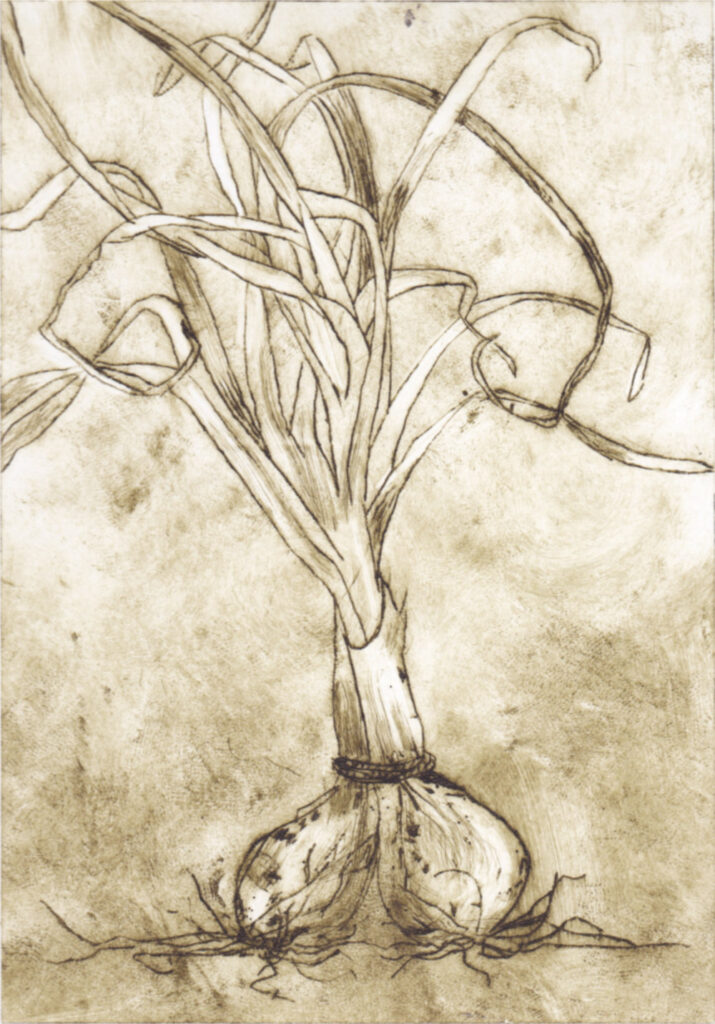
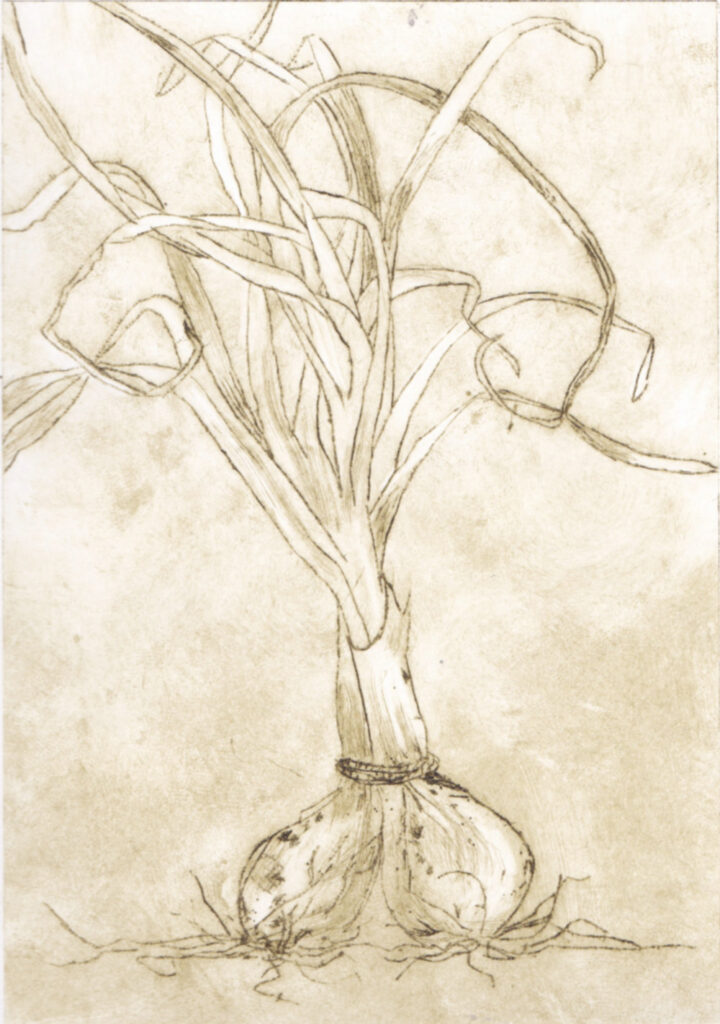
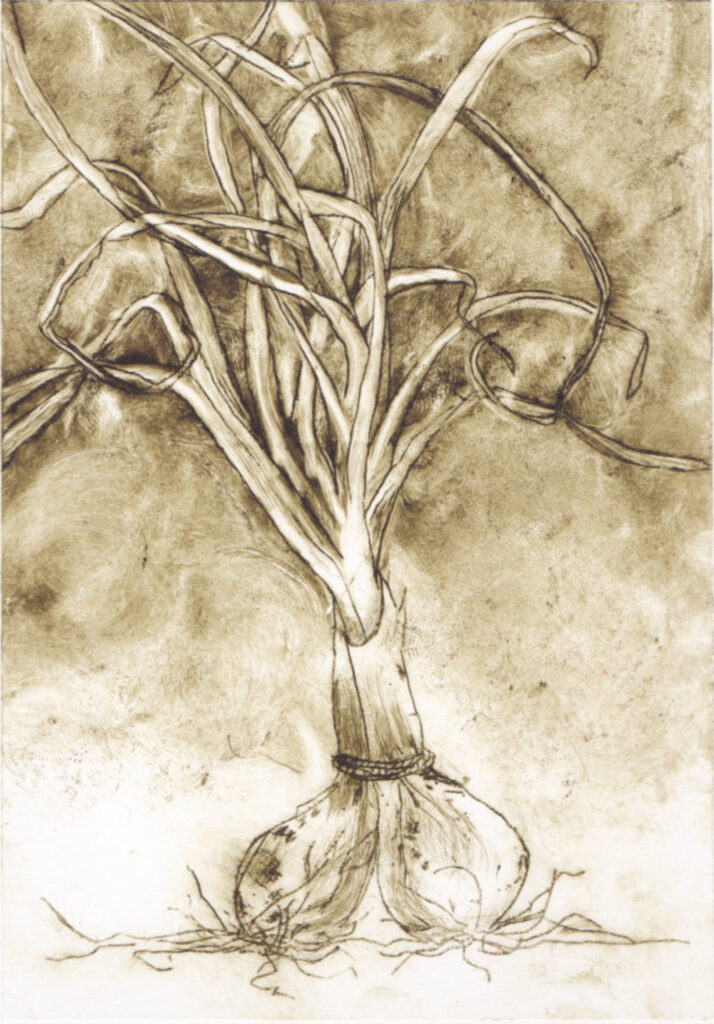
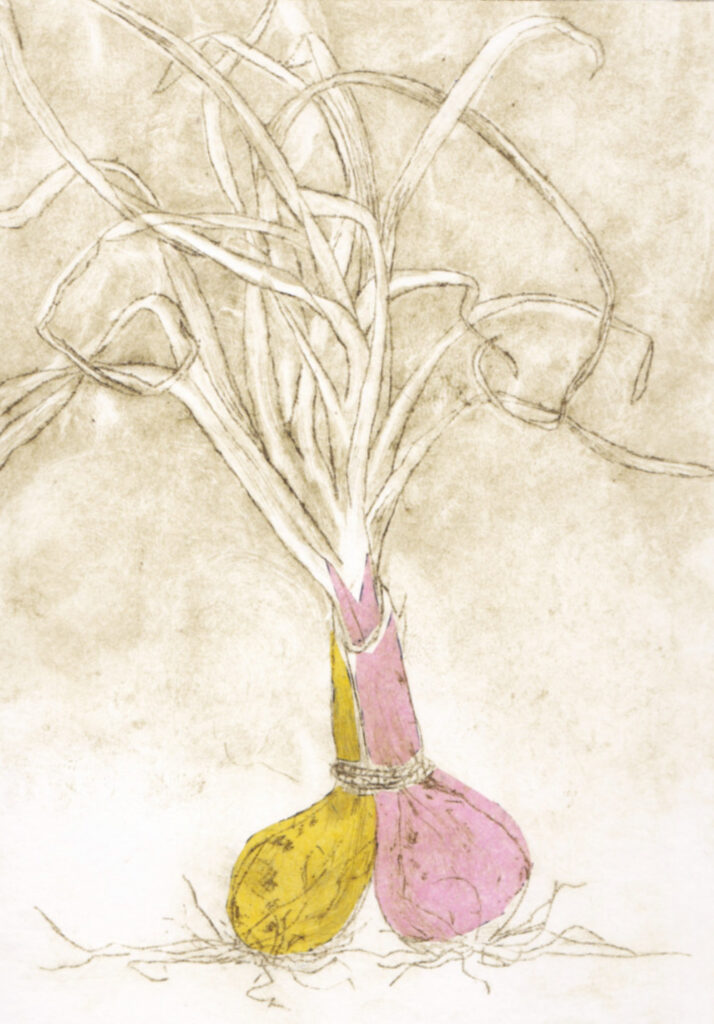
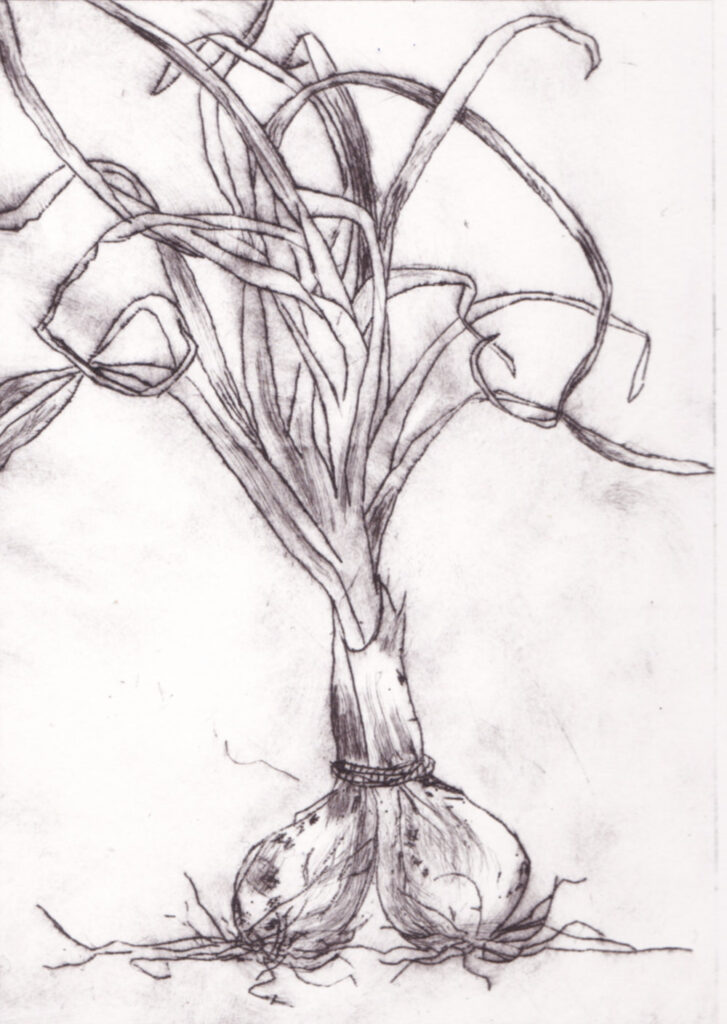
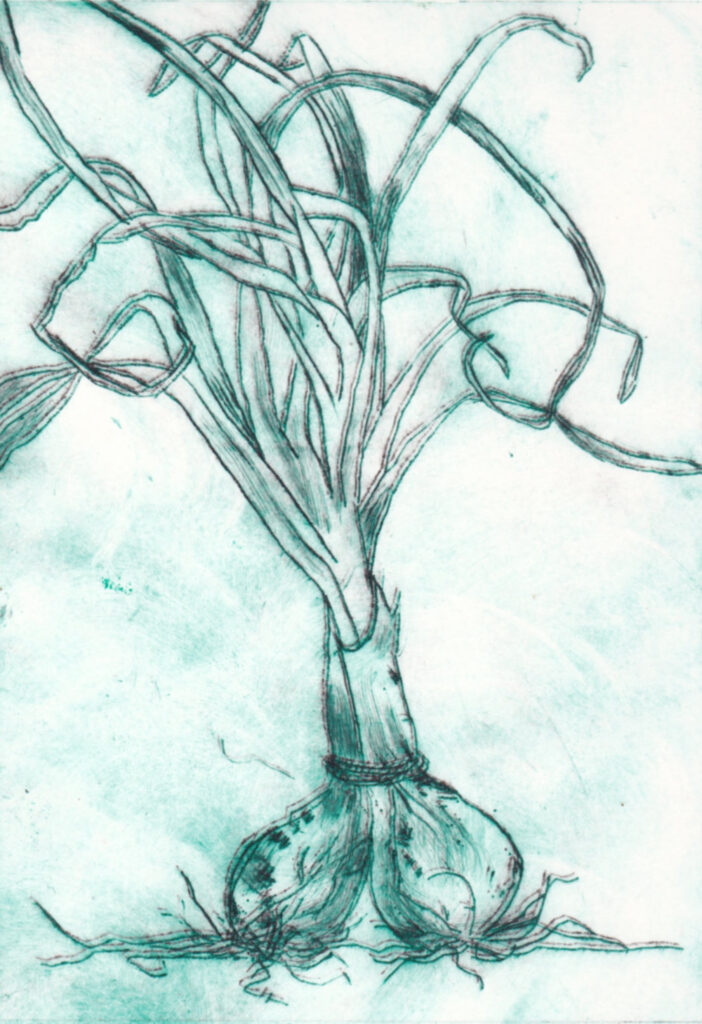
The second week of the printmaking course, and this time it was drypoint etching. The vegetable theme continued from cabbages, because today the teacher thought my photo of onions would work best. The stalks had been chopped off so I copied some stalks from an Edward Weston photo, and made some up.
We started off with a test sheet, to try out different techniques (we were engraving on acetate).
This was followed by variations of our real picture:
In sepia ink
As above, but a ghost print ( a second print, so fainter)
A re-ink of the plate with sepia, but this time with the dark background at the top rather than bottom of the image. I prefer this. I rubbed the ink off the stems with cotton buds.
The ghost print with Chine collé (tissue paper pressed onto the image)
A black version, which was a preparation for the next print.
You don’t need new glasses. I superimposed a green print on the black one, but offset it slightly. I’m not keen on the effect!
I went down to Haverhill for a haircut. Haverhill is a run-down town with many closed shops that the local council has camouflaged by putting pictures in the windows. I do like a barber’s off a side street, though. It’s just one woman in a small room with three chairs for waiting. You can have a chat with her, and this is something the Turkish barbers that have spread across this country don’t understand. You don’t go to barbers to get pampered, you go to pick up gossip. I don’t want coffee or a nose pluck or some funny smelling pomade, I want to hear local rumour and scandal.
There wasn’t much scandal today. We just chatted about supermarkets and vitamin supplements. She has chia seeds in her porridge for breakfast, like me. You would never guess to look at her – a middle-aged peroxide blonde in a side street in Haverhill. But then what would she have for breakfast? It’s humbling: I can’t even guess what people have for breakfast, let alone their moral and political opinions.
After the haircut, I thought I’d wander round the town and take some photos, or do some sketches. I settled down on a bench on the high street, and watched people. I’ve never known a place where people look so down-trodden. I’ve noticed it before when I’ve been there, but it’s only when I sat on a bench and looked at people that I realised how bad it was. One in ten people seemed to be on a mobility scooter, including many young people who were too obese to walk. Then I’d say another four in ten either had a walking stick or a problem walking, and again that wasn’t restricted to old people.
I’d seen a young couple earlier on, and I’d thought “Well, I guess he can’t walk very well, but at least they’re happy there, holding hands.” The young man lumbered left and right when he walked, and one foot was permanently tipped to the outside. I followed them in a shop and the assistant said, “What is it today, then?”
The young man said what sounded like, “Whop!”.
“Oh, books is it?” said the assistant.
When the couple moved down to the back of the shop I heard the man crying, “Whop! Whop!” and realised that was all he could say, and that the woman with him was his carer. She glanced at me self-consciously, as if she was afraid I’d disapprove him.
I asked myself whilst sitting on the bench, “What do I mean by ‘down-trodden’? If the people here are ‘down-trodden’, what does that mean exactly?” That’s one for my thought book, but here are some quick notes:
Visibly poor health: difficulty moving (needing a mobility scooter or a walking stick, having a limp or shuffle); overweight or painfully skinny; pasty skin and bad complexion (not rosy, healthy cheeks due to fresh air and exercise).
Dressed badly: cheap clothes made of synthetic material, like jogging trousers and plastic trainers; jumpers without shirts underneath; stains and worn patches on the clothes; clothes that aren’t attractive or don’t suit the person’s figure.
Messy hair: badly-cut hair dried and frazzled, or lank with grease.
Vaping: many people were doing this, including shop assistants popping outside for a quick drag.
Those are some ideas. I could have added “Wearing a medical monitor”, since I saw a young man covered in tattoos sitting with his girlfriend outside Costa Coffee. The man had a blood pressure cuff around his arm and he was watching the monitor on the table. The whole centre of town is like an outpatients unit.
For all the observations I made above, and me calling them “down-trodden”, the people didn’t look any less happy than people anywhere else. Still, I couldn’t get my camera or sketchbook out. I just couldn’t because I found it all too sad.
I drove up to Kedington, and took some pictures of the church. There are some fantastic sixteenth and seventeenth century sculptures there, so I thought I’d try using a remote flash and tripod in gloomy conditions. Unfortunately, a couple of men were wandering about trying to fix the organ. I asked if I could take photos and one of them (I guess the local) said, “Yes, that’s fine. Go ahead.” But I couldn’t bring myself to set up a tripod and flash, Instead I tested how much I could do in available light.
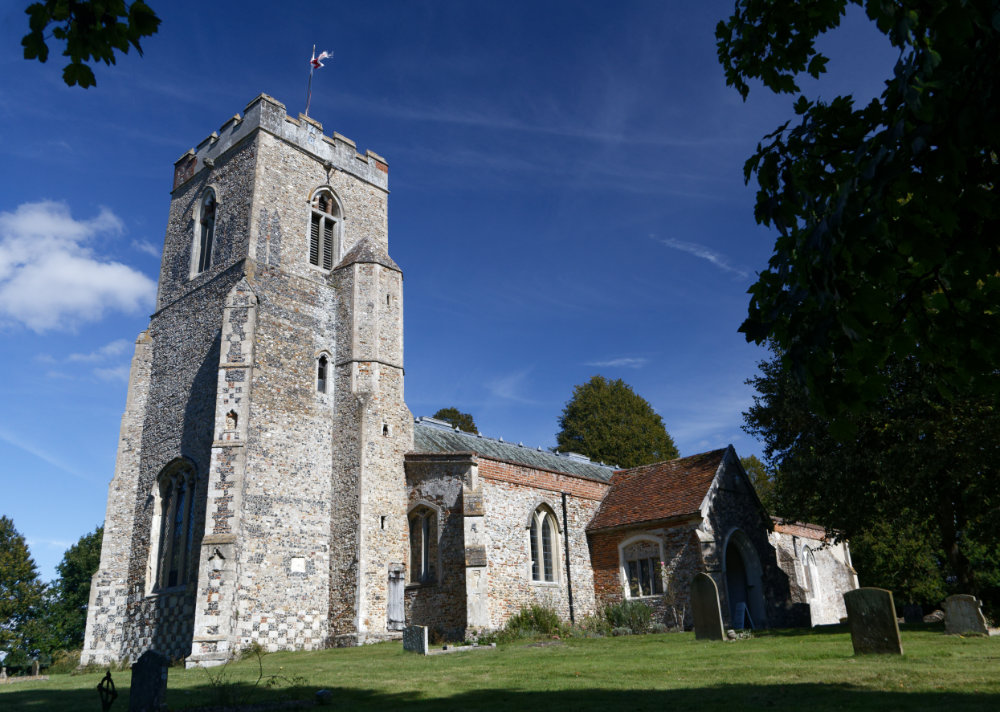
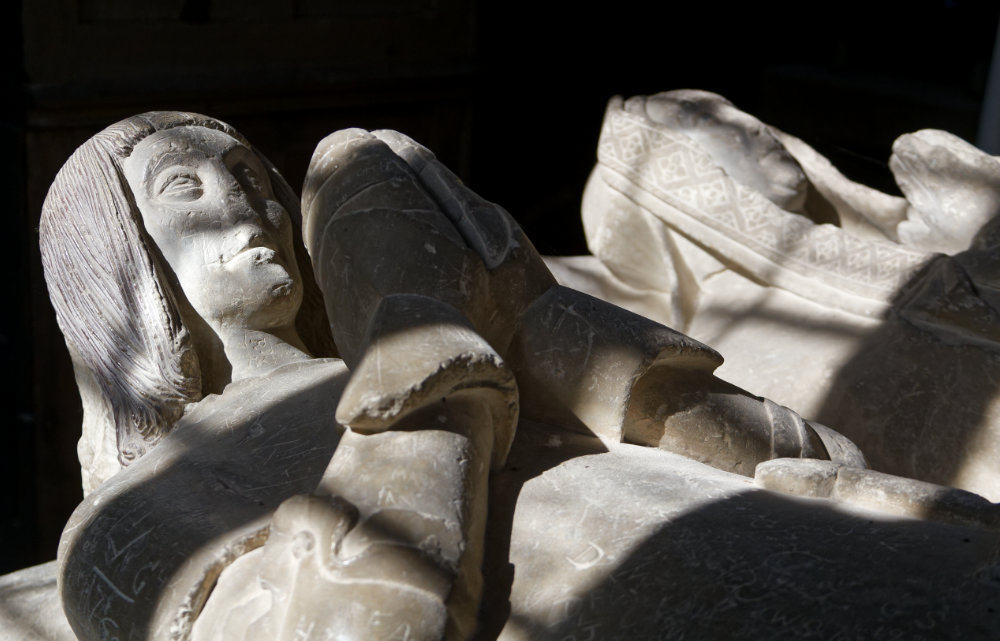
Here’s the church. I wonder why they stopped the chequer stonework at the bottom of the tower.Sir Thomas Barnardiston (d. 1503) and his wife Lady Elizabeth (d. 1526). It’s a shame I couldn’t get her in focus as well. I could have tried taking the same picture twice, each focused on a different face, and stacked the two pictures. But I would have needed a tripod.
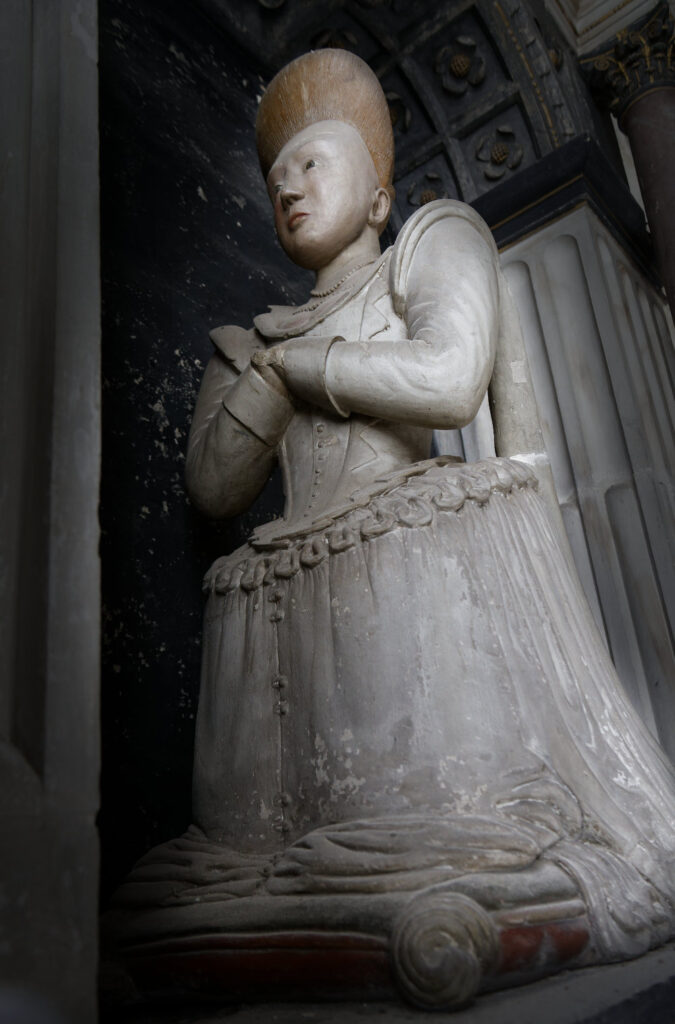
Miss Grissel Barnardiston (d. 1609). The inscription says she was “Too deare to Frendes, too much of men desier’d, Therefore beraft of us with untymely death.”
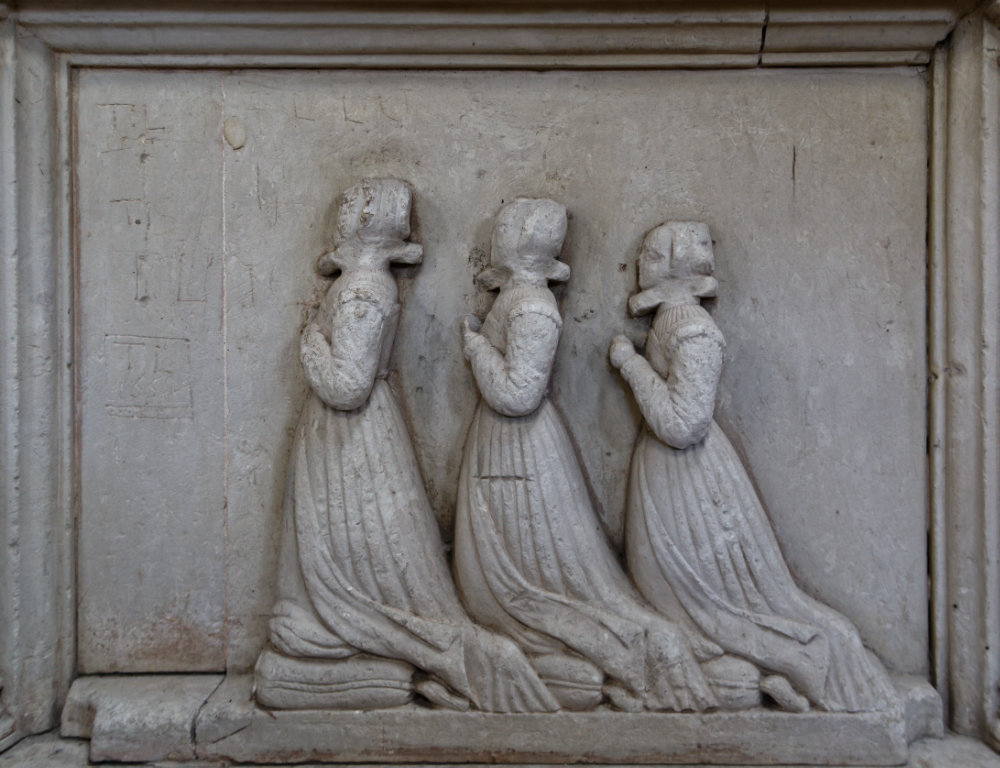
The three daughters of Sir Thomas Barnardison (d. 1619) and Lady Elizabeth (d. 1584), carved into the side of the couple’s tomb.
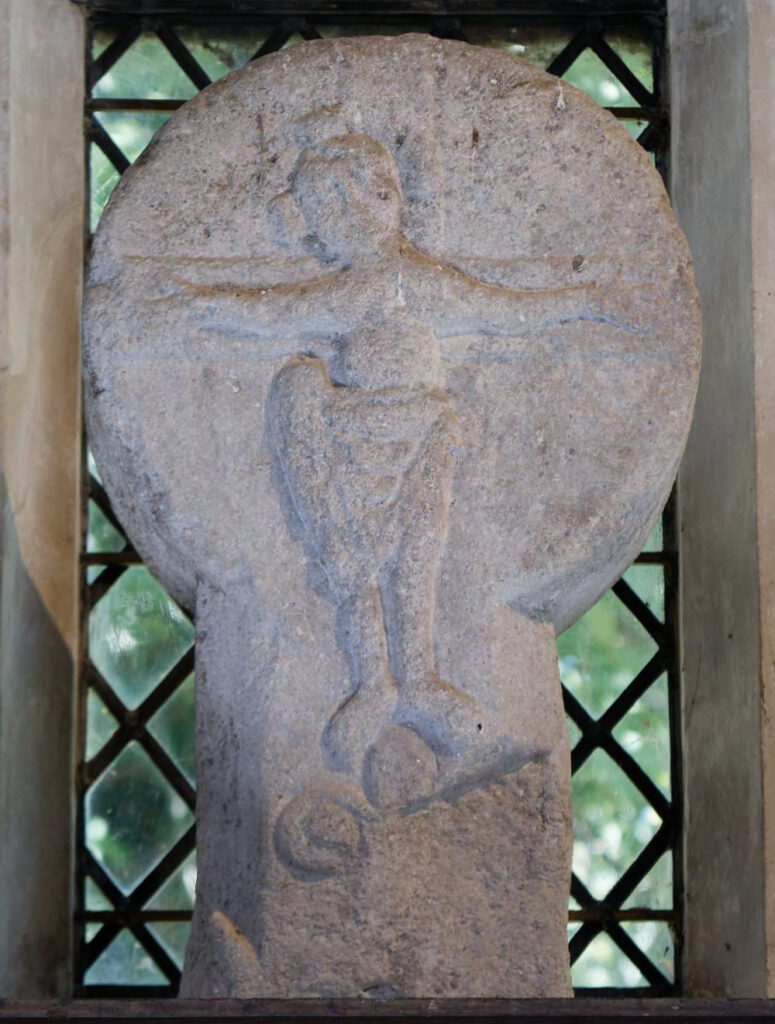
The site of the church was used for Christian worship in Roman times, when stone crosses marked a place for worship. This figure is from the top of the stone cross that existed in 900AD.
The two wives of Sir Thomas Barnardiston (d. 1610): Mary (d. 1594) and Katherine (d. 1632).
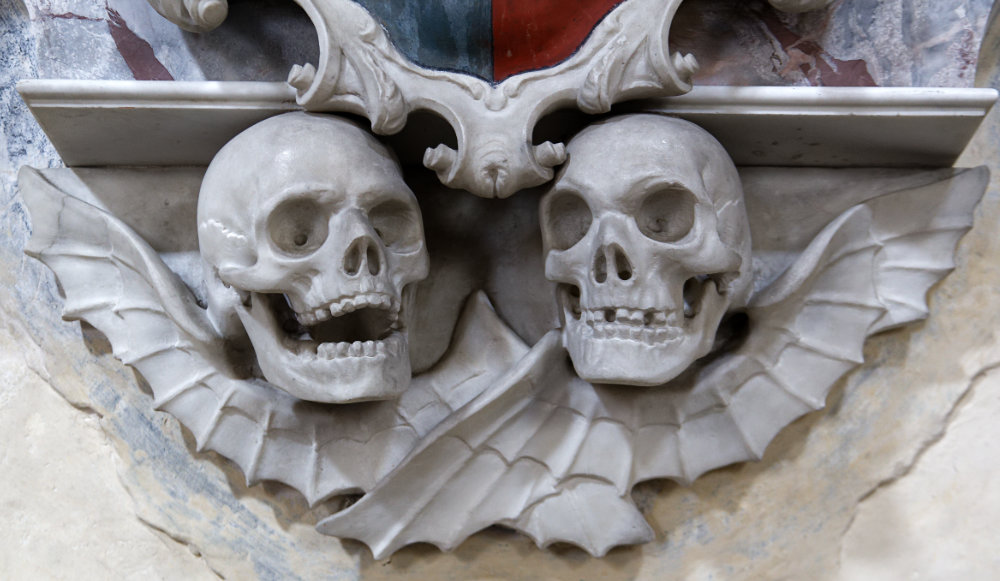
Skulls on Sir Thomas’s wall monument.
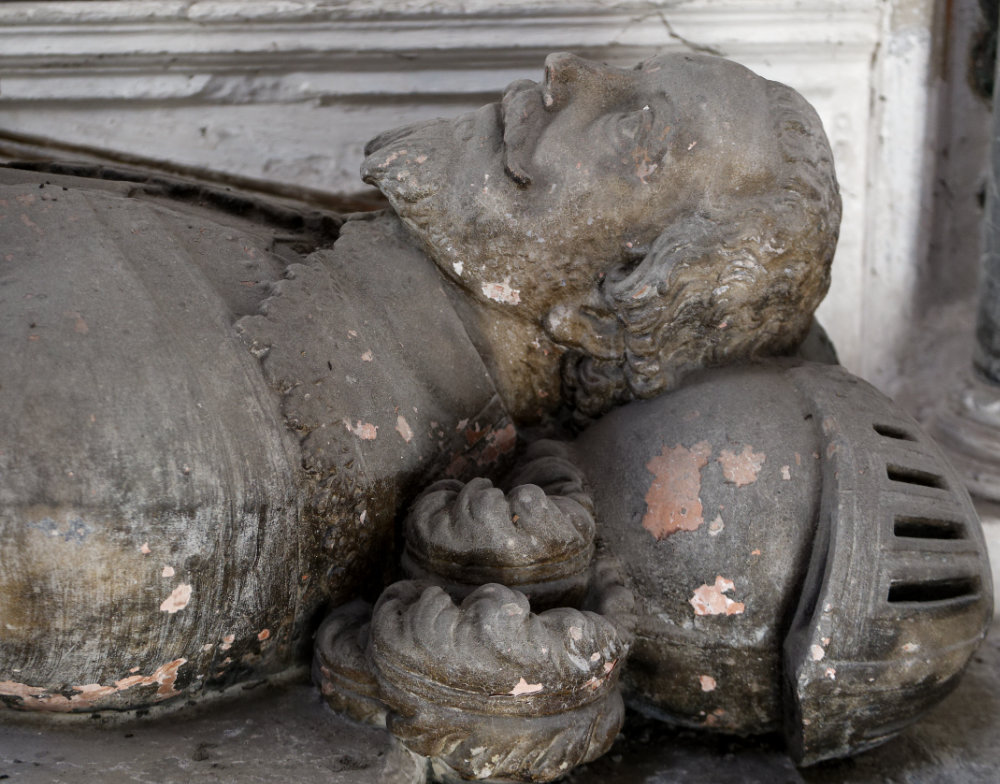
Sir Thomas himself (d. 1610), husband of Mary and Katherine. It was very dark where he was lying, so the quality isn’t great.Skulls that reminded me of Stadtler and Waldorf from The Muppet Show. They look like they have the same sense of humour.
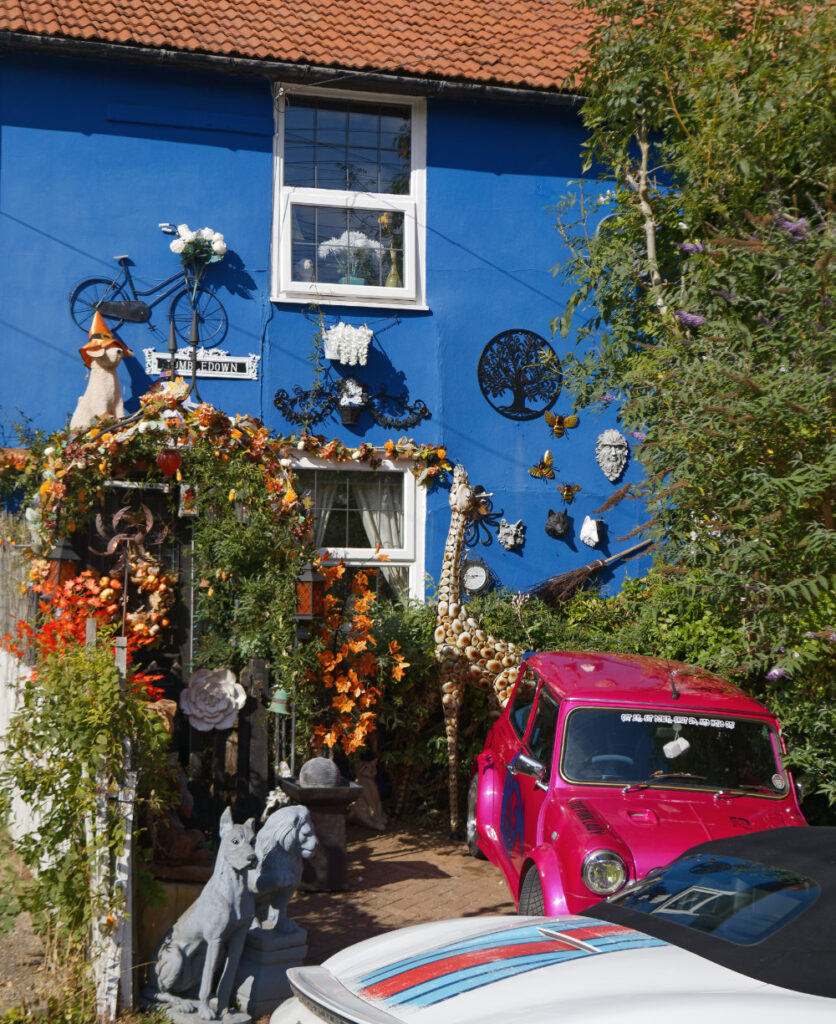
Then, as light relief from tombs, I took a stroll around the village and found a couple of eccentric houses. First this:
The items on the wall include bees, the heads of wolves, a witch’s broom, a bicycle and a clock. In the garden we have a dog, a lion, a giraffe and an orang-utan under the big white flower. The sticker on the car windscreen says “Get in, sit down, shut up, and hold on!”
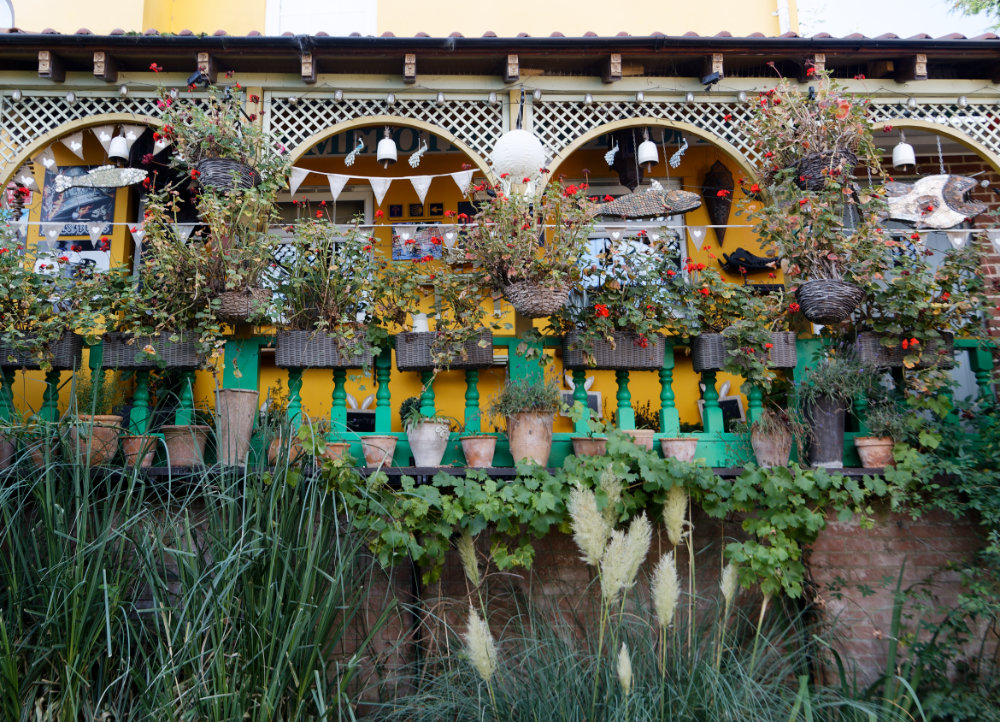
And then just a few doors down was a yellow house that had a replica Mediterranean terrace down the side, complete with balustrades and pots of geraniums. Above the terrace, high on the wall, was an enamel picture of a silhouetted rabbit with the words “Death comes to us all, and it has sharp scary teeth.”
Enamel signs for Motorhead, AC/DC and The Grateful Dead lined the wall of the terrace.
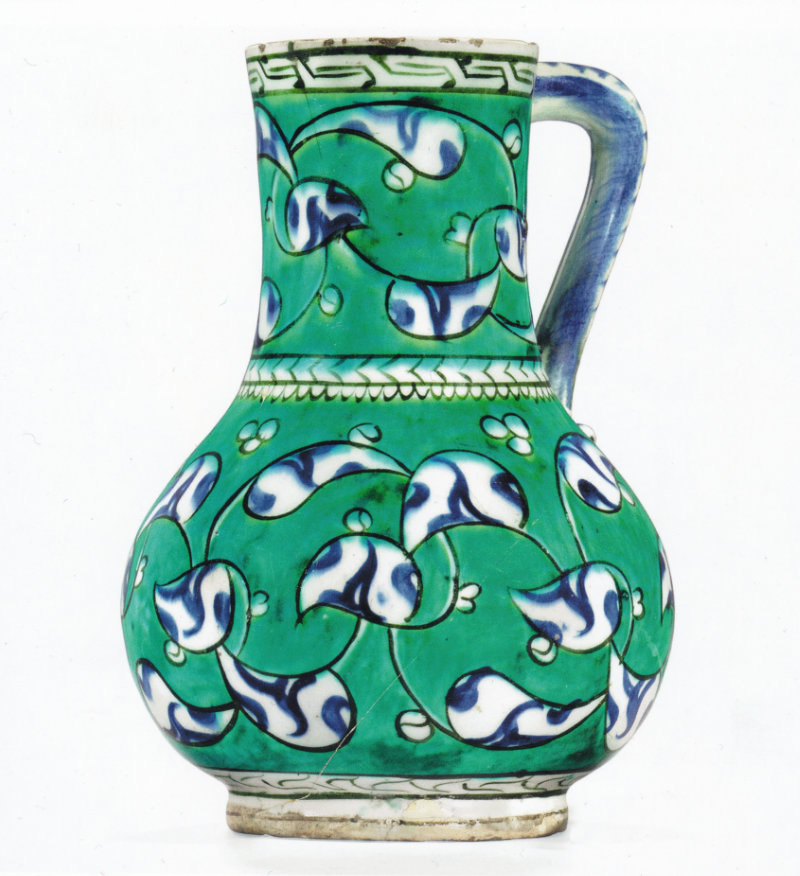
I’ve got an art calendar with a picture a day, and here is today’s picture:
It’s an Iznik pot from the sixteenth century. What a beautiful object. I love the motif and the colours. Normally these pots have blue as the dominant colour, but this green is stunning, and the motif is hypnotic. I could just keep looking at it.
Today I decided to organise my art stuff, and add sketching materials to my day bag. I found some swatches I’d done for a water colour set, and I remembered the set well – it was the last one I’d used – but could I find it?
I rummaged through everything under my desk, then in the cupboard next to my desk. I looked in the girls’ bedrooms (in case they’d borrowed it), hauled everything out from under the stairs, and finally I emptied the shed where we put the old art stuff. That was a five-hour job, because we’d bought the shed and dumped everything that used to be in the conservatory into it, just before the builders took the conservatory down. So amongst other things there were boxes of electric leads and CDs, bits of broken furniture, old pots and jam-making pans, a pressure washer, rolls of paper, an old sewing machine, and two chests of drawers containing stationary and art stuff.
It was good to go through all the art stuff, especially the paints and brushes the children had been given since they were toddlers. I threw a lot out, fixed the drawers whose bottoms had fallen out, and tidied my own art stuff. I know where everything is now, except the paint set I was looking for. I’ve still no idea where that’s gone.
I then realised that the swatches were for a different watercolour set, and the watercolour set they were for was sitting in a newly-tidied drawer. So now I have everything in order, and have brushes and ink pens to go in my day bag.
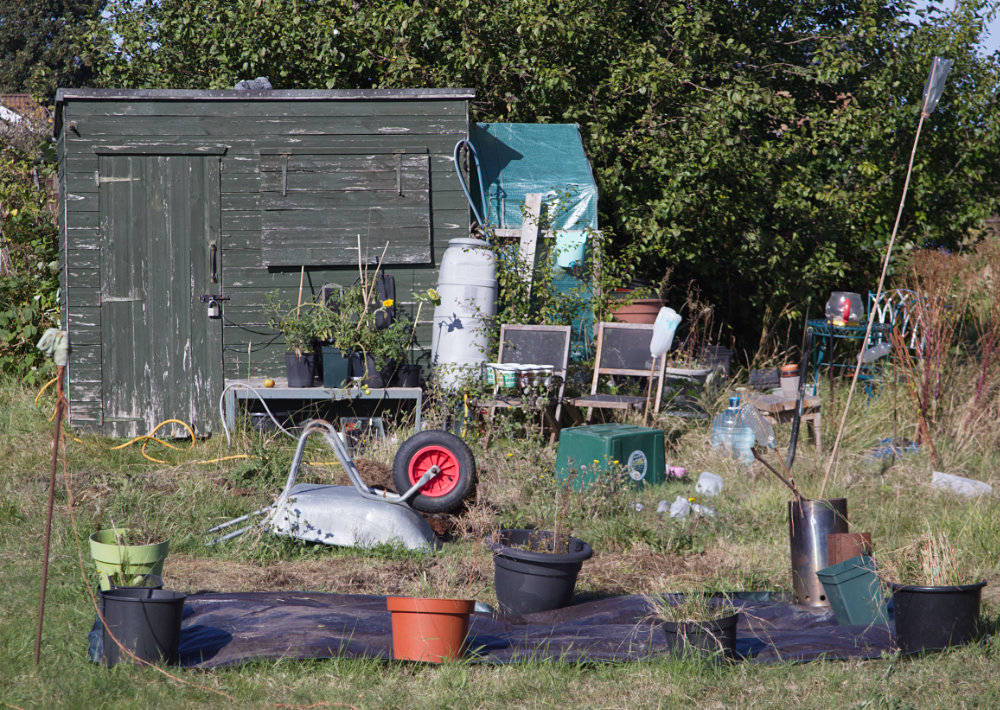
As a break from shed-tidying, I popped down to the Post Office to send a birthday card. I walked through the allotments on the way back and, since it was a sheddy kind of day, I took these pictures:
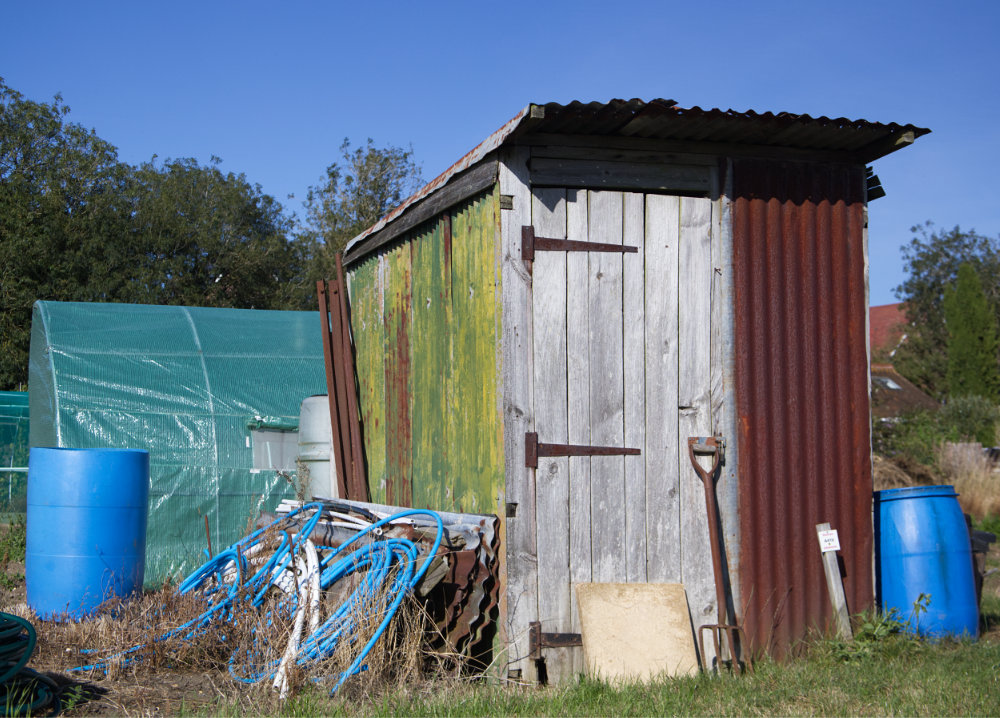
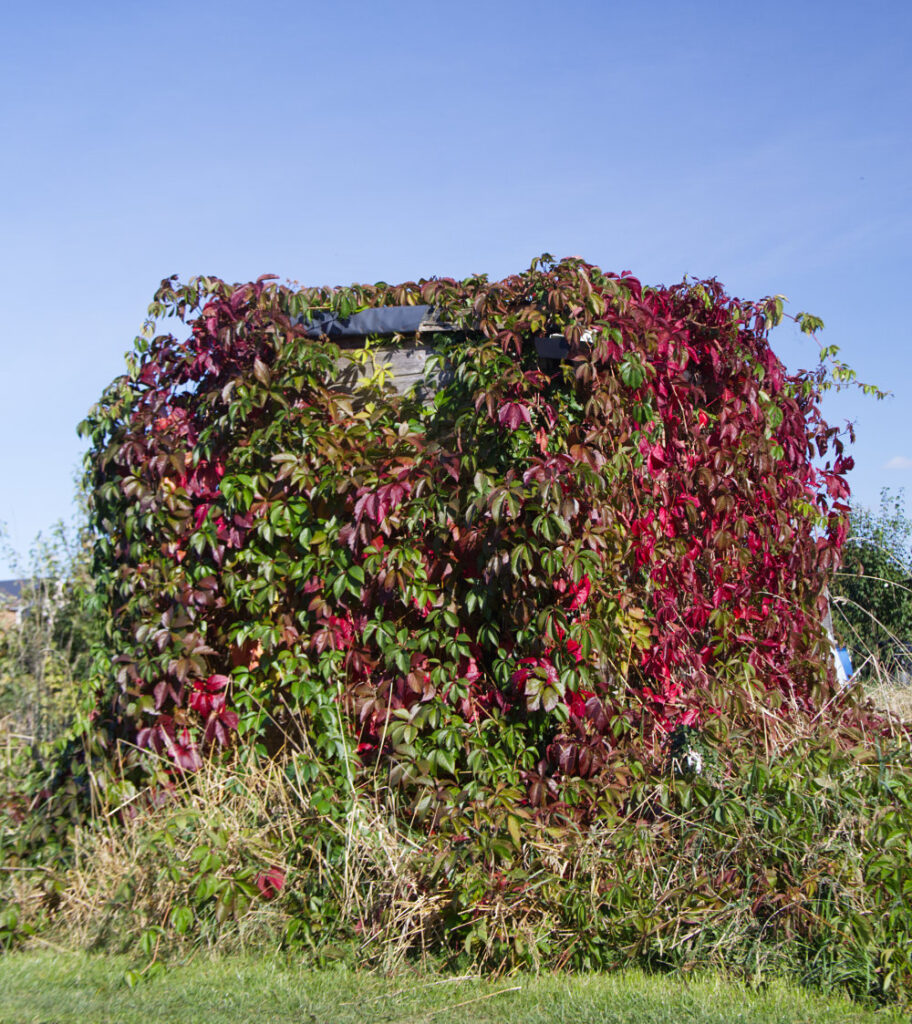
A person’s allotment shed is like their handwriting: it has a unique style. Some sheds are freshly painted, with neat rows of seed trays inside, tools leaning tidily in a corner, and a shiny padlock on the door; whilst others are keeling over like an old boat, have mouldy cloth hanging over the windows and a paving slab keeping the door shut.
I like the colours and shapes on and around this shed
This one is quite a statement. It’s swamped in Virginia creeper, and reminds me of those artists Christo and Jeanne-Claude, who wrap buildings in plastic and call it art. Maybe it is, I don’t know.